
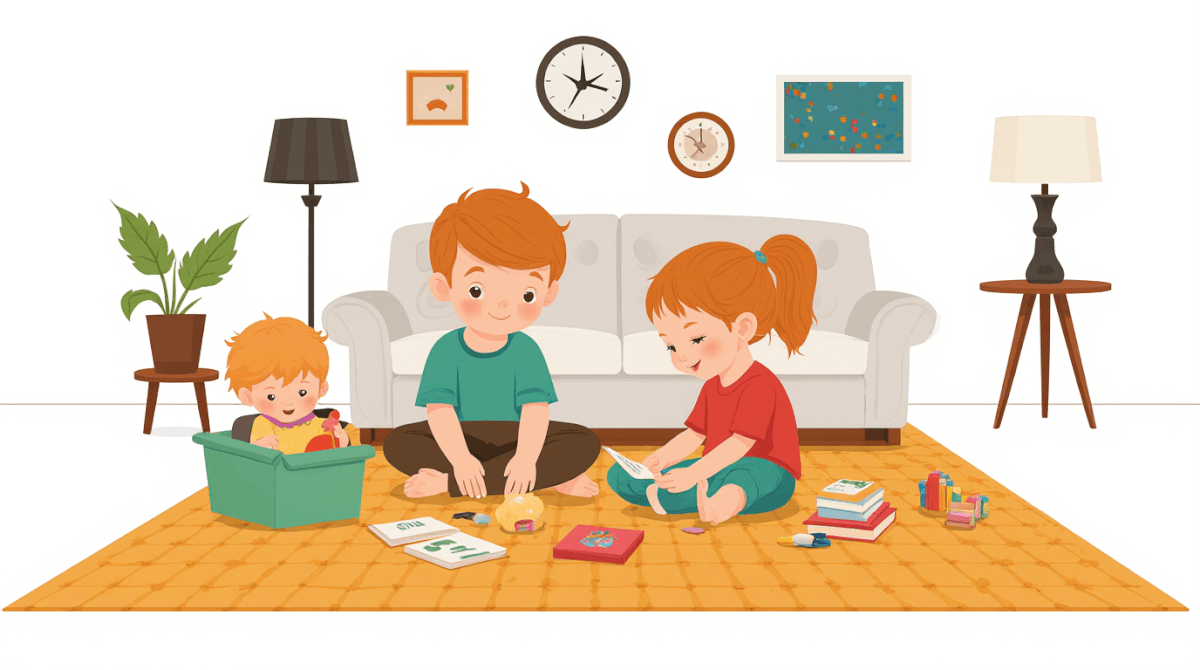
Small interactions matter profoundly in childhood because they serve as the building blocks of a child’s social-emotional development, influencing their ability to form relationships, manage emotions, and navigate the world around them. These interactions are not just fleeting moments but powerful tools that shape a child’s early experiences, which can have lasting effects on their overall well-being and future interactions.
Consider the scenario where two children are playing with toys in a classroom setting. When one child shares a toy or shows kindness to another by offering help, these small interactions create an environment of empathy and cooperation. Such exchanges are critical because they teach children about social norms, such as sharing and caring for others. These early experiences are embedded into the child’s developing brain, laying the groundwork for future social competencies.
Research in psychology has shown that these interactions can significantly influence a child’s emotional intelligence. Emotional intelligence encompasses the ability to understand one’s own emotions and those of others, express feelings appropriately, and regulate one’s behavior based on the situation at hand. When a teacher or caregiver helps a child name their feelings (“You seem upset because you dropped your coloring book”), they are teaching the child about emotional awareness. Over time, as these interactions accumulate, children develop better self-regulation skills and become more adept at managing their emotions in various contexts.
Small interactions provide opportunities for children to learn about trust and reciprocity. When a child consistently receives kindness from others, they begin to associate positive social experiences with cooperation and sharing. This can lead to the development of secure attachments—a bond between a child and caregiver that is characterized by mutual affection and consistent responsiveness. Secure attachments are vital because they provide a stable base from which children can explore their environment and form future relationships.
The mechanisms through which these interactions affect development are complex but crucial. Firstly, they reinforce positive behaviors through immediate reinforcement. When a child shares a toy, the act of sharing is acknowledged and appreciated by peers or adults, creating a positive feedback loop that encourages more pro-social behavior in the future. This is similar to how learning works—children are more likely to repeat actions if those actions lead to positive outcomes.
Secondly, these interactions allow children to practice social skills in real-time, making it easier for them to understand and navigate complex social dynamics later on. A child who frequently plays with others learns to take turns, negotiate play scenarios, and resolve conflicts peacefully. These skills are fundamental not only for academic success but also for building meaningful relationships throughout life.
Thirdly, small interactions contribute to the formation of mental models about how to interact with others. Through repeated exposure to different social situations, children develop schemas—mental frameworks that guide their behavior in new or unfamiliar settings. A child who has experienced numerous instances of sharing toys may form the schema that sharing is generally beneficial and appreciated by others.
Negative interactions can also have significant impacts on development, albeit often in more subtle ways. A child who frequently experiences bullying or exclusion might develop schemas that suggest social relationships are inherently dangerous or unattainable. This can lead to a decrease in self-esteem and difficulties forming healthy attachments later in life.
The environment plays a crucial role in shaping these interactions. A classroom where teachers model empathy and kindness sets the stage for positive social interactions among students. An environment characterized by chaos and unpredictability might limit opportunities for meaningful exchanges, thereby stunting emotional and social growth. The quality of relationships formed with caregivers—whether they are parents, guardians, or educators—is also pivotal because these relationships provide a template for how to form and maintain healthy interpersonal connections.
Small interactions in childhood matter profoundly as they serve as the foundation upon which more complex social and emotional skills are built. These exchanges not only teach children about societal norms and expectations but also shape their ability to form secure attachments and navigate social environments effectively. By fostering a supportive environment rich with positive and meaningful interactions, we can ensure that children develop into well-adjusted adults capable of forming fulfilling relationships throughout their lives.
In the context of broader social and cultural contexts, these small interactions are not isolated incidents but part of a larger tapestry of influences that shape a child’s world view. In collectivist cultures where group harmony is valued, children may learn different social norms compared to individualistic societies where self-expression is emphasized. Understanding these nuances can help educators and caregivers create environments that are sensitive to cultural differences while still promoting positive interactions.
The significance of small interactions in childhood cannot be overstated. They serve as the cornerstone for developing social-emotional competencies and setting a child on a path towards successful interpersonal relationships. By recognizing the importance of these interactions, we can work collectively to create environments that nurture not only individual development but also a sense of community and cooperation among children from an early age.
Related Reading
– Lev Vygotsky — Mind in Society
– Carol Gilligan — In a Different Voice


Be First to Comment