
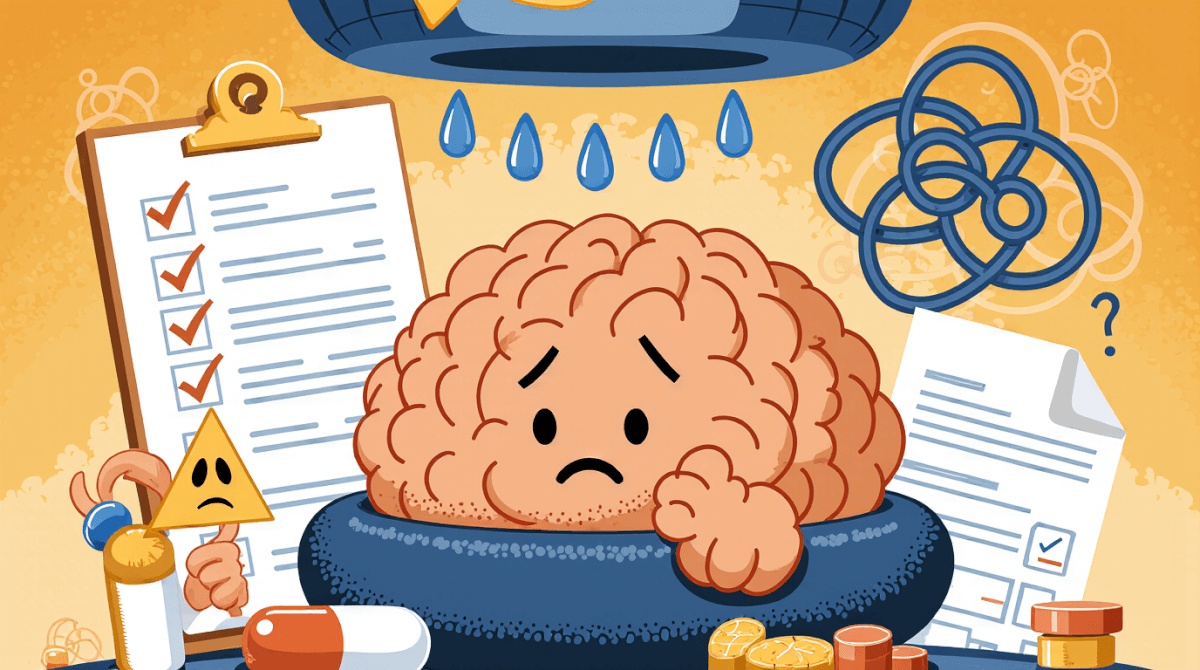
There are moments when something feels different inside.
Not dramatic at first.
Not catastrophic.
Just… heavier.
Thoughts become harder to quiet.
Energy becomes harder to access.
Simple tasks feel unusually difficult.
Sometimes people try to push through it.
Sometimes they blame themselves.
Sometimes they pretend nothing is happening.
But just like the body can become ill, the mind can struggle.
And needing help does not mean weakness.
It means you are human.
Mental Health Is Part of Overall Health
The brain is an organ.
The mind is a lived experience.
When either becomes dysregulated, life feels distorted.
Mental health challenges are not imaginary.
They are not character flaws.
They are not moral failures.
They often involve complex interaction between:
-
Biology
-
Environment
-
Stress
-
Trauma
-
Thought patterns
-
Social isolation
Understanding this reduces unnecessary shame.
No one chooses to experience persistent anxiety.
No one decides to feel empty.
No one prefers exhaustion over peace.
When the mind struggles, it is not a personal defect.
It is a signal.
Depression: More Than Sadness
Depression is often misunderstood as simple sadness.
It can include sadness — but it often includes much more:
-
Loss of motivation
-
Emotional numbness
-
Difficulty concentrating
-
Changes in sleep
-
Loss of interest in things once enjoyed
-
Persistent fatigue
Sometimes it feels like moving through fog.
Sometimes it feels like nothing matters.
Telling someone to “just think positive” misunderstands the depth of the experience.
Depression affects both brain chemistry and mental interpretation.
It requires understanding — not dismissal.
Anxiety: When the Alarm System Won’t Turn Off
Anxiety is part of normal human survival.
It protects us from danger.
But when the nervous system remains on high alert without real threat, life becomes exhausting.
Racing thoughts.
Tight chest.
Restlessness.
Constant anticipation of worst-case scenarios.
Anxiety is not weakness.
It is an overactive alarm system.
Learning regulation skills, seeking therapy, or sometimes medical support can help calm that system.
The goal is not to eliminate emotion.
It is to restore balance.
Trauma and Its Echo
Past experiences — especially painful ones — can leave deep neurological and emotional imprints.
Trauma is not only about extreme events.
It can include repeated emotional neglect, chronic instability, or long-term stress.
The brain adapts to survive.
But those adaptations can later create patterns of hypervigilance, avoidance, or emotional shutdown.
Healing does not erase history.
It reshapes response.
And healing often requires support.
The Courage to Seek Help
One of the hardest steps in mental health recovery is acknowledging the need for help.
Pride may resist.
Fear may whisper.
Stigma may discourage.
But reaching out — whether to a therapist, doctor, trusted friend, or support group — is an act of strength.
It says:
“I recognize something is not aligned.”
“I care enough about my life to address it.”
Support is not surrender.
It is strategy.
Therapy and Professional Support
Therapy provides structured space to explore patterns.
It helps individuals:
-
Identify distorted thinking.
-
Process past experiences.
-
Develop coping strategies.
-
Improve emotional regulation.
-
Rebuild internal stability.
For some, medication may also play a role.
There is no universal formula.
The path depends on the individual.
The goal is not perfection.
It is functionality and relief.
You Are Not Your Diagnosis
If someone receives a diagnosis, it can feel overwhelming.
But a diagnosis describes patterns.
It does not define identity.
You are not anxiety.
You are not depression.
You are not trauma.
You are a person experiencing a challenge.
Language matters.
When we separate identity from condition, hope becomes possible.
Small Steps Matter
Recovery is rarely instant.
It often begins with small, consistent steps:
-
Maintaining basic routines.
-
Moving the body gently.
-
Reaching out instead of isolating.
-
Limiting overwhelming input.
-
Practicing grounding techniques.
Progress may feel slow.
But slow progress is still progress.
Compassion Toward Yourself
Many people struggling mentally add an extra burden — self-criticism.
“I should be stronger.”
“I shouldn’t feel this way.”
“Others have it worse.”
Comparison rarely heals.
Compassion does.
Treating yourself with the same patience you would offer a friend creates internal safety.
Healing requires safety.
Hope Is Not Naive
Mental health challenges can feel permanent in dark moments.
But the brain is adaptable.
The mind is capable of growth.
Support systems exist.
Change may require time.
It may require effort.
It may require vulnerability.
But improvement is possible.
Neural pathways can shift.
Thought patterns can soften.
Emotional intensity can regulate.
Asking for help is not the end of independence.
It is the beginning of restoration.
When the mind needs help, it deserves attention — not shame.
Struggle does not erase your value.
It does not diminish your intelligence.
It does not cancel your strength.
It simply means something inside requires care.
And care is not weakness.
It is wisdom.


Be First to Comment