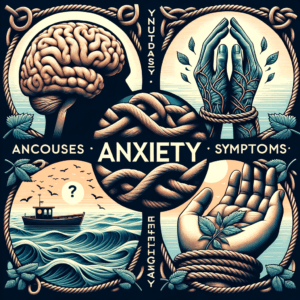
Anxiety is a complex emotional state that involves feelings of unease or worry about future events, often accompanied by physical sensations such as rapid heartbeat and sweating. Understanding the psychological underpinnings of anxiety is crucial for managing its impact on daily life. At its core, anxiety stems from an overactive mind that tends to focus on worst-case scenarios and uncertainties.
Imagine walking down a busy street at night; your heart might start racing as you notice the dim lighting and passing shadows. Your thoughts may jump ahead to what could go wrong—a mugging or getting lost in unfamiliar surroundings—and these concerns can spiral into overwhelming anxiety, even though the immediate risk is likely minimal. This pattern of thinking reflects how anxious thoughts often develop: they are exaggerated interpretations of potential threats.
Anxiety feeds on uncertainty and unpredictability, making it particularly challenging to manage during periods of significant change, such as moving to a new city or starting a new job. These transitions can trigger feelings of vulnerability and insecurity, leading the mind to construct hypothetical negative outcomes that feel very real in the moment. As these fears take hold, they can alter your behavior in ways that reinforce anxiety rather than alleviate it.
If you become anxious about public speaking due to fear of embarrassment or criticism, this may lead you to avoid situations where you might have to speak up in a meeting or attend networking events. Over time, avoidance reinforces the belief that these scenarios are too dangerous to handle, deepening your anxiety and limiting your opportunities for growth and social interaction.
Understanding how anxious thoughts develop is crucial because it allows us to recognize when we’re engaging in such patterns. When you catch yourself imagining worst-case scenarios, it’s an opportunity to step back and question whether those fears are grounded in reality or merely products of a heightened state of worry. This moment of awareness can serve as the beginning of taking control over your anxiety.
One effective way to manage anxious thoughts is through cognitive restructuring—a process where one challenges and reevaluates distorted thinking patterns. Instead of accepting fearful thoughts at face value, you might ask yourself how likely these scenarios truly are and what evidence supports or refutes them. This approach can help shift from a mindset dominated by fear to one characterized by curiosity and problem-solving.
Another strategy involves focusing on the present moment rather than projecting into an uncertain future. Techniques like mindfulness meditation encourage practitioners to observe their thoughts without judgment, allowing anxious feelings to pass without escalating into full-blown panic attacks. By training your mind to stay grounded in the here-and-now, you can reduce the grip anxiety has over your life.
Physical activities such as regular exercise play a vital role in managing anxiety. Engaging in moderate aerobic exercises like jogging or cycling stimulates the release of endorphins—chemicals that enhance mood and alleviate stress. Exercise also helps regulate sleep patterns and boosts energy levels, both of which are often disrupted by chronic anxiety.
In addition to these self-help strategies, maintaining open communication with friends, family, and healthcare providers is essential for addressing anxiety effectively. Sharing your struggles and concerns openly can reduce the isolation that often accompanies anxiety disorders. It’s important to remember that talking about what you’re experiencing doesn’t make it worse; rather, it provides a space for empathy and understanding.
Building confidence also plays a significant role in overcoming anxiety. Engaging in activities where you feel competent and valued can foster self-esteem and resilience against anxious thoughts. Whether this means pursuing hobbies, taking on new challenges at work, or participating in social groups that align with your interests, these experiences contribute to a more positive outlook on yourself.
Managing anxiety requires patience and persistence. It’s not about eradicating all anxious feelings but rather developing healthier ways of coping with them so they don’t dominate your life. By integrating various methods—such as cognitive restructuring, mindfulness practices, physical exercise, open communication, and confidence-building activities—you can create a robust defense against the grip of anxiety.
Anxiety is a common human experience that affects millions worldwide, yet it need not define us or limit our potential. With understanding and effort, individuals can navigate through anxious episodes more effectively, leading to a richer, fuller life free from constant fear and worry.