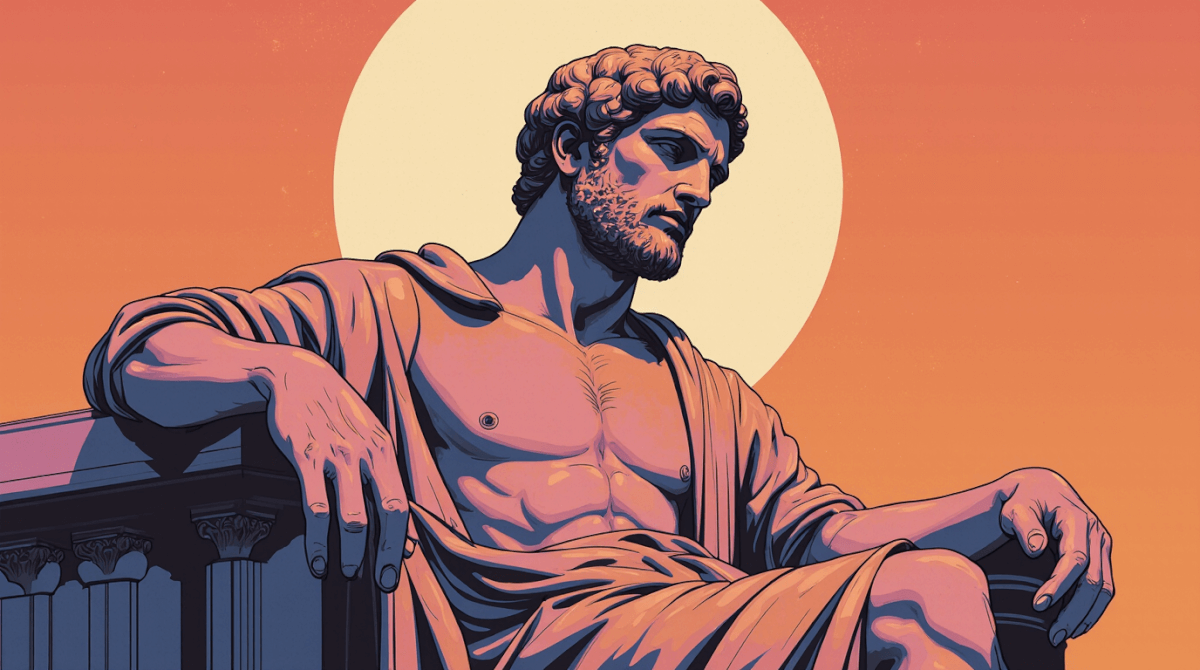
The journey of humanity is a quest for truth, an eternal search that has spanned countless generations and traversed varied landscapes of thought. This quest, rooted in the fundamental human desire to understand our existence, has led us through the ages, from the dawn of civilization to the present day. At its heart lies a simple yet profound question: What is truth, and how do we find it?
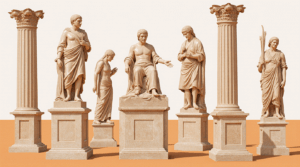
In ancient Greece, philosophers like Socrates, Plato, and Aristotle sought to uncover the essence of reality by examining the nature of knowledge and belief. They posited that true knowledge was not derived from external authorities but through the process of dialectic, or dialogue. Socrates famously claimed that “an unexamined life is not worth living,” suggesting that the pursuit of truth is essential for personal and societal well-being. Plato, introduced the concept of forms, suggesting that there exists a realm of perfect, unchanging truths beyond the physical world. Aristotle’s emphasis on empirical observation as a means to discover truth added a pragmatic dimension to philosophical inquiry.
The path to truth is not always straightforward. In many cultures and times, the search for truth has been clouded by religious and societal constraints. The medieval period in Europe, saw knowledge and truth heavily intertwined with the teachings of the Church. The authority of the Church was absolute, and any form of inquiry that challenged its teachings was met with suspicion and often persecution. This can be seen in the trial of Galileo, who was condemned for his support of heliocentrism, a view that contradicted the geocentric model favored by the Church. Here, the pursuit of scientific truth was met with resistance from religious orthodoxy, illustrating the complex interplay between truth and power.
In the Enlightenment, thinkers like René Descartes and John Locke sought to establish a foundation for knowledge independent of traditional authorities. Descartes famously declared “I think, therefore I am,” emphasizing the primacy of individual reason as a source of truth. Locke, meanwhile, argued that knowledge is derived from sensory experience, reinforcing the empirical approach to understanding reality. These philosophers laid the groundwork for modern scientific inquiry and secular thought, yet their work also introduced new challenges. The shift towards rationality and empiricism sometimes led to a devaluation of subjective experiences and emotions, suggesting that truth could be found only through cold, dispassionate reasoning.
The 19th and 20th centuries brought further complexities to the search for truth. Friedrich Nietzsche challenged traditional notions of morality and truth, proposing that they were mere constructs of power rather than objective facts. His assertion that “God is dead” reflected a broader skepticism towards the infallibility of established truths, highlighting the need for constant reevaluation of beliefs. This period also saw the rise of existentialism, with thinkers like Jean-Paul Sartre and Martin Heidegger questioning the nature of human existence and the possibility of absolute truth. Sartre famously stated that “existence precedes essence,” suggesting that individuals must create their own meaning in a world without inherent purpose.
In the latter part of the 20th century, postmodernism emerged as a philosophical movement that further challenged the notion of objective truth. Postmodern thinkers like Michel Foucault and Jacques Derrida emphasized the constructed nature of knowledge and the role of power dynamics in shaping our understanding of reality. They argued that there is no single truth but rather multiple, often conflicting perspectives, each influenced by historical, social, and cultural contexts. This perspective has had a profound impact on various fields, from literature to politics, forcing us to question the validity of absolute truths and consider the multiplicity of viewpoints.
The 21st century has brought new technological advancements that have further transformed our approach to truth. The rise of the internet and social media has facilitated the spread of information on an unprecedented scale, but it has also created new challenges in distinguishing between reliable and unreliable sources. Fake news, misinformation, and disinformation campaigns have become increasingly prevalent, complicating efforts to find truth in a digital age. Algorithms that recommend content based on user preferences can create echo chambers, reinforcing existing beliefs rather than fostering open-minded inquiry.
Scientific research has also faced new challenges. While the scientific method remains a powerful tool for uncovering truths about the natural world, the sheer volume of data and rapid pace of technological change have made it difficult to keep up with all advancements. This has led to concerns about reproducibility and the reliability of scientific findings. The replication crisis in fields like psychology and medicine highlights the need for rigorous standards and transparency in research practices.
In this context, the search for truth becomes more nuanced and complex. It is not just a question of discovering objective facts but also one of navigating the subjective experiences and perspectives that shape our understanding of reality. The philosopher Charles Taylor, in his work on pluralism, emphasizes the importance of recognizing and respecting different viewpoints as part of a broader quest for truth. He argues that a true understanding of reality requires engaging with diverse perspectives, acknowledging the validity of multiple truths within their respective contexts.
Yet, despite these challenges, the pursuit of truth remains a vital endeavor. It is through our ongoing search that we can continuously refine our understanding of the world and ourselves. The philosopher Martha Nussbaum suggests that the search for truth is also an ethical imperative, arguing that it involves caring about others and seeking to understand their experiences. In this sense, the quest for truth is not just a cognitive exercise but also a moral one.
The search for truth throughout history is a multifaceted endeavor that has evolved alongside human civilization. From the philosophical inquiries of ancient Greece to the complex challenges of the modern era, the nature of truth and our methods for seeking it have continually changed. As we move forward into an increasingly interconnected and technologically advanced world, the quest for truth will undoubtedly continue to take new forms. The questions of what constitutes truth and how we can best find it remain at the heart of human inquiry, guiding us in our quest for knowledge and understanding.