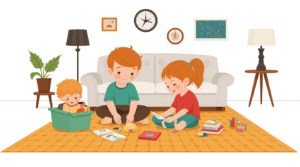
In the intricate tapestry of family dynamics, calmness emerges as a subtle yet powerful thread that weaves through the experience of parenting. This state of serene presence and emotional steadiness plays an indispensable role not only in maintaining harmony within the household but also in fostering psychological resilience and emotional intelligence in children. Yet, the pursuit of this calm is far from straightforward; it harbors layers of complexity that challenge even the most dedicated parents.
At its core, the concept of calmness in family dynamics is often associated with an outwardly tranquil demeanor—perhaps a mother gently reading to her child or a father patiently listening as his daughter shares her day. Beneath this surface lies a deeper psychological dimension where the subtleties and nuances of emotional regulation intertwine with the broader context of familial relationships.
The first tension that emerges is between the idealized image of calmness and its practical implementation. Parents often feel pressured to present themselves as perpetually serene figures, embodying the archetype of perfect parenting. This expectation can be overwhelming; parents may struggle to maintain composure in moments of stress or adversity, leading them to question their own capabilities and self-worth.
Consider a common scenario where a child exhibits challenging behavior—perhaps throwing a tantrum over a minor issue such as being asked to clean up toys. The parental response is often emotional and reactive, stemming from the immediate need for control and order in the household. In this moment of heightened tension, maintaining calmness can feel like an impossible task. Parents may find themselves oscillating between frustration, anger, or even self-doubt about their ability to handle such situations.
Yet, it is precisely these moments that highlight why calmness matters so profoundly. Research suggests that a parent’s emotional state significantly influences the child’s developing psyche (Gross & John, 2003). A consistently calm and emotionally present parent can serve as a stabilizing force in a child’s life, providing a sense of security and predictability amidst life’s uncertainties.
The act of maintaining calmness is not merely about external behavior but also involves internal emotional regulation. It requires parents to be aware of their own emotions and to manage them effectively without projecting undue stress or negativity onto their children. This process of self-awareness and emotional intelligence can be arduous; it demands introspection, patience, and continuous learning.
Another layer of complexity arises from the interplay between personal values and practical realities in parenting. A parent may deeply believe in fostering calmness as an essential virtue but find that this belief conflicts with their inherent personality traits or external circumstances. A naturally anxious individual might struggle to remain composed during high-stress situations, while financial constraints or work pressures can exacerbate emotional turbulence.
These internal and external factors create a dynamic tension where the pursuit of calmness is both aspirational and challenging. The question then becomes: How does one navigate this complexity without succumbing to feelings of inadequacy? The answer lies in recognizing that perfection is not the goal; instead, it is about striving for ongoing improvement through self-compassion and understanding.
To illustrate further, imagine a parent who recognizes their tendency towards quick emotional reactivity. They might begin by setting small, achievable goals such as taking deep breaths before responding to a child’s outburst or practicing mindfulness techniques during quiet moments. Over time, these incremental steps can build a stronger foundation of emotional regulation and calmness.
It is essential not to view this journey as linear or straightforward. The path towards greater calmness involves continuous self-reflection and adaptation. There will be setbacks and times when old habits resurface; the key lies in maintaining a non-judgmental attitude toward oneself. By cultivating self-compassion, parents can approach their own emotional challenges with kindness and understanding, fostering resilience rather than guilt.
It is crucial to recognize that every family dynamic is unique, influenced by diverse factors such as cultural background, socioeconomic status, or individual psychological profiles. What works for one household may not be applicable in another; thus, the concept of calmness must remain flexible yet grounded in core principles like emotional presence and stability.
While the role of calmness in family dynamics appears simple on the surface—merely a state of tranquility—it harbors layers of psychological complexity. The journey towards achieving this balance involves navigating internal contradictions between idealism and practicality, personal values and external pressures. By embracing self-compassion, setting realistic goals, and recognizing that each familial context is distinct, parents can cultivate an environment where calmness thrives—not as a static achievement but as a dynamic process of growth and understanding.
This exploration into the psychology of calmness in family dynamics reveals the intricate interplay between internal states and external behaviors. It underscores the importance of emotional presence and regulation not only for maintaining household harmony but also for nurturing psychological resilience and emotional intelligence in children. While the path may be challenging, it is ultimately a journey worth embarking upon—a commitment to fostering an environment where calmness can become a sustaining force within family dynamics.