
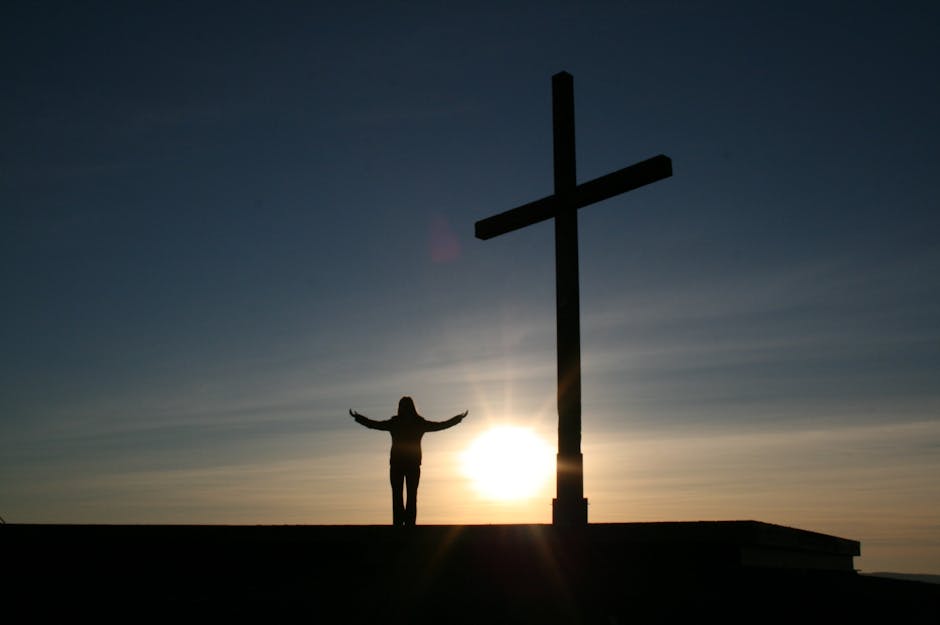
Long before modern institutions, before technology, before written law, human beings looked at the sky and asked questions.
Why are we here?
Who created this?
What happens after death?
Is there something greater than us?
Religion was not born from weakness.
It was born from wonder — and from fear — and from the need to understand existence.
Across civilizations, people constructed systems of belief to interpret suffering, morality, destiny, and transcendence.
Religion became more than belief.
It became structure.
It shaped law.
It shaped culture.
It shaped identity.
It shaped history.
To understand religion is to understand one of the most powerful forces in human civilization.
Religion as Organized Meaning
At its core, religion provides a framework for meaning.
It answers foundational questions:
-
Where did we come from?
-
What is our purpose?
-
What is good?
-
What is evil?
-
What happens beyond death?
Unlike philosophy, which explores open inquiry, religion typically presents structured answers grounded in sacred texts, traditions, and authority.
This structure offers clarity.
It also creates boundaries.
Sacred Texts and Authority
Most religions rely on sacred writings, prophetic traditions, or divine revelation.
These texts provide:
-
Moral instruction
-
Historical narrative
-
Spiritual guidance
-
Ritual structure
Authority within religion often rests on interpretation — priests, scholars, leaders who mediate understanding.
Interpretation shapes practice.
Over time, traditions evolve while preserving core doctrines.
Religion becomes both stable and adaptive.
Community and Belonging
Religion is rarely isolated belief.
It creates community.
Shared worship, shared rituals, shared symbols — these reinforce collective identity.
Belonging strengthens faith.
Community provides:
-
Emotional support
-
Shared moral standards
-
Cultural continuity
-
Generational transmission of belief
For many, religion is not merely private conviction. It is communal identity.
Moral Structure and Law
Religion historically influenced legal systems.
Concepts like justice, responsibility, compassion, and accountability often trace roots to religious ethics.
Religious morality tends to anchor values in divine authority.
Right and wrong are not simply preferences — they are rooted in higher command.
This provides strong ethical foundation, though it also creates tension when interpretations differ.
Ritual and Symbolism
Religion is not only intellectual. It is experiential.
Rituals mark life stages — birth, marriage, death.
Symbols represent transcendent ideas.
Ceremony reinforces meaning through repetition.
These practices create rhythm and continuity.
They connect the individual to something perceived as eternal.
Faith and Doubt
Religion requires faith.
Faith involves trust — not necessarily blind belief, but confidence in unseen reality.
Yet doubt also exists within religious life.
Questioning does not always destroy belief. Sometimes it deepens it.
Religious traditions often wrestle with suffering, injustice, and unanswered prayer.
Faith persists not because all questions disappear, but because conviction remains stronger than uncertainty.
Religion and Conflict
Religion has inspired profound compassion and tragic conflict.
It has motivated charity, sacrifice, and moral reform.
It has also been used to justify division and power struggles.
The power of religion lies in its depth of conviction.
Deep conviction can unify or divide, depending on how it is exercised.
Personal Identity and Religion
For many, religion forms the core of identity.
Belief shapes worldview.
Worldview shapes decision-making.
Decision-making shapes life direction.
Religious identity often influences:
-
Relationships
-
Career choices
-
Moral boundaries
-
Social alignment
It becomes more than doctrine. It becomes orientation.
Religion in a Modern World
In contemporary society, religion exists alongside secularism, pluralism, and scientific advancement.
Some see tension.
Others see coexistence.
Religion today adapts to new cultural contexts while preserving foundational claims.
Its relevance depends not only on tradition, but on how it addresses modern questions.
The Enduring Search
Whether embraced or rejected, religion remains central to human history.
Even those who distance themselves from organized religion often wrestle with its core questions.
The search for transcendence does not disappear easily.
Religion represents humanity’s structured attempt to reach beyond the visible.
It organizes belief.
It defines sacred space.
It anchors moral conviction.
And whether one participates within it or observes from outside, its influence continues to shape societies and individuals alike.


Be First to Comment