
In the cacophony of our modern lives, the practice of stillness emerges as an urgent necessity. We live in a world that is perpetually moving—social media feeds scrolling, emails pinging, notifications flashing, and minds racing with to-do lists and endless possibilities. Amidst this ceaseless activity, finding inner peace becomes not just a luxury but a profound act of self-care and spiritual exploration.
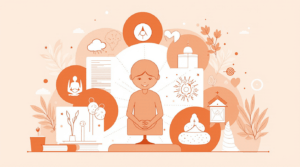
Stillness, at its core, is the practice of pausing. It is the quiet moment when one steps away from the constant whirlwind of external stimuli to listen to the whispers of their own heart. This practice transcends mere physical silence; it demands a deep engagement with the inner world—a place where thoughts, emotions, and sensations intermingle in intricate patterns.
One cannot overstate the psychological importance of this pause. In our quest for productivity and success, we often overlook the emotional toll that comes from non-stop mental activity. The mind, like any muscle, benefits from rest. When we make time to sit with ourselves without distraction, we open up space for self-reflection, which is crucial in understanding the depths of our own being.
The act of stillness invites a confrontation with one’s inner landscape. It exposes the complexity and often, the uncertainty that lies beneath the surface of daily life. Certainties fade as we delve into the unknowns of our thoughts and feelings. This tension between certainty and uncertainty is a fundamental part of human experience, reflecting both our desire for clarity and our acknowledgment of mystery.
In the stillness, one might encounter moments of profound doubt alongside periods of unwavering trust. Doubt can be unsettling, even paralyzing, as it challenges long-held beliefs and assumptions. Yet, within this turbulence, there lies an opportunity for growth and transformation. Trust emerges not merely from faith in external entities but from a deep-seated belief in the inherent goodness and resilience of one’s own soul.
The practice of stillness also serves as a bridge between presence and absence. On the one hand, it requires being fully present with oneself—engaging deeply with current thoughts and sensations. On the other, it opens up space for absence—a letting go of all that is not essential in the moment. This balance teaches us to appreciate both the richness of life’s fullness and the beauty found in simplicity.
Stillness highlights the tension between control and surrender. In our culture, there is a relentless drive to achieve mastery over one’s surroundings and circumstances. The practice of stillness gently nudges us toward recognizing that not everything can be controlled. It teaches us to trust in processes beyond our immediate grasp—both in life’s successes and failures.
These inner tensions—between certainty and uncertainty, presence and absence, control and surrender—are universal experiences shared by all humans. Yet, they are often overlooked or ignored in the rush of daily life. The practice of stillness offers a sanctuary where these tensions can be faced directly, providing a space for healing and transformation.
Religion, while often associated with organized institutions, also has its roots deeply embedded in this inner experience. For many, religious practices such as prayer, meditation, or reflection on sacred texts serve as avenues to connect more closely with one’s own spirituality. These practices, though rooted in collective traditions, ultimately offer a personal space for introspection and growth.
In exploring the practice of stillness, we uncover layers of meaning that extend beyond mere surface-level activities. It becomes an invitation to engage deeply with the fabric of our being—our emotions, thoughts, values, and aspirations. This inner exploration can lead to greater clarity about who we are and what matters most in life.
The practice of stillness is not just a means to achieve peace; it is a gateway to understanding ourselves more profoundly. In the quiet moments of solitude, we may discover layers of complexity that were previously hidden beneath the noise of external demands. This inner journey enriches our lives, making us more whole and centered amidst the chaos of existence.
In embracing stillness, we honor the wisdom within us all—the capacity for deep reflection, introspection, and spiritual growth. It is a reminder to pause, breathe, listen, and let go—embracing the full spectrum of human experience with openness and grace.
To explore the broader framework behind this topic, read
Living Your Beliefs: When Faith and Spiritual Awareness Meet Daily Life.
Related Reading
– Deepak Chopra — The Seven Spiritual Laws of Success
– Ken Wilber — A Brief History of Everything


Be First to Comment