
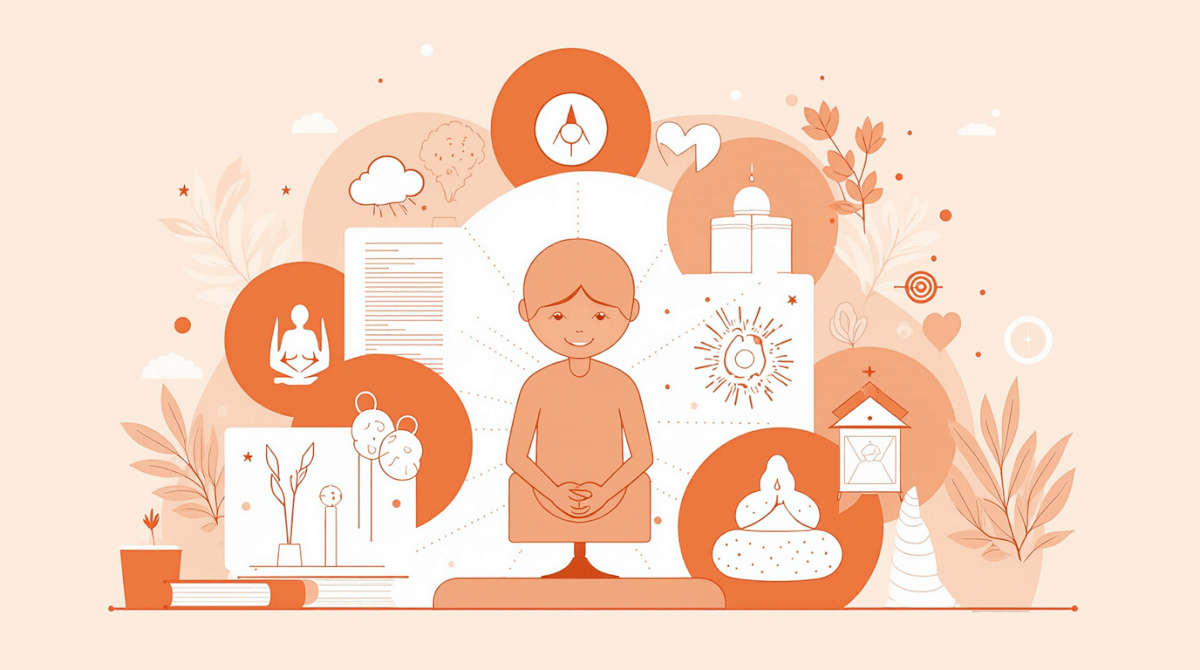
In the quiet moments when we turn inward, seeking solace from the chaos around us, spiritual centeredness emerges as a profound and personal experience. It is not about adherence to doctrine or belonging to an organized faith but rather an inner quest for meaning that transcends the mundane. This search often begins in solitude, where the clamor of external demands gives way to the whispering echoes of our own thoughts and emotions.
At its core, spiritual centeredness is a journey toward coherence—an effort to integrate various aspects of our being into a harmonious whole. This integration is not merely intellectual; it encompasses the emotional and physical realms as well. We strive for balance between our inner world and outer actions, recognizing that true peace lies in aligning one’s spirit with one’s values and intentions.
Yet, this path is not without its challenges. Inner tensions often arise when we confront doubts about our beliefs or experiences. The tension between certainty and uncertainty can be particularly unsettling. On the one hand, there are moments of clarity where everything seems to make sense, where a sense of purpose and direction guides us forward. But these periods of clarity are often punctuated by deeper questions that shake our foundations—questions like “What is my purpose?” or “Do I truly know anything?” These uncertainties do not diminish the value of spiritual centeredness; rather, they highlight its complexity and the dynamic nature of personal belief.
The presence and absence in one’s life also play pivotal roles. A sense of presence can be felt when we are fully engaged in the moment—whether it is through mindfulness practices or simply being aware of our surroundings without judgment. This presence can bring a deep peace, grounding us in the reality of now. There are times when this presence feels elusive, perhaps due to external pressures or internal turmoil. In these moments, spiritual centeredness becomes an act of surrender rather than control—a willingness to let go and trust that even absence has its own wisdom.
Doubt and trust coexist in a delicate dance within our spiritual journeys. Doubts can be paralyzing, but they also serve as catalysts for deeper reflection and growth. They force us to question the status quo and seek new understandings. Trust, provides the foundation upon which we build our beliefs. It is a leap into the unknown, an act of faith that transcends rational explanations. Both doubt and trust are necessary components of spiritual centeredness; they challenge us to remain open to new experiences while maintaining a core sense of integrity.
Belief systems shape identity, behavior, community, and moral thinking in profound ways. They offer frameworks within which we can make sense of the world and our place in it. For many, these systems provide comfort and a sense of belonging. Spiritual centeredness also involves questioning these frameworks, recognizing that no single belief system fully encapsulates the entirety of human experience. It is an ongoing process of negotiation between personal beliefs and external influences, striving for balance without becoming overly rigid.
The complexity within spiritual centeredness lies in its multifaceted nature—embracing both certainty and uncertainty, presence and absence, doubt and trust. These tensions are not merely obstacles but integral parts of the journey. They teach us to navigate life’s uncertainties with grace and resilience, finding meaning even in moments of doubt or discomfort.
Spiritual centeredness is a deeply personal experience that transcends institutional frameworks. It is an ongoing process of integrating our inner world with external realities, navigating tensions between certainty and uncertainty, presence and absence, and doubt and trust. This journey, marked by its complexity and nuance, invites us to explore the depths of our own souls and find meaning in the quiet moments of introspection.
To explore the broader framework behind this topic, read
Living Your Beliefs: When Faith and Spiritual Awareness Meet Daily Life.


Be First to Comment