
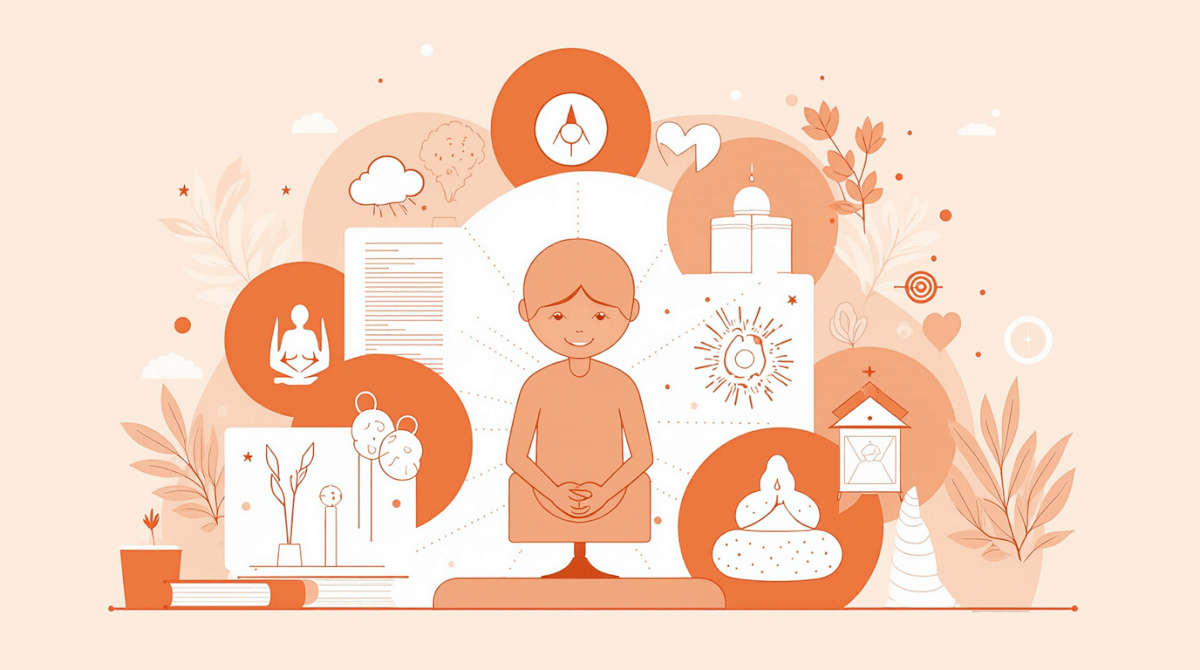
In the quiet moments when the world quiets down, there is an invitation to explore the inner landscape that defines us beyond the visible and tangible aspects of our lives. This exploration often leads to a quest for inner harmony—a state where one’s mind, heart, and soul are in consonance with each other and perhaps with something greater than oneself. Spirituality, in this context, becomes a personal search for meaning, transcendence, or depth that goes beyond the material and the mundane.
Inner harmony is not merely an absence of conflict; it is a dynamic state where conflicting emotions, thoughts, and beliefs coexist peacefully within one’s inner self. It involves navigating through the tension between certainty and uncertainty, presence and absence, control and surrender, doubt and trust, finding balance in these opposites rather than choosing sides.
The psychological significance of such an exploration cannot be overstated. In our daily lives, we are bombarded with external stimuli that can disrupt our inner peace. The constant noise, the relentless pace of modern life, and the pressures to conform or succeed—all contribute to a state of mental and emotional turmoil. Inner harmony becomes a sanctuary, a place where we can retreat from these storms and find solace.
Belief systems play a crucial role in shaping one’s sense of identity, behavior, community, and moral thinking. For many, religion offers a structured framework through which they make sense of the world and their place within it. It provides rituals and practices that help anchor them in times of uncertainty, giving meaning to both joyous and sorrowful moments. Yet, spirituality is not confined to organized religion alone. It can be found in various forms—whether it be meditation, nature walks, or simple acts of kindness.
The complexity of human experience is reflected in the diversity within belief systems. While some find solace in definitive answers, others embrace the uncertainty and ambiguity that come with exploring spiritual truths. This complexity is not a barrier but an invitation to dive deeper into one’s inner world. The tension between faith and doubt can lead to a rich internal dialogue where one learns to live with both—knowing that both are integral parts of the human experience.
One might ask, why does spirituality matter if we live in a secular age? The answer lies in the profound impact it has on our emotional well-being. When we engage deeply with spiritual practices, whether through prayer, contemplation, or simply being mindful, we create an environment where our inner selves can flourish. This isn’t to say that one needs to believe in anything supernatural; rather, it is about recognizing and nurturing the deeper aspects of human consciousness.
For many, spirituality serves as a bridge between the known and unknown, providing a sense of continuity amidst change. It helps us understand that life’s uncertainties are not just challenges but opportunities for growth. The act of surrendering control can be incredibly liberating, allowing one to let go of rigid expectations and embrace the fluidity of existence.
In moments of solitude, when we are alone with our thoughts, we have the opportunity to reflect on what truly matters. This introspection often leads us back to a place of inner harmony—a state where the voice of doubt and the call of trust resonate together in harmony. It is not about silencing one’s doubts but learning to hold them alongside moments of clarity and certainty.
Spirituality as an inner experience is about finding balance within oneself. It involves recognizing that every person’s journey is unique and that there are no shortcuts to true harmony. The path may be marked with challenges, but it also promises profound rewards—a deeper understanding of self and a more peaceful relationship with the world around us.
The pursuit of inner harmony through spirituality invites us to explore the depths within ourselves. It is an ongoing process, one that requires patience, curiosity, and courage. As we journey inward, we uncover layers of meaning and connection that enrich our lives in ways that transcend the ordinary.
To explore the broader framework behind this topic, read
Living Your Beliefs: When Faith and Spiritual Awareness Meet Daily Life.



Be First to Comment