
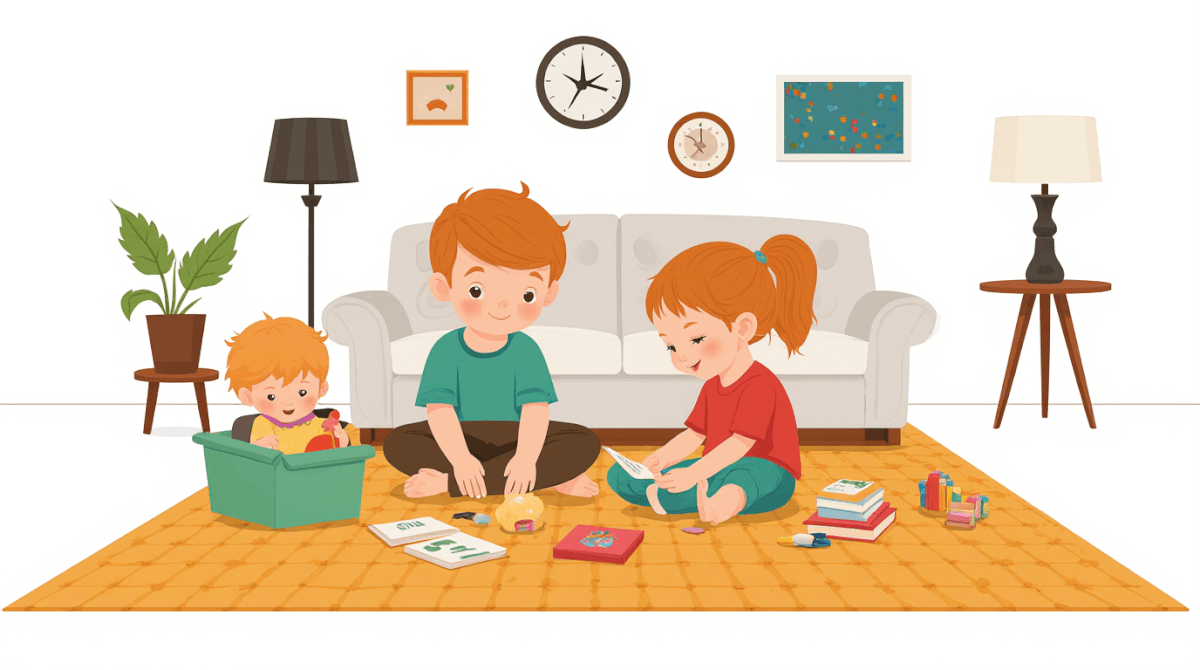
Confidence is a complex psychological construct that significantly impacts how individuals perceive themselves and their abilities. It influences everything from academic performance to social interactions and career success. The gentle structure provided by early childhood environments plays a pivotal role in shaping confidence, particularly through the mechanisms of consistency, predictability, and supportive guidance.
In many families, there exists a balance between allowing children freedom to explore and offering structured routines that provide a sense of security. A gentle structure is not rigid or restrictive but rather flexible enough to accommodate a child’s interests while maintaining essential boundaries. A family might establish a regular bedtime routine that includes reading stories, which helps the child understand the predictable nature of their day. This predictability in turn fosters a secure environment where children can anticipate what will happen next, reducing anxiety and increasing their sense of control.
The consistency provided by gentle structure is crucial for confidence building. When routines are consistently followed, children learn to trust that they will be met with support and guidance. If a child knows that every Saturday morning involves playing in the park, they can look forward to this activity with anticipation, knowing that it will happen regardless of circumstances. This reliability forms a foundation upon which confidence can grow.
Gentle structure often includes supportive guidance rather than overbearing control. Parents or caregivers who provide gentle yet firm direction help children develop problem-solving skills and self-regulation abilities. When faced with choosing between multiple activities after school, a parent might guide the child by suggesting options and allowing them to make a decision. This process teaches the child to evaluate their preferences and consider consequences, fostering independence and boosting confidence in their decision-making abilities.
One specific mechanism through which gentle structure influences confidence is through the creation of a secure base from which children can explore. The concept of a secure base was first introduced by Mary Ainsworth, who conducted attachment studies showing that securely attached children use their caregiver as a safe haven when exploring their environment. Similarly, in the context of gentle structure, a child’s home or classroom becomes a secure base where they feel safe to take risks and try new things without fear of failure.
Consider a preschool setting where children are encouraged to participate in arts and crafts activities but also given time to explore independently. The teacher might observe and guide the children, offering help when needed but allowing them to make their own choices about what materials to use or how to proceed with projects. This approach nurtures confidence by creating an environment where children feel valued for their individuality and contributions.
Additionally, gentle structure supports emotional regulation, which is a key component of confidence. When children experience consistent routines and supportive interactions, they develop the ability to manage their emotions more effectively. If a child is feeling upset about something that happened at school, a parent’s calm response and gentle guidance in discussing feelings can help the child process emotions healthily. This emotional intelligence fosters resilience and self-assurance.
Environments lacking consistent structure can have detrimental effects on confidence. Children who do not experience predictable routines or supportive guidance may struggle with anxiety, uncertainty, and lack of direction. A family that frequently changes bedtime schedules or does not provide clear rules might leave children feeling uncertain about their day-to-day experiences. This unpredictability can lead to feelings of insecurity and undermine confidence in one’s ability to manage the world.
Gentle structure also promotes social competence, another critical aspect of confidence. Children who grow up in nurturing environments where they are encouraged to interact with others develop important social skills such as empathy, communication, and cooperation. A family that regularly engages in group activities like board games or community service projects helps children learn how to collaborate and contribute positively to social settings.
The gentle structure provided by early childhood environments significantly influences confidence development through mechanisms of consistency, predictability, supportive guidance, creation of secure bases, emotional regulation, and social competence. By fostering a nurturing and predictable atmosphere, caregivers can help children build strong foundations for self-assuredness that will serve them well throughout their lives.
References:
Ainsworth, M. D., & Bell, S. M. (1970). Attachment, temperament, and social behavior of one-year-olds in the strange situation. Child Development, 41(3), 587-607.
Goleman, D. (1995). Emotional Intelligence: Why It Can Matter More Than IQ. Bantam Books.



Be First to Comment