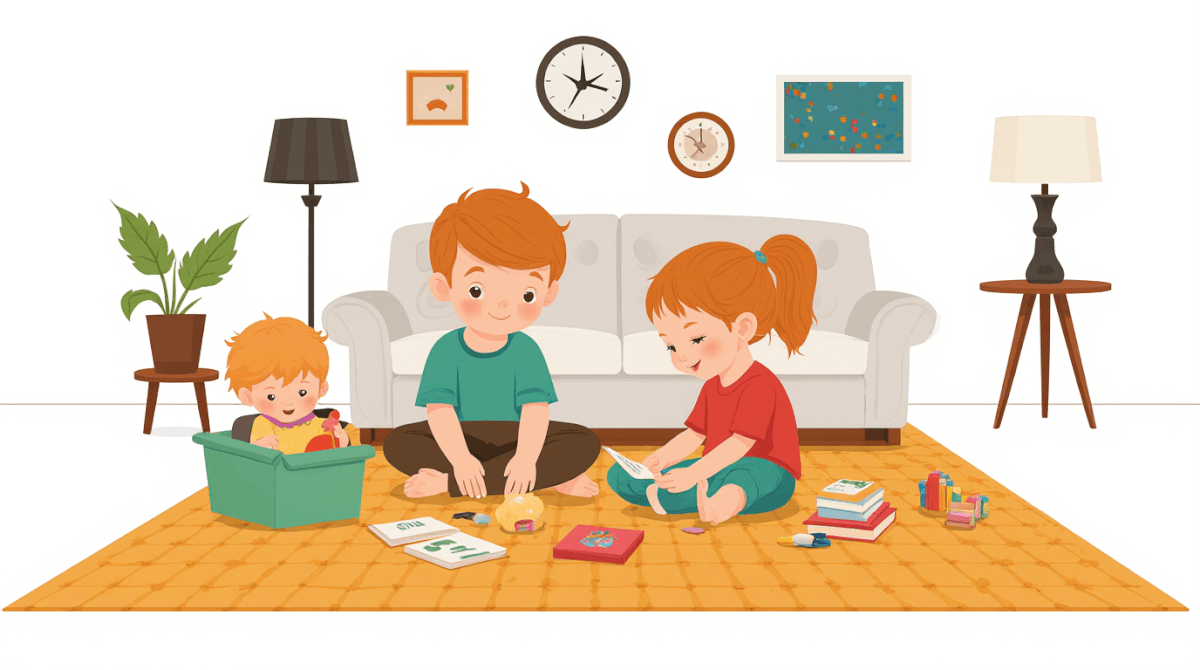
In a stable home environment, children observe patterns of behavior, communication, and emotional expression that become internalized as part of their personal narrative. A child who witnesses consistent and nurturing interactions between parents learns to associate stability with positive outcomes, thereby developing a secure base for exploration and social engagement. This secure base fosters a sense of trust and safety, which is crucial in forming healthy adult relationships. When a child consistently experiences support and validation from caregivers, they learn to interpret the world as a place where help and understanding are available, mirroring this sentiment in their adult relationships.
Instability in the family environment can lead to different developmental trajectories. Frequent changes in caregivers, erratic emotional responses, or inconsistent boundaries can create a sense of unpredictability that, over time, may erode a child’s sense of security. In such contexts, children might learn to prioritize self-protection and independence as survival mechanisms, often at the expense of developing trust and vulnerability in relationships. A child whose parent’s moods swing unpredictably might come to view others’ emotions as unpredictable and potentially harmful, leading them to remain guarded in adult interactions.
These early patterns of behavior and emotional responses, whether learned from stability or instability, are not static but rather dynamic processes that continually shape the individual’s worldview. Emotional security, built over time through consistent positive interactions, becomes a cornerstone for developing empathy and understanding in adult relationships. Securely attached children tend to form close, trusting bonds with their peers and romantic partners because they have internalized a belief that others will be reliable sources of support and comfort. This internalization fosters a robust sense of self-worth and confidence, enabling adults to engage in meaningful, reciprocal relationships.
Those who have experienced instability may develop a more guarded approach to relationships. The fear of abandonment or betrayal can manifest as excessive caution or even aggression, as they navigate the complexities of adult relationships. An individual who has grown up with unpredictable parental behavior might find themselves struggling to open up emotionally in intimate settings, fearing that their needs and desires will be met with indifference or hostility. This internalized fear can lead to cycles of avoidance, where the need for closeness is counterbalanced by a profound aversion to vulnerability.
The psychological mechanisms at play here are deeply intertwined with the way children process emotions and form attachments. In stable environments, children learn to express their feelings openly and receive appropriate responses, which in turn helps them develop a healthy emotional vocabulary. They understand that their emotions are valid and important, and they can navigate these emotions without fear of judgment or rejection. This process of emotional regulation is critical for building self-esteem and the ability to communicate effectively in adult relationships.
Children from unstable homes might lack this foundational understanding. They may learn to suppress or mask their emotions to avoid conflict or to gain acceptance, which can lead to a fragmented sense of self. In adulthood, these individuals might struggle with emotional authenticity, finding it challenging to fully express their feelings or to trust others who do the same. This can result in superficial or strained relationships where deep connection and intimacy are elusive.
The influence of family stability on adult relationships extends to identity formation. Children who grow up in stable homes often develop a strong sense of self within a supportive environment, allowing them to explore their interests and passions without fear of rejection. They can experiment with different roles and identities, knowing that their core self is valued and understood by their caregivers. This process of self-discovery and validation is essential for building an adult identity that is resilient and adaptable.
In unstable families, this exploration might be hindered by constant shifts in attention or support. Children who lack a stable base for self-exploration may struggle with a fragmented sense of identity, feeling unsure about their place in the world. This uncertainty can manifest as a tendency to conform or to seek validation externally, often leading to relationships that are more about meeting external expectations than fostering genuine, internal growth.
Self-regulation is another crucial aspect influenced by family stability. In stable environments, children learn to manage their emotions and impulses through consistent guidance and support. They develop strategies for dealing with stress and conflict, learning to navigate the social dynamics of their home with confidence. This skill set is invaluable in adult relationships, where self-regulation enables individuals to handle challenges and maintain emotional balance during conflicts or difficult conversations.
Those from unstable homes might lack these regulatory mechanisms. Without a consistent framework for managing emotions, they might struggle to cope with stress and conflict in healthy ways. This can lead to impulsive reactions or prolonged periods of emotional distress, making it challenging to maintain stable relationships. A person who has experienced inconsistent parenting might find themselves lashing out in response to perceived threats, even when the situation does not warrant such a reaction.
The cycle of support versus overprotection further complicates these dynamics. In families where there is an abundance of support, children may develop a robust sense of self-worth and independence. In cases of overprotection, children might learn to view the world as a place full of potential dangers that require constant vigilance. This can lead to overly cautious or anxious adults who struggle with making decisions or taking risks.
Overprotection can also stifle natural development by preventing children from learning to handle challenges independently. They may become overly reliant on others for validation and reassurance, which can be detrimental in adult relationships where self-sufficiency is valued. A child who is constantly told that they need to be careful or protected might grow into an adult who is hesitant to take on new responsibilities or make independent decisions, leading to a cycle of dependency.
The influence of family stability on adult relationships is a complex interplay of emotional security, self-regulation, identity formation, and confidence. These processes begin in early childhood and continue to evolve throughout one’s life, shaping the way individuals approach and navigate their social worlds. Whether through the nurturing of a stable home environment or the challenges posed by instability, the foundational experiences of childhood significantly inform the emotional landscapes of adulthood.
Reflecting on these dynamics, it is clear that the relationships we form as adults are deeply rooted in our earliest interactions and the emotional climates within which we grow. The stability or instability of family life serves as a template for how we perceive ourselves and others, setting the stage for the quality and depth of connections we can establish throughout our lives.
Related Reading
– Carol Gilligan — In a Different Voice
– James Heckman — The Economics of Early Childhood