
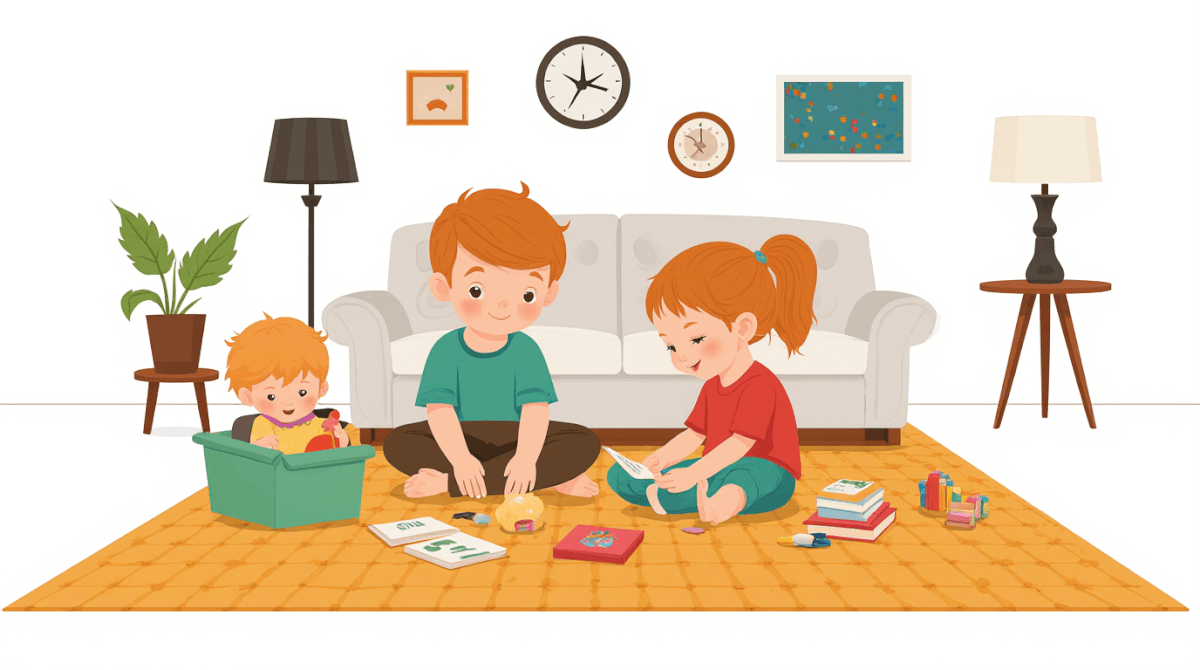
Early childhood is not simply a phase of small milestones and first words. It is the structural period in which the foundations of character, emotional stability, and moral awareness are quietly formed.
The way a child is supported in the early years does not just influence behavior in the present. It shapes how that person will think, relate, decide, and respond decades later.
We often focus on academic success, talent, or measurable achievements. Yet what truly determines whether a child grows into a responsible, compassionate, and grounded adult is something less visible: the quality of support, guidance, and emotional formation they receive early in life.
These first years are not about perfection. They are about formation.
Early Support Is Emotional Architecture
A young child depends entirely on the adults around them to interpret the world.
When a child feels consistently supported, something powerful happens internally:
-
The world feels safe.
-
Relationships feel reliable.
-
Mistakes feel survivable.
-
Growth feels possible.
Support in early childhood is not constant praise. It is consistent presence.
It means the child knows that someone stable stands behind them — not controlling every move, but available, attentive, and emotionally engaged.
This sense of security becomes the base layer of confidence. Without it, children may still function. But with it, they thrive.
Emotional support during early childhood teaches a child that they are not alone in navigating frustration, fear, curiosity, or failure. That lesson carries forward into adulthood in subtle but powerful ways.
Formation Happens Before Formal Education
By the time a child enters school, many patterns are already taking shape.
Early childhood formation includes:
-
How emotions are expressed and regulated.
-
How conflict is handled.
-
How authority is understood.
-
How empathy is modeled.
-
How responsibility is introduced.
These lessons are rarely taught in formal sentences. They are absorbed through daily interaction.
A child who sees calm problem-solving learns calm problem-solving.
A child who experiences respectful correction learns respect.
A child who is guided with consistency learns internal discipline.
Formation does not begin with textbooks. It begins with tone, routine, and example.
The Role of Affection in Moral Development
Affection is often misunderstood as indulgence. In reality, healthy affection is a stabilizing force.
When children experience warmth — not overprotection, but genuine affection — they develop emotional security. Emotional security allows space for moral growth.
A child who feels valued is more capable of valuing others.
A child who experiences patience is more likely to practice patience.
Affection in early childhood reduces the need for attention-seeking behaviors later. It fosters internal steadiness rather than external validation.
This does not eliminate discipline. It strengthens it. Because discipline rooted in affection is interpreted as guidance, not rejection.
Structure Creates Internal Order
Support without structure creates confusion.
Structure without support creates fear.
Early childhood development requires both.
Children need predictable rhythms:
-
Regular sleep patterns.
-
Clear boundaries.
-
Consistent expectations.
-
Calm corrections.
Predictability allows the nervous system to relax. A relaxed nervous system is more open to learning, empathy, and cooperation.
When a child knows what to expect, they can focus on growth rather than survival.
Structure in early childhood does not restrict development. It protects it.
Language Becomes Identity
The language used with young children becomes the voice they eventually use with themselves.
Repeated phrases turn into internal narratives.
When adults separate behavior from identity, children learn that mistakes do not define them.
When correction is firm but respectful, children learn that boundaries are not humiliation.
The early years are when self-perception begins to solidify. Supportive language does not deny accountability; it frames it constructively.
Over time, this shapes resilience.
Teaching Responsibility Early
Responsibility is not introduced suddenly in adolescence. It begins in small, manageable ways during early childhood.
Simple tasks. Small contributions. Clear expectations.
When children are invited to participate in family life, they learn that they are capable and needed.
This early sense of contribution builds dignity.
It prevents the development of entitlement and encourages cooperation.
Responsibility in early childhood should feel natural, not punitive. It grows gradually as competence grows.
Emotional Regulation Starts With Co-Regulation
Young children cannot regulate themselves independently. They borrow regulation from adults.
When adults remain calm during emotional storms, children learn that strong feelings are manageable.
When adults respond with volatility, children internalize volatility.
Early childhood is the period when the nervous system is still organizing itself. The emotional climate around a child becomes part of their internal wiring.
Support means guiding emotions without suppressing them.
Formation means modeling self-control without rigidity.
Over time, the child develops internal regulation based on what they consistently experience.
The Long View: Raising Adults, Not Just Children
It is easy to focus on immediate compliance.
But early childhood formation is about long-term character.
The question is not:
“How do I stop this behavior right now?”
The deeper question is:
“What kind of adult is this moment shaping?”
Support in early childhood lays the groundwork for:
-
Integrity
-
Responsibility
-
Emotional stability
-
Respect for others
-
Healthy independence
Children who experience stable guidance do not become perfect adults. But they are more likely to become grounded ones.
Community, Belonging, and Identity
Early childhood support extends beyond the parent-child relationship. It includes the broader sense of belonging.
Children who feel rooted in a family structure — where expectations and affection coexist — develop a clearer identity.
Identity formed in stability is less fragile.
Belonging reduces the need to search for validation in harmful environments later.
The early years are when children learn:
“I am part of something.”
“I matter here.”
“I have a place.”
That internal security becomes a protective factor throughout life.
Early Formation Is Quiet but Powerful
The impact of early childhood support is rarely dramatic in the moment.
It is quiet.
It looks like repetition.
It looks like consistency.
It looks like small conversations.
It looks like daily presence.
But these small moments accumulate.
Over time, they shape decision-making, self-worth, relational skills, and moral judgment.
By adulthood, the visible achievements may vary — careers, talents, paths. But beneath those visible outcomes lies the invisible foundation built in early childhood.
Support.
Structure.
Affection.
Consistency.
Guidance.
These are not temporary parenting strategies.
They are long-term investments in the kind of people children will become.
Early childhood is not just preparation for school.
It is preparation for life.
And the adults we hope our children become are being quietly formed long before anyone notices.


Be First to Comment