
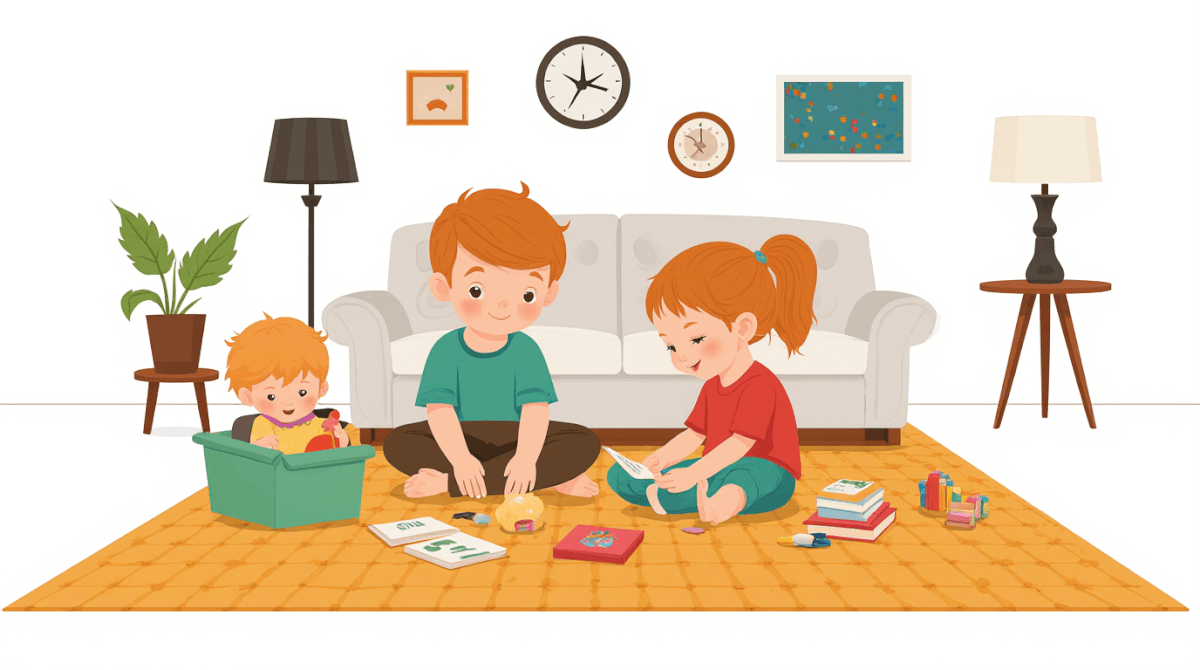
The formation of emotional maturity during early years sets a foundational framework for how individuals navigate their emotions and relationships later in life. Emotional maturity involves understanding, managing, and expressing feelings appropriately within social contexts. This process is influenced significantly by the environment and early experiences children encounter, making it crucial to explore specific mechanisms through which these factors shape emotional development.
One critical mechanism influencing emotional maturity is the quality of attachment formed between a child and their primary caregiver during infancy. Attachment theory posits that the type of relationship infants develop with their caregivers can impact their ability to regulate emotions in later years. Securely attached children tend to have better emotional regulation skills compared to those who are insecurely attached. Insecure attachments can stem from inconsistent or dismissive caregiving, leading to difficulties in recognizing and managing emotions.
Consider the example of a child named Lily who experiences consistent and responsive care from her parents. From an early age, she learns that expressing emotions like sadness is acceptable and will lead to support rather than judgment or dismissal. This environment fosters emotional intelligence, allowing Lily to understand her feelings and communicate them effectively as she grows older. A child named Max who experiences neglectful caregiving might struggle with identifying his emotions. He may become withdrawn or develop maladaptive coping mechanisms like aggression due to his limited exposure to healthy emotional expression.
Research indicates that children who experience consistent emotional validation from caregivers are more likely to develop secure attachments and subsequently higher levels of emotional maturity (Bowlby, 1969). A child might feel upset after losing a toy. A caregiver who acknowledges the child’s feelings, offering comfort or suggesting ways to find the lost item, helps the child understand that emotions are valid and can be addressed constructively.
The quality of interactions within families and communities further reinforces emotional maturity. Children learn social norms and expectations through these interactions, which influence their ability to empathize with others and manage interpersonal relationships. In a supportive family environment, children see adults managing stress and resolving conflicts in positive ways, modeling effective emotional regulation strategies. Parents who discuss their emotions openly can teach children the importance of verbalizing feelings, leading to better communication skills.
Community involvement also plays a significant role. Children who participate in group activities or clubs learn to collaborate, resolve disputes, and develop empathy for others. These experiences enhance their social skills, contributing to emotional maturity. Joining a sports team can help children understand the importance of teamwork and handling winning and losing gracefully.
Another important factor is the cultural context within which a child grows up. Cultural norms and values significantly influence how emotions are expressed and perceived. In some cultures, expressing strong emotions openly might be seen as inappropriate, while in others, it may be encouraged. These differing cultural expectations shape children’s emotional expression and self-perception. In collectivist societies where group harmony is valued, children may learn to suppress individual emotions for the sake of maintaining social cohesion.
It is important to note that not all environments provide equally nurturing conditions for emotional development. Children from disadvantaged backgrounds might face more challenges, such as unstable living situations or exposure to violence, which can hinder their progress towards emotional maturity (Dodge & colleagues, 2003). Even in these challenging circumstances, supportive adults and community resources can mitigate negative effects.
The role of peers also cannot be understated. Peer interactions provide opportunities for children to practice social skills and learn from one another’s experiences. Positive peer relationships foster trust, cooperation, and mutual support, all essential components of emotional maturity (Pianta & colleagues, 2014). Children who engage in positive friendships are more likely to develop a broader emotional vocabulary and the ability to handle complex social situations.
The formation of emotional maturity during early years is deeply intertwined with the quality of attachment, family interactions, community involvement, cultural context, and peer relationships. Each of these factors contributes uniquely to shaping how children understand and manage their emotions, setting the stage for future emotional intelligence. While challenges can arise from various environmental factors, nurturing and supportive conditions play a critical role in promoting healthy emotional development.
In summary, while each factor plays its part, it is clear that the interplay between secure attachment, family dynamics, community engagement, cultural values, and peer interactions significantly influences the formation of emotional maturity during early years. These mechanisms collectively shape not only how children experience their emotions but also their ability to navigate complex social situations effectively.
Bibliography:
– Bowlby, J. (1969). Attachment and Loss: Vol. 1. Attachments. Basic Books.
– Dodge, K. A., Bates, J. E., & Sommerfeldt, L. B. (2003). Peer victimization in childhood and adolescence. In W. M. Bukowski, A. S. Newcomb, & J. W. Demaray (Eds.), The handbook of children’s friendships (pp. 165-187). Lawrence Erlbaum Associates.
– Pianta, R. C., Lahey, B. B., Greenberg, M. T., & Hawkins, J. D. (2014). Child-parent relationships and the development of social competence in early childhood. In M. E. Lamb (Ed.), Handbook of parent–child relations (Vol. 3) (pp. 567-618). Lawrence Erlbaum Associates.



Be First to Comment