
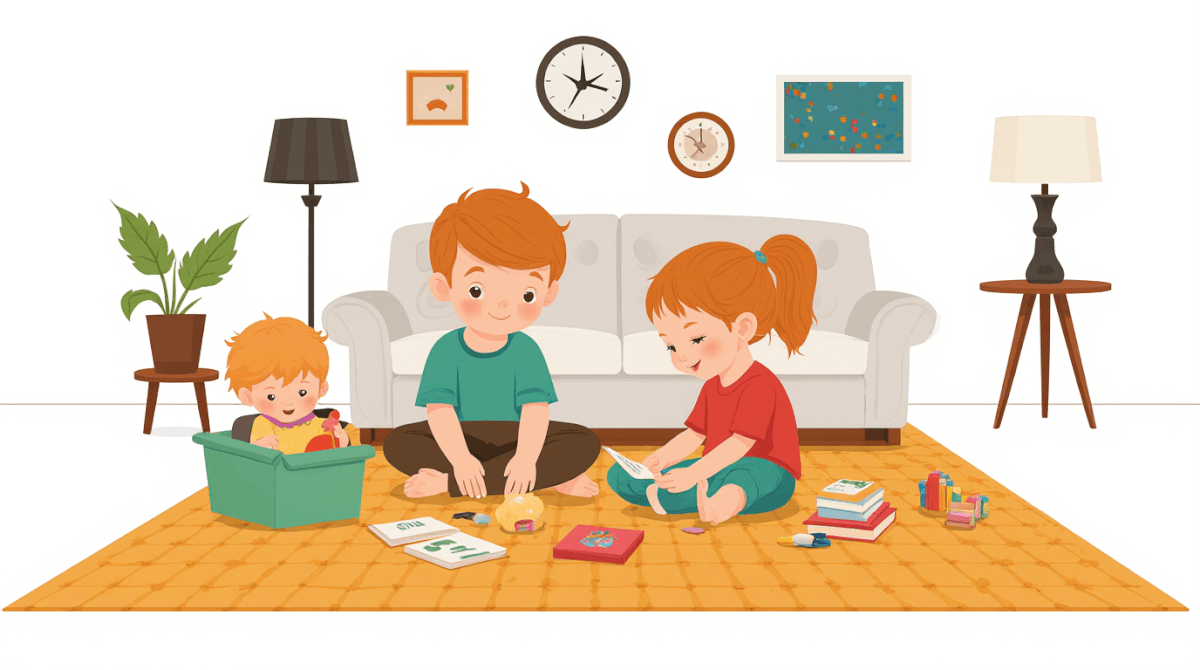
Supportive familial relationships provide emotional security and stability, which are essential for children’s ability to manage their emotions effectively. In families where parents consistently offer warmth, understanding, and empathy, children learn that their feelings are valid and important. A parent who listens attentively when a child expresses frustration or disappointment helps the child understand that such emotions are natural and can be processed constructively. Over time, this fosters emotional intelligence—the capacity to identify, understand, and manage one’s own emotions, as well as respond appropriately to the emotions of others.
Research indicates that children who experience consistent support from their parents tend to develop better coping mechanisms for dealing with stress and adversity. A study by Downey, Irwin, and Brown (1998) found that children in stable and nurturing family environments were more likely to exhibit less anxiety and depression as they grew older. These findings underscore the importance of supportive relationships in building emotional resilience early on.
Such supportive interactions contribute to the development of secure attachment styles. Securely attached children are better equipped to form healthy relationships later in life because they have learned to trust others as sources of comfort and support. A securely attached child may turn to parents or close friends during times of emotional distress, knowing that help is available and reliable.
The impact of supportive relationships extends beyond immediate emotional regulation; it also shapes cognitive processes related to self-perception and identity formation. Children who grow up in nurturing environments are more likely to develop positive self-images, seeing themselves as capable and worthy individuals. This positive self-concept is crucial for emotional balance because it influences how children interpret their experiences and emotions. If a child consistently receives validation and encouragement from caregivers, they may internalize messages about their competence and value, which can buffer against negative emotions during challenging situations.
Children who experience chronic neglect or abuse may struggle to form secure attachments and develop healthy self-perceptions. Without supportive relationships, these children might become more prone to emotional dysregulation, anxiety, and depression in later life. A study by Main et al. (1985) highlighted that insecurely attached children were at higher risk for developing psychopathology due to their difficulty in forming trusting connections with others.
The mechanism of supportive familial relationships also includes modeling behaviors and social norms. Parents who demonstrate emotional regulation through their own actions provide valuable lessons to their children. A parent who calmly discusses and resolves conflicts rather than reacting impulsively models effective problem-solving strategies that children can emulate. This not only teaches children how to handle emotions but also reinforces the idea that problems have solutions, fostering resilience.
Supportive relationships within families can influence the development of prosocial behaviors, which are essential for maintaining emotional balance in social contexts. Children who learn to empathize and understand others’ feelings through interactions with caregivers are more likely to exhibit kindness and consideration towards their peers. Such social competencies help children navigate complex interpersonal dynamics, reducing conflicts and enhancing overall well-being.
The importance of supportive familial relationships is further underscored by the way they shape coping strategies. In families where emotional support is available, children learn healthier ways to manage stress and anxiety rather than resorting to maladaptive behaviors like aggression or withdrawal. A child who has learned to express feelings through open communication with parents may be less likely to engage in harmful activities when feeling overwhelmed.
The formation of emotional balance in childhood is profoundly influenced by supportive familial relationships, which provide essential emotional security and stability. These relationships not only help children regulate their emotions but also shape their self-perceptions, social skills, and coping strategies. The quality of these interactions within families lays a strong foundation for psychological resilience and adaptability throughout life. While other factors such as peer relationships and school environments also play critical roles, the early experiences in nurturing family settings remain pivotal.
References:
– Downey, G., Irwin, C. R., & Brown, E. J. (1998). The impact of parental warmth on children’s adjustment: A test of the mediational model. *Child Development*, 69(4), 1052-1073.
– Main, M., Hesse, E., & Tronick, E. Z. (1985). One-year-olds’ responses to the return of their mothers after an absence following a strange situation: Security in unfamiliar contexts as related to specific mother-infant interactive patterns. In J. Solomon & C. R. George (Eds.), *Attachment in the Preschool Years: Theory, Research, and Intervention* (pp. 125-160). New York: The Guildford Press.



Be First to Comment