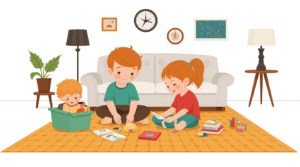
Caring for and raising a child is often perceived through the lens of nurturing, growth, and development—yet beneath these familiar tropes lies a complex web of psychological dynamics that are both intricate and profoundly intimate. The family unit operates not merely as a collection of individuals but as an interdependent system where each member’s actions and emotions significantly shape one another’s experiences. In this exploration, we delve into the nuanced experience internal to parenting, focusing on the inherent tensions and contradictions within such a relationship.
At its core, child rearing is fundamentally about fostering emotional stability, resilience, and self-awareness in a young individual who is learning how to navigate their world. Yet, as one parent or caregiver engages with this task, they are simultaneously confronted by personal challenges that test their own psychological boundaries. This duality introduces an essential layer of complexity: the interplay between parental expectations and emotional needs.
Affection plays a crucial role in child development; it is not merely about physical touch but encompasses the subtle yet powerful effects of consistent emotional support. Children learn to trust, empathize, and form secure attachments through these interactions with their caregivers, which are foundational for future relationships. The act of providing affection consistently can be fraught with internal conflicts. Parents strive to create a nurturing environment that fosters warmth and security; on the other, they grapple with personal insecurities that might manifest as emotional barriers or even ambivalence towards these very acts.
Consider the scenario where a parent is acutely aware of their own unresolved childhood traumas. While their intention may be to offer unconditional love and support, this awareness can paradoxically lead to moments of hesitation or unpredictability in how they express affection. This contradiction arises because the parent’s internal emotional landscape—shaped by past experiences—is intrinsically intertwined with their actions towards their child.
Maintaining consistency in parenting is another dimension that amplifies these psychological tensions. Consistency offers a sense of stability and predictability for children; it allows them to develop reliable patterns of behavior based on clear expectations set forth by the caregivers. Achieving this consistency can be challenging when one’s own emotional state fluctuates unpredictably due to external stressors or personal struggles.
Imagine a parent who is under significant work-related pressure, leading to heightened levels of anxiety and irritability. These emotions might manifest as increased scrutiny over their child’s behavior or more frequent outbursts during times that should be filled with nurturing activity. This scenario highlights how external pressures can disrupt the delicate balance required for consistent parenting.
Emotional presence becomes another critical factor in this dynamic system, yet it too is fraught with complexity. Being fully present emotionally requires a level of self-awareness and emotional regulation that may not always be attainable due to personal challenges or competing demands on one’s time and energy. The parent might find themselves struggling to maintain their own mental health while simultaneously attempting to provide the necessary emotional support for their child.
In instances where parents are dealing with significant life events, such as a divorce or career changes, these external circumstances can further complicate matters. Emotional availability may be compromised due to the preoccupation required in navigating personal challenges and adjusting one’s priorities accordingly. Consequently, this can lead to feelings of guilt or inadequacy among caregivers who recognize their limitations but also understand that emotional presence is crucial for a child’s well-being.
These complexities underscore how parenting involves not just external behaviors but an internal journey of self-discovery and growth. The act of nurturing another individual inherently mirrors the caregiver’s own psychological state, creating a reciprocal relationship where personal development and familial bonds are deeply intertwined.
The contradiction between providing affection consistently while being mindful of one’s emotional well-being highlights this intricate dynamic. Parents must work diligently to create an environment that nurtures love and security; on the other, they cannot ignore their own internal needs without potentially compromising these efforts. This balance is delicate yet essential for both parent and child.
Maintaining consistency in parenting adds another layer of complexity. While setting clear expectations and routines can provide a sense of stability and predictability, doing so requires emotional resilience that may be strained by external pressures or personal struggles. The ability to remain patient and understanding, even when faced with challenging circumstances, is crucial but not always easy.
Emotional presence—being fully attuned to one’s child’s needs and emotions—is another critical aspect. This can be difficult for parents who are dealing with their own emotional challenges, leading them to inadvertently neglect or misinterpret their children’s cues. The result can be a cycle of both overcompensation (where the parent becomes overly attentive) and underengagement (where they become emotionally distant).
The internal struggle between these dimensions—the need to provide affection consistently while managing one’s personal struggles—creates a tension that is both profound and pervasive within the family system. This contradiction exists not only in moments of crisis but also in everyday interactions, where small gestures and reactions can carry significant emotional weight.
Exploring this inner conflict reveals how parenting is fundamentally about navigating these inherent contradictions. The interplay between providing warmth and support while maintaining one’s own psychological well-being requires a delicate balance that is both challenging and rewarding. Parents are not merely external agents imparting knowledge or guidance; they are integral participants in the growth of their children, deeply connected through shared emotional experiences.
The experience of parenting emerges as an intricate dance between nurturing roles and personal challenges. The family system operates as a complex web where each member’s actions and emotions significantly influence one another. While affection, consistency, and emotional presence matter profoundly for child development, they also introduce internal tensions that test parental resilience and self-awareness.
By recognizing these contradictions and working to navigate them, parents can foster not just the growth of their children but also their own personal journeys of healing and transformation. The ongoing exploration of this dynamic relationship underscores how parenting is both a profound act of love and an essential process of self-discovery.