At its core, this discipline challenges us to question the very foundations of our beliefs. Consider the principle of non-contradiction: something cannot both be and not be at the same time in the same sense. This principle underpins much of logical reasoning and the structure of legal systems. But how did we arrive at this principle? And what might happen if we examined its validity more deeply?
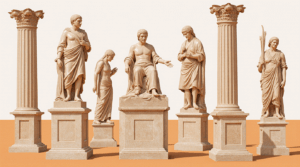
In ancient Greek philosophy, Socrates is known for his method of questioning, often referred to as the Socratic method. Through a series of probing questions, he aimed to uncover the hidden assumptions and contradictions within his interlocutors’ statements. This approach encourages a deeper examination of first principles, revealing the often unconscious beliefs that guide our reasoning.
The act of examining first principles is not without its challenges. One significant hurdle is the cognitive dissonance it can cause. When we confront a long-held belief or practice and find it wanting, it can be disorienting and uncomfortable. This discomfort arises because many of our foundational beliefs are deeply ingrained, and questioning them requires a willingness to let go of familiar ways of thinking.
The process of examining first principles can lead to a sense of uncertainty. In an era where knowledge is often presented as absolute and unchallengeable, this uncertainty can feel unsettling. It is precisely in this uncertainty that growth and deeper understanding can occur. By embracing the unknown and the questions themselves, we open ourselves to new insights and perspectives.
Another challenge lies in the sheer complexity of many first principles. They are often not easily separable from the larger systems of knowledge they inform. When examining the principle of causality—the idea that every event has a cause—this principle is deeply embedded in scientific inquiry, legal proceedings, and even everyday reasoning.
In addition to these challenges, the practice of examining first principles can also be seen as a form of intellectual humility. It compels us to recognize that our current understanding is not the end of the journey, but rather a starting point. This humility can foster a more open-minded approach to learning and growth, allowing us to remain receptive to new ideas and perspectives.
The rewards of examining first principles, far outweigh these challenges. By doing so, we can arrive at a deeper, more nuanced understanding of the world. In the realm of ethics, questioning the principle of utility—whether an action is right if it maximizes overall happiness—can lead us to consider alternative ethical frameworks and the potential limitations of utilitarianism. This examination might reveal the importance of other values such as justice, fairness, or the intrinsic worth of individuals.
The act of examining first principles can also enhance our decision-making processes. By questioning our assumptions and beliefs, we can make more informed and thoughtful choices. In business, questioning the principle of profit maximization might lead us to consider the long-term environmental and social impacts of our decisions. This deeper reflection can help us align our actions with a broader set of values and goals.
The discipline of examining first principles also has implications for personal growth and self-awareness. By critically evaluating our own beliefs, we can gain a clearer understanding of our biases and assumptions. This awareness can be transformative, enabling us to make more authentic and meaningful choices in both our personal and professional lives.
This practice can foster a sense of intellectual curiosity and exploration. It encourages us to delve into the origins and implications of our ideas, leading to a richer and more fulfilling life. By embracing the continuous questioning of our beliefs, we can navigate through the complexities of modern life with greater clarity and purpose.
The discipline of examining first principles is a powerful tool for personal and intellectual development. It challenges us to question the very foundations of our knowledge, revealing the hidden assumptions that shape our understanding of the world. While it comes with its challenges, the rewards are profound. By embracing this practice, we can arrive at a deeper, more nuanced understanding of reality and make more informed and thoughtful choices. In doing so, we not only expand our intellectual horizons but also enrich our lives with greater clarity, purpose, and authenticity.