
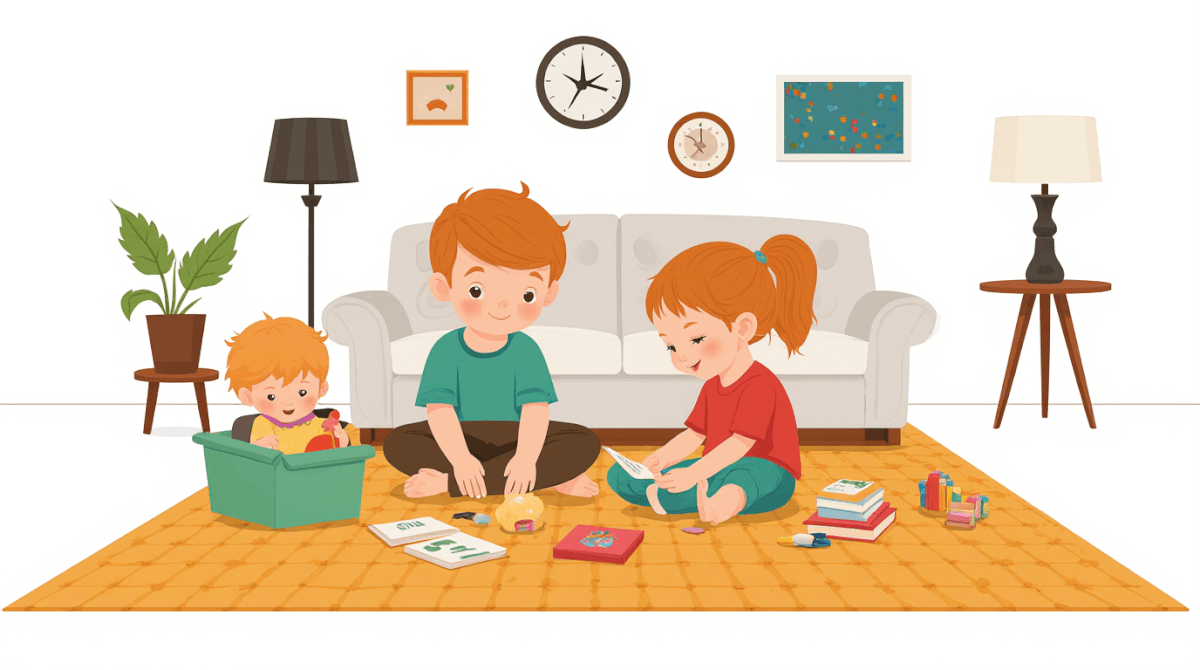
Social awareness—the ability to understand the emotions and intentions behind one’s own and others’ actions—is a fundamental aspect of human development that begins in early childhood. It involves recognizing social norms, empathizing with others, and engaging effectively within societal contexts. This essay will explore how family life serves as a critical environment for developing social awareness, focusing on the role of interactions and emotional exchanges within families.
The process of social awareness starts from the earliest days of life. Infants are born into a world where their primary interaction is with caregivers who form the first social context they experience. Mothers, fathers, siblings, and other family members play a crucial role in shaping an infant’s understanding of the social world. Through these interactions, children learn to recognize emotions on others’ faces, understand basic social rules, and develop rudimentary empathy skills. When parents react warmly to a child’s efforts to share or cooperate, they reinforce positive social behaviors that help the child become more socially aware.
In families, communication is key in fostering social awareness. Conversations about daily events, shared experiences, and stories involving characters with different personalities and emotions can provide children with rich opportunities to develop their understanding of interpersonal dynamics. Discussing a storybook where a character is feeling sad or angry can help children learn that these feelings are normal and understand the reasons behind them. This kind of dialogue encourages children to see perspectives other than their own, thus enhancing social awareness.
Family routines also contribute significantly to the development of social awareness. Regular family activities like meal times, bedtime stories, and chores offer frequent opportunities for interaction and observation. During meals, parents can engage children in conversations about the day’s events or current affairs, teaching them how to discuss issues respectfully and listen empathetically to different viewpoints. Similarly, sharing household responsibilities with children helps them understand concepts of fairness and cooperation, which are essential components of social awareness.
Family conflicts provide teachable moments that can deepen a child’s understanding of social dynamics. When disagreements occur among family members, parents should handle them constructively, demonstrating effective conflict resolution strategies. If siblings argue over toys, the parent might guide them through finding a compromise or taking turns, thereby showing how to manage disputes peacefully and respectfully.
Emotional support from family members is another vital factor in social awareness development. Children who feel secure and loved are more likely to engage positively with their peers and understand complex emotional states better. When parents validate children’s feelings and show genuine interest in their emotional well-being, they encourage the development of empathy and understanding towards others’ emotions. Acknowledging a child’s frustration when playing with friends and discussing ways to manage it can help them develop social skills that are crucial for navigating social interactions.
Family diversity is another critical aspect that enriches social awareness. In families where members have different backgrounds or perspectives, children learn to appreciate cultural differences and develop a broader worldview. This exposure helps them understand the importance of respect and inclusivity in diverse societies. In multilingual households, children often learn multiple languages from an early age, which enhances their ability to communicate effectively with people from various cultural backgrounds.
The influence of family life on social awareness is not limited to direct interactions but extends to the broader context of familial values and norms. Families that emphasize community service or volunteer work instill in children a sense of responsibility towards others, fostering social awareness. Participating in local events or helping neighbors with tasks can teach children about giving back and understanding the impact their actions have on others.
Family life is a multifaceted environment that significantly influences the development of social awareness through interactions, communication, emotional support, and exposure to diverse perspectives. By creating an inclusive and supportive home atmosphere, parents play a crucial role in shaping how children perceive and engage with the world around them. This early foundation laid by families sets the stage for more complex social understanding later in life, making family relationships integral to the growth of socially aware individuals.
In light of this exploration, it is clear that while individual characteristics and external factors certainly contribute to a child’s development, the nurturing and supportive environment provided within the family plays an indispensable role. As children grow, they carry forward the lessons learned from their families into broader social interactions, making them more adept at understanding and interacting with others in complex societal contexts.
References:
– Zahn-Waxler, C., & Radke-Yarrow, M. (1990). The Development of Empathy in Childhood: A Review. *Child Development*, 61(1), 134–152.
– Bretherton, I., & Beeghly, M. (1980). Social Information Processing and the Emergence of Prosocial Behavior in Children. In L. R. Minor (Ed.), *Social Cognition: The Stanford Symposium* (pp. 137–162). Lawrence Erlbaum Associates.




Be First to Comment