
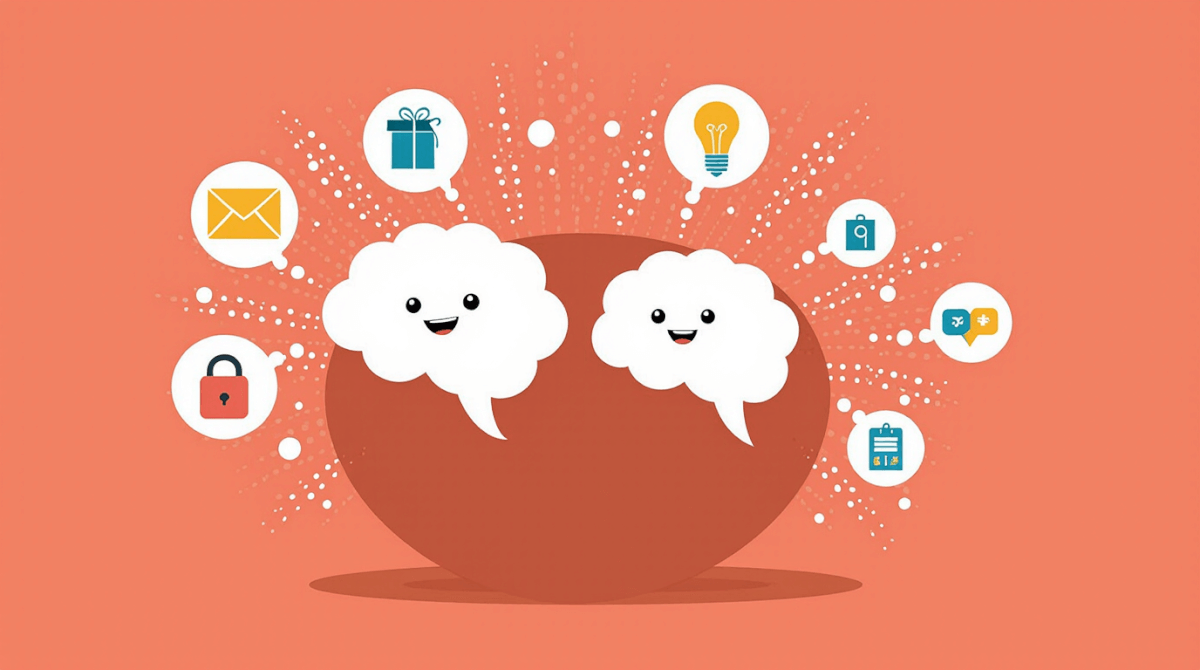
Every thought you have.
Every memory you replay.
Every fear you feel.
Every decision you make.
All of it passes through one biological structure — the brain.
And yet, from that physical structure emerges something far less tangible:
The mind.
The brain is matter.
The mind is experience.
One can be scanned.
The other must be lived.
Understanding the relationship between brain and mind is one of the most fascinating explorations in human knowledge — because it is the study of the system that produces your perception of reality itself.
The Brain: A Biological Engine
The brain is an organ — complex, dynamic, adaptive.
It regulates:
-
Movement
-
Emotion
-
Memory
-
Language
-
Attention
-
Decision-making
-
Sensory perception
Billions of neurons communicate through electrical and chemical signals.
These signals create patterns.
Patterns create behavior.
The brain constantly processes information from both the external world and the internal body.
It predicts.
It reacts.
It adapts.
It is not static.
Neuroplasticity — the brain’s ability to reorganize itself — allows learning, healing, and behavioral change.
Your brain today is not identical to your brain five years ago.
Experience reshapes it.
The Mind: Experience Emerging From Biology
While the brain is physical, the mind refers to subjective experience.
The mind includes:
-
Thoughts
-
Emotions
-
Awareness
-
Imagination
-
Interpretation
-
Identity
We cannot hold the mind in our hands.
Yet we feel its presence constantly.
The mind interprets signals the brain processes.
Two people can experience the same event and form completely different interpretations.
This difference emerges from internal mental frameworks — memory, belief, emotion.
In this sense, the mind shapes perception.
And perception shapes reality as it is experienced.
Emotion and Regulation
The brain contains systems that generate emotional responses.
Fear, joy, anger, attachment — these are not random.
They serve adaptive purposes.
Fear protects.
Attachment bonds.
Anger signals boundary violation.
However, without regulation, emotional responses can become disproportionate.
The mind plays a role in regulation.
Through awareness and reflection, individuals can influence emotional reaction.
The brain generates impulses.
The mind interprets and moderates them.
Healthy functioning requires cooperation between both.
Memory and Identity
Memory does not simply store events.
It reconstructs them.
Each time a memory is recalled, it is subtly reshaped.
This process influences identity.
Who you believe yourself to be depends partly on the narrative your mind constructs from past experiences.
The brain stores patterns.
The mind weaves meaning.
Understanding this dynamic allows greater flexibility in self-perception.
Identity is not fixed data. It is interpreted history.
Attention and Focus
Attention is one of the brain’s most powerful tools.
What you focus on strengthens neural pathways.
Repeated focus reinforces patterns.
This is why habits form.
It is also why negative rumination can deepen anxiety or sadness.
The mind can redirect attention intentionally.
Over time, this redirection reshapes the brain.
Focus becomes architecture.
Stress and the Nervous System
The brain constantly monitors safety.
When threat is perceived, stress responses activate.
Short-term stress can sharpen awareness.
Chronic stress, however, disrupts balance.
It affects sleep, decision-making, memory, and emotional regulation.
Understanding how stress influences the brain empowers healthier coping strategies.
Breathing techniques, rest, movement, and reflection are not abstract wellness trends — they directly affect neurological functioning.
The Interaction Between Biology and Belief
Biology influences thought.
But thought also influences biology.
Beliefs can activate stress responses.
Perception can alter emotional state.
Expectation can affect performance.
This bidirectional relationship explains why mindset matters.
The brain and mind are not isolated domains.
They operate as integrated system.
Mental Health and Brain Function
When brain regulation becomes disrupted, mental health conditions can emerge.
Depression, anxiety, mood instability, and other challenges often involve neurological and psychological components.
Understanding this reduces stigma.
Mental health is not weakness.
It involves complex interaction between biology, environment, and cognition.
Support, therapy, and sometimes medical treatment aim to restore balance within this system.
The Mystery That Remains
Despite scientific advancement, the brain-mind relationship still contains mystery.
How does physical tissue generate subjective awareness?
How does consciousness arise?
Research continues.
But what is clear is this:
Your perception of the world depends on how this system functions.
And understanding that system increases self-awareness.
Living With Awareness of the System
When you understand that:
Thoughts are patterns.
Emotions are signals.
Stress is physiological.
Habits reshape neural pathways.
You gain leverage.
Instead of being completely driven by reaction, you can develop observation.
Observation creates space.
Space allows choice.
And choice allows growth.
The brain builds the structure.
The mind experiences the story.
Together, they form the system through which you experience existence.
To understand them is not merely scientific curiosity.
It is self-understanding.
And self-understanding is the beginning of intentional living.


Be First to Comment