
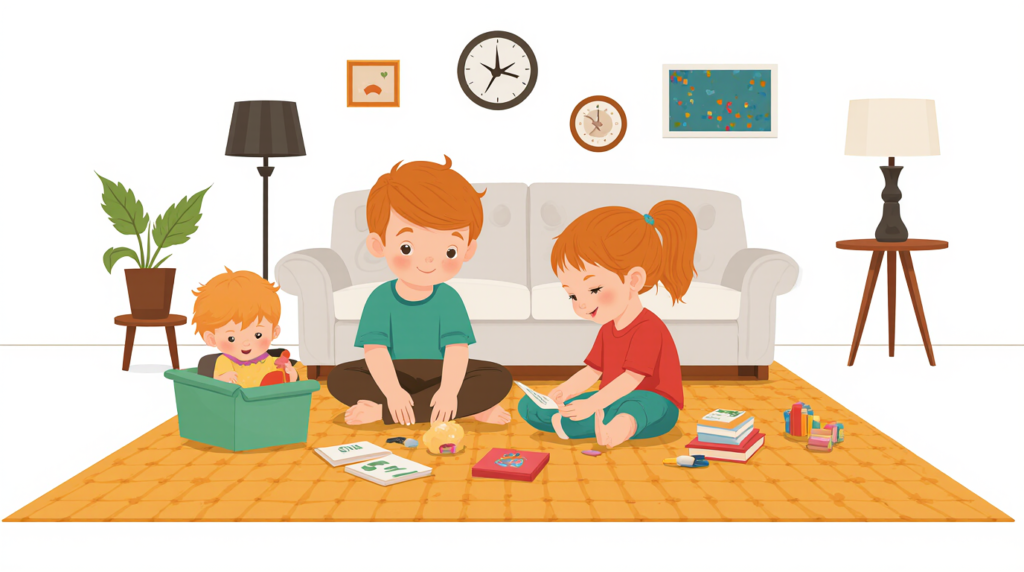
Attachment theory posits that early relationships between caregivers and infants set the stage for future emotional and behavioral development (Bowlby, 1982). A secure attachment is characterized by a caregiver who is re
Posts tagged as “family influence in early childhood”
Emotional balance begins at home through the nurturing environment that parents create for their children. The home serves as a foundation upon which emotional resilience and well-being are built. A supportive family atm
Children's ability to learn cooperation through example is a critical aspect of their social development. This process occurs when children observe and imitate the behaviors and attitudes of adults and peers around them.
Emotional support plays a pivotal role in building resilience, enabling individuals to navigate life’s challenges more effectively. Resilience is the ability to bounce back from adversity, adapt to change, and recover fr
Trust plays a critical role in social development, acting as the foundation upon which individuals build meaningful relationships and interact effectively within their communities. Trust is not merely an emotional state
Internal discipline refers to a child's ability to regulate their own behavior without constant external supervision. This critical skill is often developed through a combination of social and cultural influences as well
Emotional warmth plays a significant role in shaping one's identity through the lens of how it fosters secure attachment and self-esteem. By understanding this relationship, we can see that emotional warmth acts as a fou
The development of patience during early years is a critical process that shapes an individual’s emotional regulation and social interaction skills for the future. This essay explores how the environment and early experi