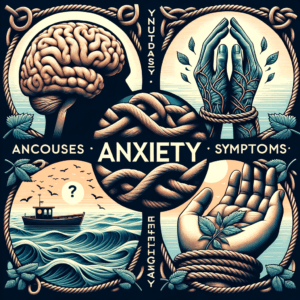
Understanding the intricate web of anxious thoughts, emotions, and behaviors is crucial in managing social anxiety. This condition often spirals into a cycle where fear and worry about social interactions lead to intense stress, which in turn exacerbates the original fears and anxieties. To navigate this challenging terrain, it’s important to delve into how these psychological mechanisms intertwine.
Anxiety begins with the mind’s tendency to predict potential negative outcomes before they occur. This predictive mechanism is a survival tactic hardwired into our brains from prehistoric times when threats were more immediate and life-threatening. In today’s context, this instinct can manifest as an overactive worry about social situations that may or may not be genuinely threatening. Someone with social anxiety might dread attending a work party because they imagine being criticized for not fitting in or making a mistake that embarrasses them.
These anxious thoughts are often accompanied by physical sensations like rapid heartbeat, sweating, and trembling, which prepare the body to fight off danger. This physiological response is part of the “fight or flight” reaction—a biological mechanism designed to protect us from real threats. In social anxiety, this system gets activated when there’s no genuine threat, causing discomfort and avoidance behaviors.
One common scenario where these mechanisms play out vividly is in public speaking. Imagine standing before a group to deliver a presentation; your palms may start sweating, your heart might race, and you could feel an overwhelming urge to escape the situation. These physical sensations are your body’s way of alerting you that danger is present, even though the only threat here is social discomfort rather than real harm.
Anxious thoughts often become self-fulfilling prophecies. The belief that one will fail or be judged harshly can lead to behaviors that actually increase the likelihood of these outcomes. If someone avoids eye contact and seems nervous during a conversation, others might interpret this behavior as shyness or disinterest, thereby reinforcing their anxiety.
Another critical aspect is the emotional toll that persistent anxious thoughts take over time. Chronic stress can lead to a host of physical ailments such as headaches, ulcers, and insomnia. The constant worry about social interactions can exhaust mental resources and disrupt sleep patterns, creating a vicious cycle where one feeds into the other. If someone with anxiety has trouble sleeping because they’re worrying about tomorrow’s meeting, they may start the day feeling fatigued and irritable, which could further strain their ability to handle the situation positively.
Understanding these dynamics is just the first step in managing social anxiety. While it might seem overwhelming at times, recognizing how anxious thoughts develop and influence behavior can provide a sense of empowerment. Instead of viewing every thought as an immutable truth, one can learn to challenge and reframe them.
Instead of assuming that everyone will notice your nervousness and judge you negatively, you could remind yourself that most people are too focused on their own concerns to scrutinize others closely. This shift in perspective can reduce the intensity of anxious thoughts and diminish the physiological reactions they trigger.
Additionally, integrating stress-reducing practices into daily routines is essential for managing anxiety. Exercise, in particular, stands out as an effective tool because it helps channel excess energy generated by the fight or flight response. Engaging in activities like walking, yoga, or even casual sports can help dissipate the tension and calm the mind.
Techniques such as Progressive Muscle Relaxation (PMR), Autogenic Relaxation, and Imagery Relaxation are also valuable resources for managing stress. PMR involves tensing and relaxing different muscle groups to release physical tension that often accompanies anxiety. Autogenic relaxation combines deep breathing with positive affirmations to soothe the mind, while imagery relaxation uses visualization to transport oneself mentally away from stressful situations.
It’s important to remember that overcoming social anxiety is a gradual process that requires patience and self-compassion. Learning to recognize anxious thoughts without immediately acting on them can lead to significant improvements in emotional well-being. By understanding how these mechanisms work and incorporating stress management strategies, individuals can gain control over their anxiety and improve their quality of life.
The key lies in acknowledging social anxiety as a complex interplay between mental processes and physical sensations, rather than seeing it as an insurmountable obstacle. With consistent effort and self-awareness, managing this condition becomes a journey toward greater resilience and emotional stability.