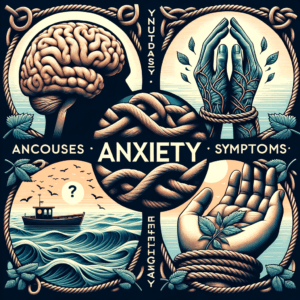
Understanding the complex interplay between anxious thoughts and our emotional well-being is crucial for navigating the challenges of daily life. Anxiety can be overwhelming, often manifesting through persistent worry or fear about situations that are perceived as threatening or unpredictable. The root of these anxieties lies in a series of psychological mechanisms that intertwine with one another, shaping how we perceive the world around us and our place within it.
Anxiety typically begins with cognitive distortions—faulty thought patterns that skew our perception towards negative outcomes. You might find yourself overthinking about an upcoming presentation at work. Instead of seeing this event as an opportunity to showcase your skills, you focus on what could go wrong: the possibility of forgetting key points or facing harsh criticism from colleagues. This type of thinking is often characterized by catastrophizing—projecting worst-case scenarios into every situation.
This mental state triggers a cascade of physiological responses. As the mind fixates on potential threats, it sends signals to the body’s stress response system, commonly known as the fight-or-flight reaction. The adrenal glands release hormones like adrenaline and cortisol, preparing the body for immediate action. In real-life terms, this might manifest in physical symptoms such as increased heart rate, sweating, or tense muscles. Over time, these reactions can lead to chronic tension, fatigue, and other health issues.
The emotional landscape of anxiety is equally complex. People often experience a profound sense of dread or unease, which can be challenging to articulate. Emotions like fear and worry become a constant backdrop against which daily activities unfold. In moments of heightened anxiety, even routine tasks such as grocery shopping or driving to work can feel daunting. The anticipation of potential problems can overshadow the present moment, making it difficult to engage fully in experiences.
Anxious thoughts tend to be persistent and intrusive, making it hard to escape from their grip. They may recur throughout the day, sometimes triggered by specific events but often surfacing unexpectedly. This relentless chatter in the mind not only affects our emotional state but also influences behavior. People might start avoiding situations that trigger anxiety, leading to a gradual restriction of activities and social interactions.
Imagine someone who experiences intense anxiety when speaking in public. Over time, they may avoid all forms of public communication or even gatherings where conversation is expected. This avoidance reinforces the anxious thoughts by confirming their worst fears—confirming that the feared outcome would indeed be disastrous if faced head-on.
Understanding the cyclical nature of anxiety and its impact on behavior is crucial for managing it effectively. Recognizing that anxious thoughts do not necessarily reflect reality is a significant step forward. While these thoughts might feel true, they often represent exaggerated scenarios that are unlikely to occur. Shifting focus from worst-case predictions to more balanced assessments can help reduce the grip of anxiety.
Mindfulness practices offer one approach to breaking this cycle. Mindful awareness involves observing your thoughts and feelings without judgment, acknowledging them as transient mental events rather than absolute truths. This practice allows you to step back from anxious narratives and see them for what they are—thoughts that do not necessarily dictate reality.
Consider a situation where someone is feeling overwhelmed by anxiety about an upcoming exam. Instead of letting the worry spiral out of control, mindfulness encourages pausing to notice the thoughts without reacting immediately. You might observe thoughts such as “I’ll fail this exam,” and then gently redirect attention back to your breath or another neutral point of focus.
Another technique involves cognitive restructuring—challenging negative thought patterns by questioning their validity and replacing them with more balanced perspectives. If you are worried about a presentation at work, instead of fixating on potential blunders, you might remind yourself that you have prepared thoroughly and that small mistakes do not define your performance.
The goal is to develop resilience against anxiety by recognizing its psychological roots and understanding how thoughts influence emotions and behavior. This insight empowers individuals to approach anxious moments with greater awareness and flexibility, fostering a sense of control amidst uncertainty. By nurturing this self-awareness, people can navigate their experiences more effectively, reducing the grip of anxiety on daily life.
In essence, addressing anxiety involves cultivating a deeper understanding of its underlying mechanisms while developing strategies to manage its impact. Through consistent practice and mindful observation, individuals can create space between themselves and their anxious thoughts, leading to greater emotional stability and well-being. This process is not about eliminating anxiety entirely but rather about transforming our relationship with it—embracing the complexity of human emotions without being consumed by them.