
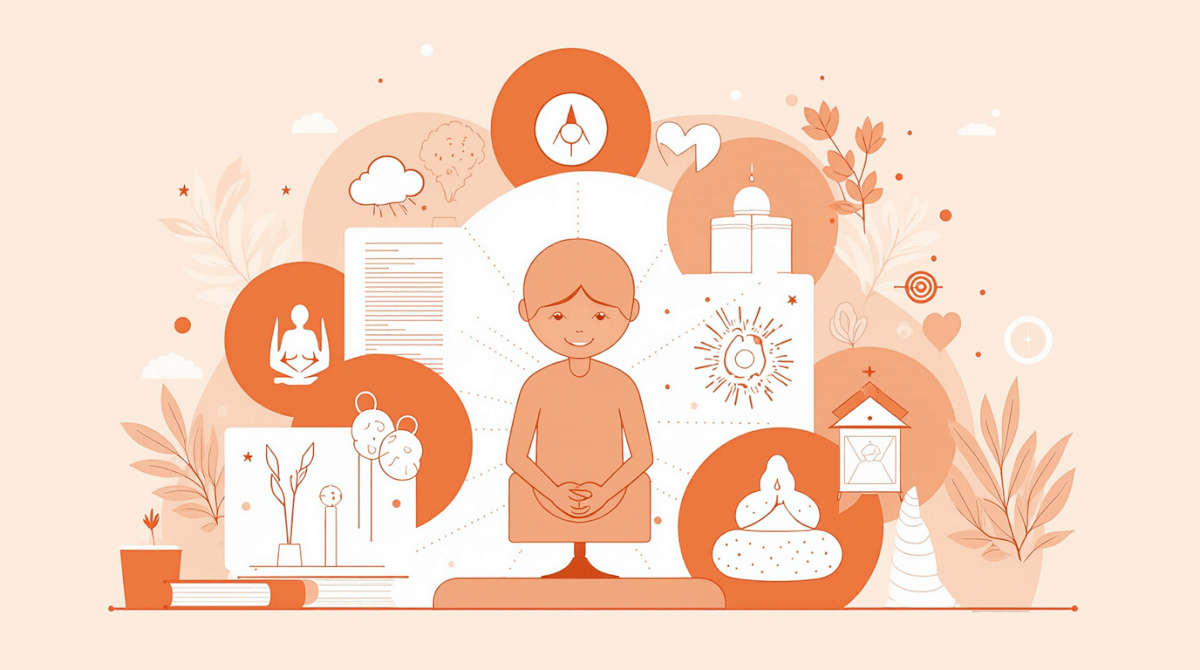
Spirituality during difficulty is often portrayed through the lens of an unyielding, otherworldly force that guides us through trials and tribulations. Yet, when we explore it as an inner human experience, spirituality becomes a deeply personal search for meaning, transcendence, and inner coherence—a quiet, introspective journey that unfolds within our minds and hearts.
In moments of uncertainty, the mind often seeks certainty, a reliable anchor amidst the stormy seas of life’s unpredictability. It is in these times that spirituality can provide a sense of stability and grounding. A friend once shared with me how she found solace in meditative practices during a period of intense professional stress. Through focused breathing and mindfulness exercises, she was able to observe her thoughts without judgment, creating space for clarity and calm. This momentary pause allowed her not only to regain perspective but also to reaffirm the value of her inner world—a testament to how spirituality can offer solace when the outer world seems chaotic.
Transcendence, is about stepping beyond our immediate concerns and limitations to find a broader sense of purpose. During times of personal crisis, such as losing a loved one or facing a significant health challenge, it is easy to feel small in comparison to the enormity of human suffering. Spirituality can offer a glimpse of something greater than oneself—a connection to a deeper reality that transcends individual pain and sorrow. A colleague shared her experience after the sudden passing of her father: “I found comfort not just in the memories we had, but in the belief that our spirits continue on.” This sentiment speaks to the power of spirituality as an anchor for hope and a reminder of the enduring nature of love.
Inner coherence is another dimension of spiritual resilience. It involves integrating various aspects of oneself into a unified whole. In moments of doubt or confusion, when one’s beliefs and actions seem out of sync, finding inner coherence can be particularly challenging. It also serves as a pathway to greater personal integrity and authenticity. Reflecting on my own journey during a period of moral questioning, I realized that my spiritual practices often brought me back to a place of balance and harmony. Through journaling and reflective practices, I was able to articulate my values more clearly, aligning my actions with my beliefs. This process was not always easy; it required patience and self-compassion. Yet, the result was a greater sense of peace and clarity—a reminder that our spiritual path is as unique and intricate as our fingerprints.
Presence and absence are two sides of the same coin in this exploration of spirituality. The practice of being fully present in the moment—mindful of one’s thoughts, emotions, and physical surroundings—can be profoundly healing. Yet, it can also bring up feelings of emptiness or a sense of lack, particularly when we grapple with existential questions about our place in the world. A therapist I know once shared how she uses mindfulness exercises to navigate these feelings. By acknowledging her doubts without judgment, she was able to find a space where presence and absence coexist. This acceptance allowed her not only to confront her fears but also to experience moments of profound peace amidst uncertainty.
Control and surrender are perhaps the most challenging pair in this spiritual journey. The human inclination towards control is deeply rooted in our need for safety and security. Yet, when faced with overwhelming challenges, it can feel impossible to hold onto that sense of control. Spiritual resilience teaches us that true strength lies not in controlling every outcome but in trusting the process. A friend who lost her job unexpectedly spoke about how she initially fought against the changes, clinging to a vision of stability and security. As time passed, she began to see the opportunities hidden within this transition—a chance for personal growth and new beginnings. This shift from control to surrender was not easy; it required letting go of certainties and embracing the unknown. Yet, in doing so, she found a sense of peace that transcended her initial fears.
Doubt and trust are perhaps the most intimate pair in this spiritual dialogue. Doubt is a natural part of the human experience—it challenges us to question our beliefs and assumptions, pushing us to grow and evolve. Trust, involves letting go of doubt and placing faith in something greater than ourselves—a leap into the unknown. A writer once told me about her struggle with faith during a particularly challenging period in her life. She described moments of intense doubt when everything seemed uncertain and out of control. Yet, through consistent practice and reflection, she learned to trust the process, allowing herself to be guided by an inner voice that spoke of resilience and perseverance. This trust was not always easy; it required patience and self-compassion. In embracing both doubt and trust, she found a deeper sense of peace and connection.
Spirituality during difficulty is not about finding easy answers or escaping the challenges we face. Instead, it is about navigating these experiences with grace, resilience, and an open heart. Through moments of uncertainty, transcendence, inner coherence, presence, absence, control, surrender, doubt, and trust, we discover the depths of our own spirit—a journey that transforms us, deepens our understanding, and ultimately enriches our lives.
To explore the broader framework behind this topic, read
Living Your Beliefs: When Faith and Spiritual Awareness Meet Daily Life.


Be First to Comment