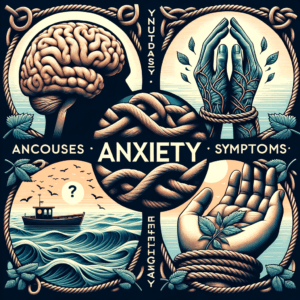
Anxiety is an emotion that most people encounter at one point or another in their lives. It’s often triggered by challenging situations, whether they are real or imagined, and can significantly impact our thoughts, feelings, and actions. In the context of poker, performance anxiety can be particularly debilitating for players who face high-stakes tournaments or formidable opponents with a reputation to uphold. The psychological mechanisms behind anxious thoughts and their influence on behavior are complex but can be understood through everyday experiences.
Anxiety often begins as an anticipatory response to potential threats or challenges that might arise in the future. In poker, this might manifest when you’re playing against renowned players like Doyle Brunson, Annie Duke, or Scotty Nguyen. You know your hand is strong, yet the fear of facing superior opponents can lead to a constant questioning of your abilities. This self-doubt serves as a mental barrier that prevents you from fully engaging in the game, leading to decisions that aren’t based on skill but rather on an imagined scenario where things could go wrong.
This anticipatory anxiety is rooted in our brain’s ability to simulate future events and outcomes based on past experiences or hypothetical situations. When we play poker, these simulations can be exaggerated, causing us to focus excessively on potential losses rather than the opportunities at hand. The result is a state of mental exhaustion where making decisions becomes increasingly difficult due to overwhelming worry about failure.
In everyday life, this mechanism plays out similarly. Imagine you’re about to give an important presentation at work. You might spend countless hours preparing, but as the day approaches, your mind starts to race with thoughts of all that could go wrong—what if you forget a crucial point? What if your colleagues or superiors think poorly of your ideas? This anxiety can lead to physical symptoms like sweating and shaking hands, further exacerbating feelings of inadequacy.
The emotional impact of such anxious thoughts is profound. They not only affect how we perceive our abilities but also influence our emotional state and subsequent behavior. In poker, this might mean folding when you have a strong hand because the fear of losing overshadows the excitement of winning. Similarly, in everyday scenarios, performance anxiety can cause individuals to avoid situations that are necessary for personal or professional growth due to an overwhelming sense of dread.
Anxious thoughts tend to be cyclical and self-reinforcing. When we experience failure after being overly cautious due to fear—like folding a strong hand in poker—we might interpret this as evidence that our fears were justified, thereby strengthening future anxiety responses. This cycle can be hard to break because it’s based on deeply ingrained beliefs about our capabilities and the potential consequences of our actions.
Understanding these psychological mechanisms is crucial for anyone seeking to navigate through anxiety-inducing situations. It’s important to recognize that while anxious thoughts are a natural part of human experience, they don’t necessarily reflect reality accurately. In poker, the reputation of an opponent might seem intimidating but doesn’t always equate to superior skill. Similarly, in everyday life, our fear-based simulations can be overly pessimistic and not reflective of actual outcomes.
By acknowledging that these anxious thoughts are often exaggerated and based on worst-case scenarios rather than probable ones, we can begin to challenge their validity. This process involves stepping back from the immediate emotional response to think critically about the situation at hand. For a poker player, this might mean reminding oneself of past successes or the unpredictability inherent in the game that gives them an equal chance as anyone else.
In everyday life, reframing anxious thoughts can also be transformative. Instead of fearing failure during a presentation, one could focus on the excitement and opportunity it presents to showcase their skills. This shift in perspective helps break the cycle of self-doubt and reinforces a more balanced view of potential outcomes.
Overcoming anxiety is about developing resilience through understanding and reflection rather than seeking immediate solutions or quick fixes. It’s a journey that involves acknowledging our fears, questioning them, and gradually building confidence by engaging with challenging situations despite initial apprehensions. This approach allows us to not only manage anxiety effectively but also to grow as individuals who are better equipped to handle life’s uncertainties.
Anxious thoughts often develop from the brain’s tendency to simulate worst-case scenarios and can significantly impact our emotions and behavior in both high-stress environments like poker tournaments and everyday life situations. By recognizing these mechanisms and working on challenging negative thought patterns through critical thinking and gradual exposure to fears, individuals can develop greater resilience against anxiety and thrive in demanding circumstances.