

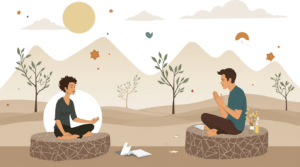
Consider a simple morning routine: Sarah starts her day with a meditation session and reads scripture before beginning work. Her belief system emphasizes mindfulness and self-improvement, which translates into a conscientious effort to start each day intentionally. This practice of intentional living is not just a fleeting act but an integral part of how she approaches every task throughout the day. When faced with a decision at work—whether to stay late or attend her child’s school play—Sarah’s belief in balancing personal and professional life influences her choice, often prioritizing family despite potential career drawbacks.
In another setting, John is involved in a neighborhood dispute over property boundaries. His religious upbringing instilled in him the value of community and respect for others’ rights. In this conflict, his beliefs compel him to approach the situation with patience and understanding, seeking mutual agreement rather than asserting dominance. He believes that resolving disputes through dialogue and compromise aligns with divine teachings of kindness and justice. This moral clarity shapes not only how he resolves conflicts but also influences his interactions within the broader community, fostering an environment based on trust and cooperation.
The psychological impact of such beliefs is profound. Sarah finds comfort in her structured routine, which provides a sense of stability and purpose. The act of reflecting on scripture reinforces her values, grounding her decisions in a deeper understanding of herself and her role in society. Similarly, John’s commitment to resolving conflicts ethically strengthens his relationships with neighbors, creating a more cohesive community. These practices are not just personal choices but active contributions to social harmony.
Beliefs also shape behavior through internalized values that become habitual over time. For Sarah, the regularity of her spiritual practices ensures that these beliefs remain integral parts of her identity. Whether meditating in silence or participating in a group discussion, these rituals reinforce her commitment to mindfulness and self-reflection. John’s adherence to ethical principles is evident in his consistent approach to conflict resolution, making it second nature for him to prioritize communal well-being.
The complexity of living according to belief is not without its challenges. Both Sarah and John may experience moments of doubt or conflicting desires. Sarah might struggle between her commitment to family and her career ambitions, questioning whether her beliefs are practical in a world dominated by professional success. Similarly, John might face difficult decisions where ethical considerations clash with personal interests, testing the limits of his moral clarity.
The diversity within belief systems further complicates this lived experience. While both individuals share common values, their interpretations and applications can differ based on cultural or contextual factors. Sarah’s approach to mindfulness may evolve as she integrates different practices from various traditions, while John might adapt his ethical principles in response to changing societal norms. These variations reflect the dynamic nature of belief systems, which continually interact with personal experiences and external influences.
Moral clarity in an age of relativism is a lived reality that profoundly shapes daily choices and behaviors. Through beliefs like mindfulness, community, and ethical integrity, individuals navigate complex social landscapes, contributing to their own identity and the broader community. The psychological, social, and cultural significance of such beliefs cannot be understated; they provide a foundation for making sense of the world and acting with purpose. As Sarah and John demonstrate, these beliefs are not just abstract concepts but active forces that guide everyday decisions, fostering both personal growth and communal harmony. The complexity of living according to belief is evident in the continuous interplay between internal convictions and external actions, highlighting the rich tapestry of human experience shaped by religious or spiritual practices.
To explore the broader framework behind this topic, read
Living Your Beliefs: When Faith and Spiritual Awareness Meet Daily Life.


Be First to Comment