
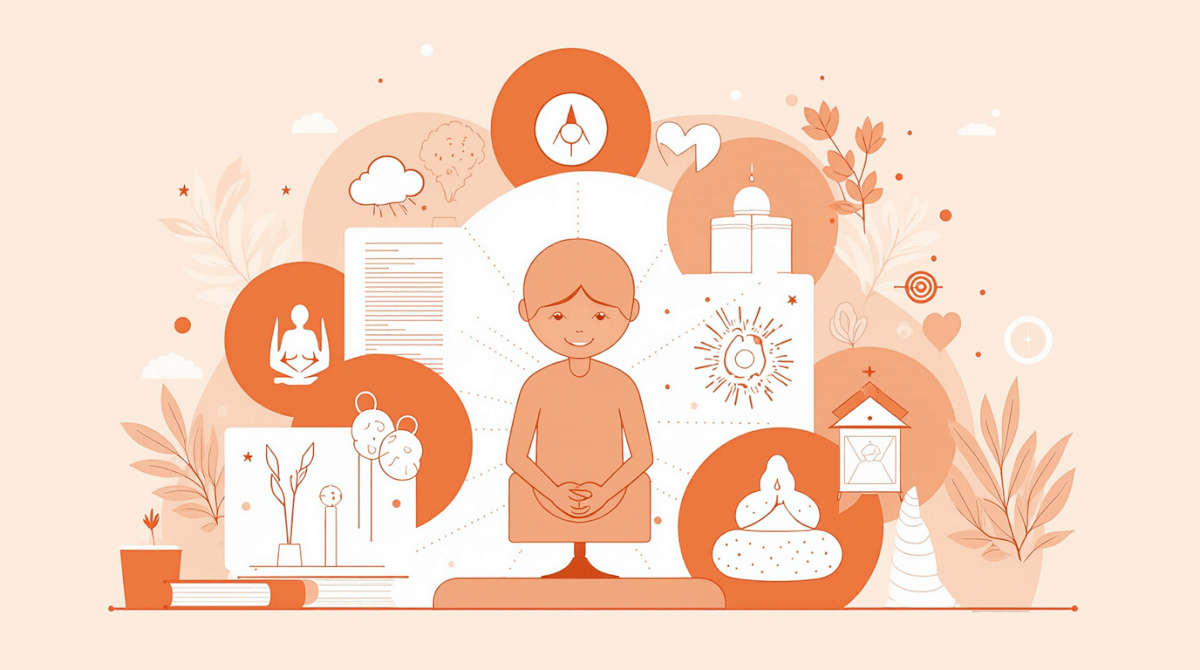
The act of contemplation, whether through meditation, prayer, or reflection, invites us into a space where we can listen to the subtle voices within ourselves. These are not mere whispers but echoes of deeper wisdom and understanding—wisdom that often speaks in moments of quiet solitude and stillness. Such moments allow us to confront the inner tensions of certainty and uncertainty, presence and absence, control and surrender.
When faced with a difficult decision or an uncertain future, contemplation can offer clarity where confusion reigns. It helps us to discern our true desires from fleeting impulses. In this process, we may discover that while we cannot always predict the outcomes of our choices, we can have faith in our ability to face whatever comes next.
Belief systems, even when deeply personal and not institutionalized, shape who we are. They provide a framework for understanding the world and our place within it. For some, this might mean turning to religious texts or teachings that offer guidance on navigating life’s challenges; for others, it could be embracing secular philosophies that emphasize self-discovery and ethical living.
These belief systems can serve as lighthouses in times of doubt. They provide a sense of direction and purpose, helping us to make sense of the chaos around us. They also come with their own set of uncertainties. We must continually question and reassess our beliefs, allowing them to evolve alongside our understanding of ourselves and the world.
Consider the tension between control and surrender in spiritual practice. While it is natural to want to grasp at security and certainty, spirituality often encourages a letting go—both of material possessions and emotional attachments. This does not mean abdicating responsibility or agency; rather, it involves recognizing that some aspects of life are beyond our control. By embracing this reality, we can find peace in the present moment.
In moments of solitude, when we are forced to confront our innermost selves, doubts often arise. We question whether our paths truly align with our deepest values and desires. These doubts, far from being negative, are essential for growth and authenticity. They push us to seek deeper understandings and more profound connections—connections not just with others but also with a sense of something larger than ourselves.
Contemplative practices encourage us to explore these inner landscapes, inviting us to see beyond the surface level of our experiences. They teach us that uncertainty is not an enemy but a friend—a reminder that life is complex and full of contradictions. Through embracing this complexity, we can develop a more nuanced understanding of ourselves and others.
Contemplative practices foster a sense of presence—the ability to fully engage with what is happening in the moment rather than being preoccupied with past regrets or future worries. This presence allows us to experience life more deeply and richly. It also helps us to navigate difficult emotions and situations with greater resilience.
In this journey, we are not alone. The inner strength gained through contemplative practice can be shared and supported by others who walk similar paths. Community provides both a sense of belonging and the encouragement needed to continue on our spiritual journeys. Yet, it is ultimately an individual experience—one that requires introspection, self-reflection, and the willingness to confront one’s own limitations.
Inner strength through contemplative practice is about more than just achieving peace or happiness; it is about deepening our understanding of ourselves and the world around us. It involves navigating the complex interplay between certainty and uncertainty, presence and absence, control and surrender. By embracing these tensions, we can find greater coherence within ourselves and, in turn, become more deeply connected to the broader human experience.
To explore the broader framework behind this topic, read
Living Your Beliefs: When Faith and Spiritual Awareness Meet Daily Life.
Related Reading
– Tenzin Wangyal Rinpoche — The Tibetan Yogas of Dream and Sleep
– David R. Hawkins — Letting Go


Be First to Comment