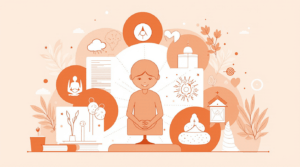
In the quiet recesses of one’s mind lies an uncharted territory, a landscape where the contours of thought and emotion intermingle to shape our innermost essence. This is the realm of contemplative practice—a personal quest for strength and clarity that transcends the superficial layers of daily life. As individuals, we are often enveloped by the external pressures and expectations of society, which can cloud our ability to access this deeper sense of self. Contemplation serves as a beacon in this darkness, guiding us toward a more profound understanding of who we are and what gives our lives meaning.
The journey inward begins with a simple act: sitting in stillness and allowing the mind to settle into the present moment. This practice can take various forms—meditation, prayer, or simply moments of quiet reflection. In these quiet spaces, the layers of habitual thinking begin to peel away, revealing the complexities and contradictions that reside within us. The tension between certainty and uncertainty becomes palpable; we question the very foundations of our beliefs, embracing an ambiguous yet profound clarity. This is not a rejection of faith but rather a deepening of it, where doubt serves as a catalyst for spiritual growth.
Contemplation often involves a dance between presence and absence—a subtle interplay that enriches our inner landscape. Presence here does not mean the absence of thoughts or feelings, but rather an awareness of them without becoming overly entangled in their narrative. It is in these moments of mindful observation that we can begin to discern the underlying patterns of thought that shape our actions and reactions. Absence, refers to those fleeting instances when we let go of control and surrender to a greater sense of serenity. These are times when external pressures seem less daunting, and inner calm prevails.
The struggle between control and surrender is one of the most poignant aspects of contemplative practice. We yearn for certainty in an uncertain world, seeking assurance that our actions will lead to desired outcomes. Yet, this desire can create a rigid sense of self and limit our capacity for growth. Through contemplation, we learn to release the reins of control and trust in a higher order or deeper wisdom. This does not mean passivity but rather a willingness to embrace the unknown with an open heart.
Doubt is a constant companion on this journey, challenging us at every turn. It arises from our recognition that no matter how deeply we have explored our inner landscape, there will always be more to uncover. Doubt can be paralyzing or liberating; it depends on how we choose to engage with it. When approached as an invitation for further exploration, doubt becomes a powerful ally in the pursuit of truth and authenticity.
The complexity of these inner experiences cannot be overstated. Each person’s path is unique, shaped by their individual history, personality, and circumstances. What may resonate deeply with one person might seem irrelevant to another. This diversity underscores the universal appeal of contemplative practice—it speaks directly to the human condition, addressing questions that are as old as time itself.
In exploring spirituality from this inner perspective, we recognize its psychological significance—how it shapes our sense of identity, behavior, and community. Our beliefs serve as a framework through which we navigate life’s challenges, providing both guidance and comfort. They can also become rigid and limiting if not regularly examined and updated to reflect deeper understanding.
For many, the search for spirituality is an exploration of transcendence—an attempt to connect with something beyond the self. This could manifest in various ways—through nature, art, music, or personal relationships. These experiences offer glimpses of a greater reality, fostering a sense of awe and wonder that can transform our everyday perceptions.
Inner strength through contemplative practice is not about achieving a perfect state of being but rather embracing the process of growth and discovery. It involves navigating the intricate web of emotions, thoughts, and beliefs that form the fabric of our inner lives. Through this journey, we learn to find resilience in uncertainty, peace in presence, and trust in surrender. Each step forward, no matter how small, contributes to a richer understanding of ourselves and our place in the world.
Related Reading
– Krishnamurti — The First and Last Freedom
– Anthony de Mello — The Way to Love