
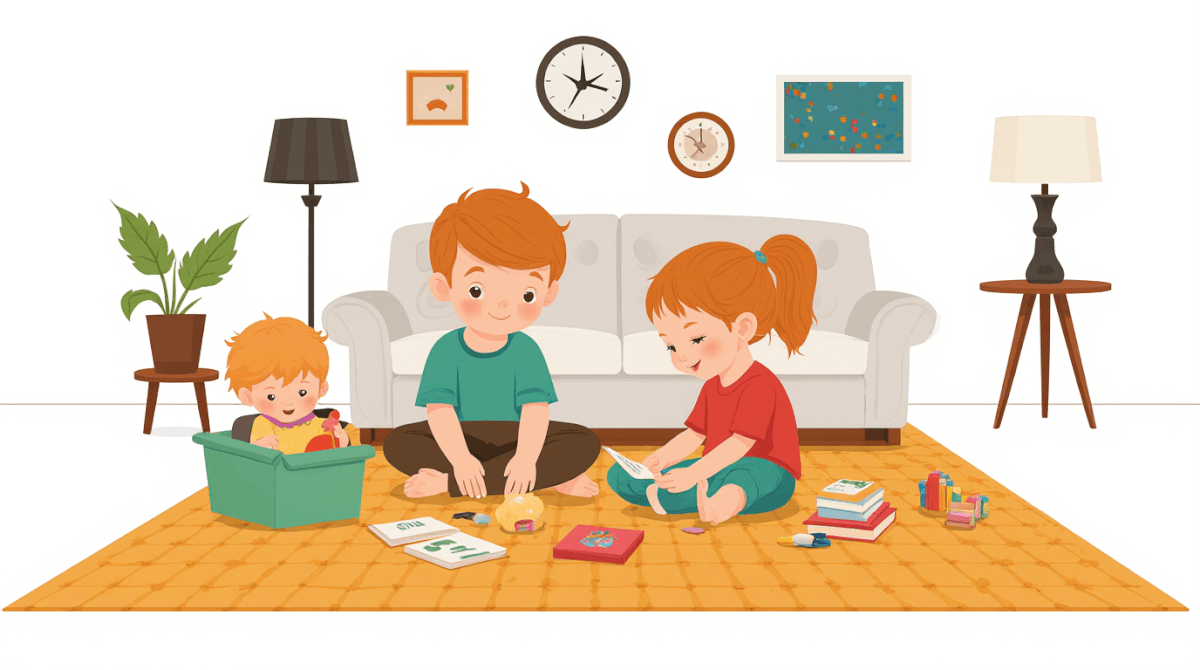
Stability influences cognitive development through its impact on a child’s emotional security, which in turn affects their ability to engage with the world and process information effectively. Emotional security, derived from stable relationships and environments, provides a solid foundation that allows children to explore their surroundings confidently and learn new concepts without constant worry or fear. This mechanism is critical because it enables cognitive processes such as memory formation, attention span development, and problem-solving skills to flourish.
Emotional security begins with the stability of early relationships, most notably those between caregivers and infants. A stable environment where a child feels safe and supported leads to the release of oxytocin and other bonding hormones that strengthen emotional bonds. This biochemical process not only fosters trust but also enhances cognitive function by reducing stress levels, which are detrimental to learning. When a baby is consistently held and spoken to in a calm manner, they experience fewer physiological stress responses such as elevated heart rate or increased cortisol levels. These physiological changes contribute to better neural connections that support memory retention and attention.
As children grow older, the stability of their broader environment continues to play a crucial role. Schools with stable structures provide predictable routines and consistent expectations, which help children develop self-regulation skills. Self-regulation is essential for cognitive development because it allows children to manage their emotions and behaviors effectively. In classrooms that are chaotic or unstable, students may struggle to focus on tasks due to heightened stress levels. Stable educational settings with clear rules and expectations promote a sense of safety, enabling children to concentrate more effectively and engage in complex problem-solving activities.
The role of consistent routines extends beyond academic environments into daily life at home. Regular meal times, bedtime schedules, and predictable daily activities provide children with stability that reduces uncertainty and anxiety. This predictability is particularly important during early childhood when the brain is developing critical neural pathways for cognitive functions like language acquisition and numerical understanding. Reading a storybook every evening before bed reinforces both linguistic and emotional security by creating positive associations between the child and the activity.
Stable social interactions with peers contribute to the development of social cognition—understanding how others think and feel—which is integral to higher-order thinking processes such as empathy and cooperation. When children experience consistent and supportive friendships, they learn to navigate social situations effectively, which enhances their ability to collaborate on tasks and understand complex narratives. Children who consistently play with a group of friends at the same playground may develop better communication skills and conflict resolution strategies through repeated interactions.
In addition to its direct impact on cognitive development, stability also influences how children perceive and interact with challenges. In stable environments, children are more likely to approach difficulties with resilience rather than giving up or becoming overly anxious. This attitude is crucial for developing perseverance—a key component of problem-solving skills. A child who frequently encounters setbacks in a stable home environment learns that these situations can be managed through persistence and planning. This experience builds confidence and enhances the ability to tackle complex problems.
The impact of stability on cognitive development becomes particularly evident when comparing children from different socioeconomic backgrounds. Children living in poverty or unstable households often face numerous challenges that hinder their ability to focus on learning. These factors, such as inconsistent housing or frequent family relocations, can lead to heightened stress levels and fragmented attention, which impede memory formation and comprehension. Children raised in stable environments, regardless of socioeconomic status, are more likely to develop strong cognitive skills because they have the emotional security needed to engage fully with educational activities.
In summary, stability influences cognitive development by providing a secure base from which children can explore their environment and learn new information without constant fear or worry. This mechanism operates through multiple pathways including emotional bonding, self-regulation, social cognition, and resilience building. The consistent support provided in stable environments enables children to develop critical cognitive skills such as memory formation, attention span development, problem-solving abilities, and perseverance. By fostering these cognitive processes, stability prepares children for academic success and lifelong learning.
References:
– American Psychological Association. (2017). Stress in America: Coping with Change.
– Centers for Disease Control and Prevention. (2020). Child Maltreatment and Its Consequences.




Be First to Comment