
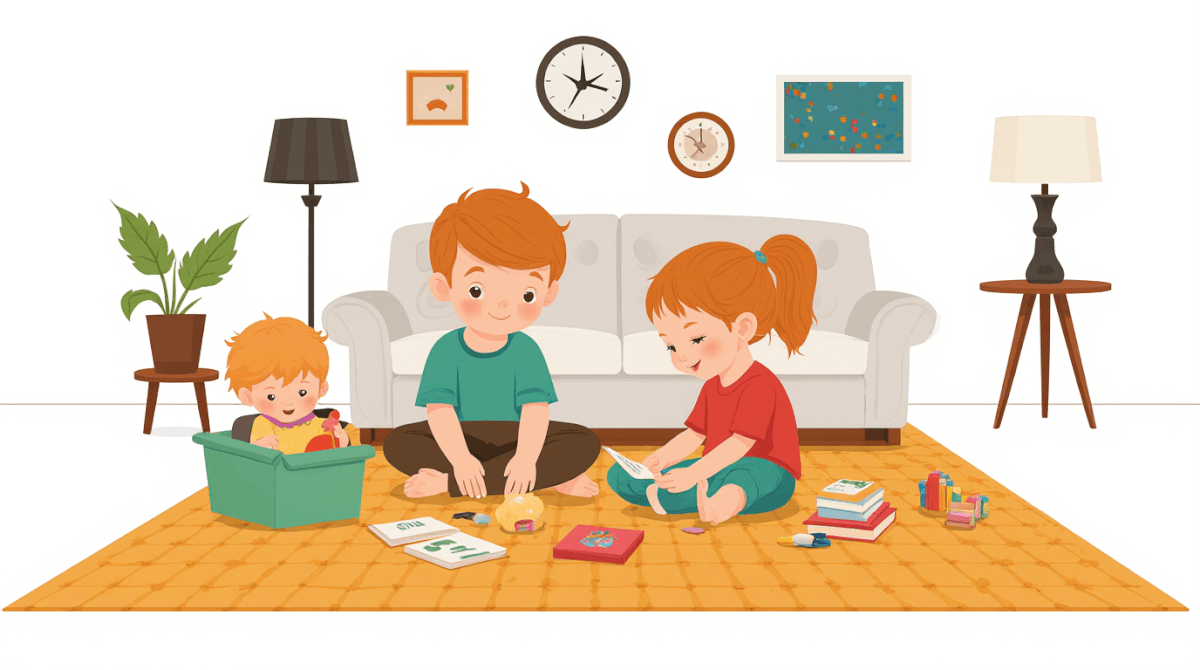
The first step in understanding this mechanism involves recognizing that problem-solving skills are not innate but develop over time through experiences and interactions. When a child encounters a challenge, whether it is figuring out how to build a block tower or solving a math problem, the support provided by their environment plays a crucial role. When a caregiver helps a toddler stack blocks, they do not simply provide the answer but guide the child’s exploration of different solutions, thereby fostering an early understanding that problems can be approached in various ways.
This guidance and support from caregivers serve as the foundational building blocks for more advanced problem-solving skills. As children grow, their ability to think critically about problems increases, partly because they have learned how to engage with challenges constructively. When faced with a difficult math problem, a child who has been supported in solving simpler puzzles or games may feel more confident and equipped to tackle the task.
Early support extends beyond individual interactions; it also includes broader social and cultural factors that shape a child’s environment. In settings such as schools, children learn to collaborate with peers, discuss problems, and work towards solutions together. This collaborative learning not only enhances their problem-solving skills but also teaches them the value of teamwork and communication—skills essential in tackling complex challenges.
The impact of early support is evident in the development of cognitive flexibility. Cognitive flexibility refers to the ability to adapt thoughts or actions based on new information or changing circumstances. Children who receive supportive early experiences are more likely to exhibit greater cognitive flexibility because they have been encouraged to explore different solutions and consider multiple perspectives. A child who has learned that there can be several ways to solve a puzzle is better prepared to think flexibly when confronted with a novel problem.
Another key aspect of how early support shapes problem-solving skills is the development of resilience. Resilience involves the ability to recover from difficulties and maintain a positive outlook in the face of challenges. Children who grow up in environments where they receive consistent, positive feedback and encouragement are more likely to develop strong emotional coping mechanisms. These children learn that setbacks are part of the process and that perseverance is rewarded. This resilience not only makes them better problem solvers but also contributes to their overall mental well-being.
A lack of early support can have detrimental effects on problem-solving skills. Children who do not receive adequate guidance may develop learned helplessness—a psychological state where they believe they are unable to solve problems regardless of the effort they put in. This can manifest as avoidance behavior or a reluctance to try new strategies, significantly hindering their ability to approach challenges effectively.
The role of culture and social context is also critical in shaping these skills. Different cultures have varying expectations for problem-solving behaviors. In some societies, there may be greater emphasis on individual effort, while others prioritize collaborative approaches. These cultural norms influence how children interpret their experiences and develop the necessary cognitive and emotional tools to navigate complex problems.
Early support can take many forms, from direct guidance during playtime to indirect encouragement in everyday interactions. A caregiver who regularly engages with a child in activities like reading or playing games is providing a supportive environment that enhances problem-solving skills subtly yet effectively. These activities not only entertain but also teach children to think logically and sequentially.
Early support plays a pivotal role in shaping problem-solving skills through the development of cognitive flexibility, resilience, and critical thinking. The quality and nature of this support, whether it comes from caregivers or broader social contexts, significantly influence how children approach problems. By fostering an environment that encourages exploration, collaboration, and emotional well-being, we can help children develop into resilient and effective problem solvers ready to face the challenges of a complex world.
References:
1. Siegler, R. S., & Dehay, D. (2018). Numerical development. In W. Damon & R. M. Lerner (Eds.), Handbook of child psychology and development science: Vol. 3. Theoretical models of human development (7th ed.). John Wiley & Sons.
2. Greenberg, M. T., & Domitrovich, C. E. (2018). Promoting children’s social-emotional well-being in early childhood programs. Future of Children, 28(2), 35-64.



Be First to Comment