
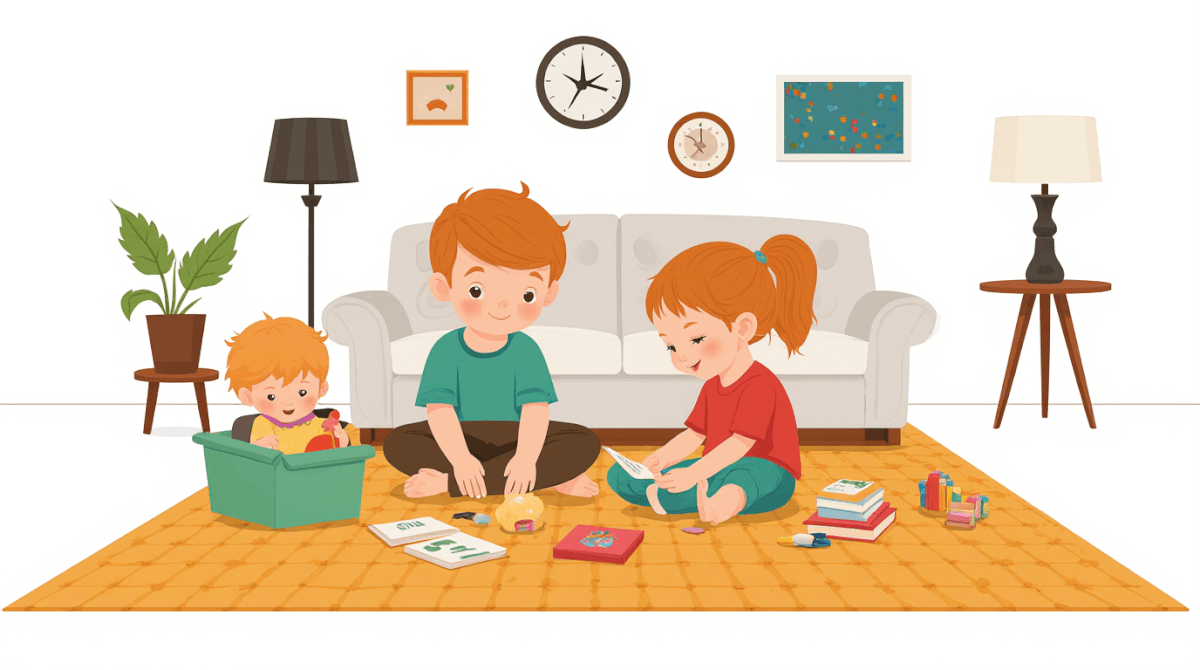
Consistent guidance plays a crucial role in the cognitive and emotional development of children. This process involves adults providing structured support to help children navigate various experiences with understanding and direction. The mechanism by which consistent guidance influences child development is multifaceted, involving the formation of schemas—mental frameworks for organizing knowledge—and the reinforcement of behaviors that lead to self-regulation. To understand how this works, we can delve into two key areas: the role of a stable environment in shaping cognitive structures and the impact of repetitive, positive interactions on children’s ability to regulate their emotions and actions.
In terms of cognitive development, consistent guidance helps children develop schemas through repeated exposure to similar experiences. When a child consistently receives guidance during playtime or problem-solving activities, they begin to see patterns and understand how to respond in different situations. This process is akin to constructing building blocks, where each block (or experience) adds to the structure of their understanding. Parents or caregivers who provide consistent instructions, such as helping a toddler sort shapes into matching containers, are indirectly teaching them about categories and relationships, which lay down foundational knowledge for more complex cognitive tasks later on.
The environment in which children grow up significantly influences these learning processes. A stable home with predictable routines provides the necessary structure that supports schema formation. If a child regularly sees adults solving puzzles together, they may develop a schema understanding of problem-solving strategies without explicit instruction every time. Over time, this predictability allows children to anticipate what is expected from them and to prepare mentally for similar experiences. This preparation not only enhances their cognitive abilities but also fosters a sense of security and trust in the world around them.
Consistent guidance contributes to emotional regulation by reinforcing behaviors that are beneficial and discouraging those that might lead to negative outcomes. When a child learns to use words instead of throwing tantrums, they are being guided towards more adaptive coping mechanisms. This process is not just about stopping bad behavior but also about teaching appropriate ways to express emotions. Children who receive consistent emotional guidance learn to recognize and manage their feelings effectively, which is crucial for their long-term mental health and social interactions.
Repetitive positive interactions also play a significant role in this mechanism. When caregivers consistently provide affection, encouragement, and support, children develop a sense of self-worth and resilience. These interactions create a feedback loop where the child’s actions are met with approval or constructive criticism, leading to improved behavior over time. If a child learns that making mistakes is part of learning through consistent but gentle guidance from adults, they are more likely to take risks in exploring new activities without fear of failure. This approach not only enhances their problem-solving skills but also builds their confidence.
It’s worth noting how the social and cultural context further influences these processes. In a diverse society, children may encounter different guidance styles that can be both enriching and challenging. Exposure to various cultural practices through consistent yet respectful guidance helps children understand and appreciate diversity, contributing to their development as global citizens. Learning about different traditions during family celebrations can broaden a child’s understanding of the world beyond their immediate environment.
The impact of consistent guidance on self-regulation is particularly significant. Self-regulation involves managing one’s own behavior, emotions, and thoughts in response to internal or external stimuli. Children who grow up with consistently guiding caregivers learn early on how to monitor their actions and adjust them as needed. This skill is crucial not only for academic success but also for navigating complex social situations. A child who learns to manage their impulses by stopping to think before reacting may find it easier to follow classroom rules or resolve conflicts peacefully.
Consistent guidance is a vital mechanism in the development of children’s cognitive and emotional capabilities. By fostering schema formation through structured experiences and reinforcing behaviors that promote self-regulation, caregivers can significantly impact how children perceive and interact with their environment. The role of stable environments and repetitive positive interactions cannot be overstated; they provide the necessary foundation for children to grow into confident, capable adults who are well-equipped to handle the challenges of life.
In the broader social context, consistent guidance also contributes to the transmission of values and norms from one generation to another, ensuring that cultural continuity is maintained. As society evolves, this mechanism adapts to new environments while preserving essential elements of culture and education. The impact of these guiding principles extends beyond individual development; they shape communities and influence societal structures in profound ways.
By recognizing and valuing the role of consistent guidance, we can better support children’s holistic growth, ensuring that they are prepared for the complexities of life with a strong foundation of knowledge, emotional intelligence, and self-regulation.
Related Reading
– Diana Baumrind — Child Care Practices Anteceding Three Patterns of Preschool Behavior
– John Gottman — Raising an Emotionally Intelligent Child



Be First to Comment