
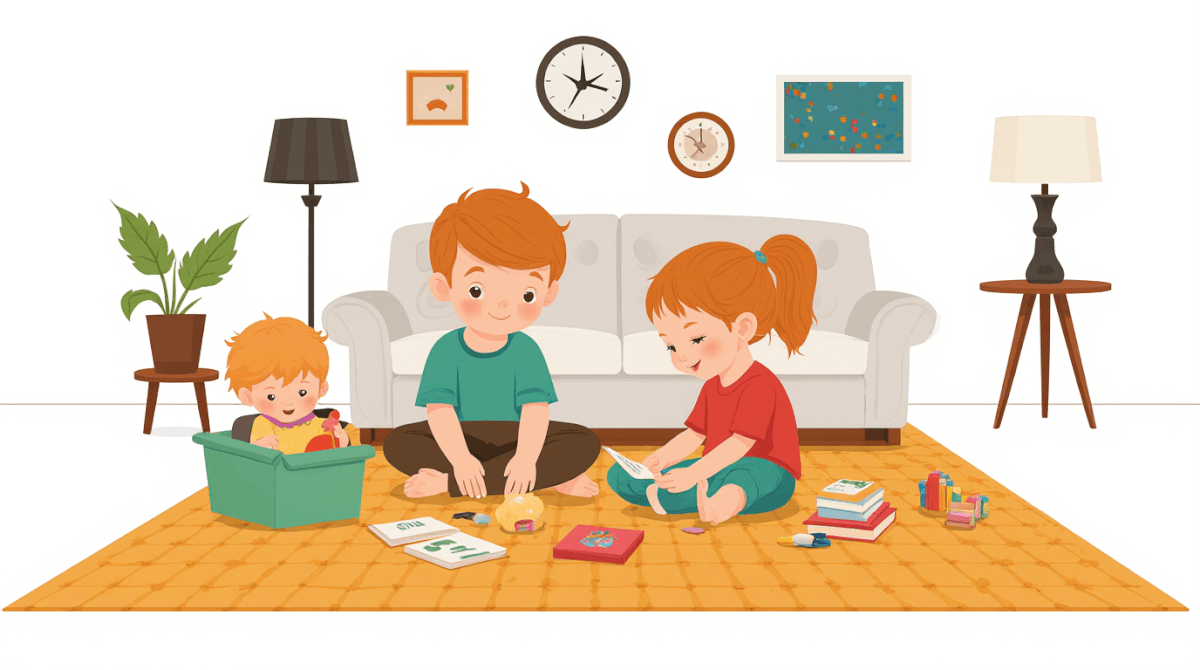
Social responsibility is a fundamental aspect of human behavior that enables individuals to contribute positively to their communities. For children, this development starts early and involves complex interactions between the child’s internal motivations and external influences from various environments. One specific mechanism through which social responsibility develops in children is through the influence of moral modeling within family and community settings. This essay will analyze how parents and peers serve as role models for children, shaping their understanding of social norms and ethical behavior.
Children learn about social responsibility by observing and imitating the actions of others around them, a process known as observational learning. Parents are primary role models in this context, as they provide numerous opportunities for children to see what behaviors are acceptable or expected within society. When parents volunteer at local food banks or engage in community service activities, children learn about the importance of giving back and helping others. These actions serve as visible examples that guide children’s understanding of social responsibility.
Peers also play a significant role in shaping a child’s perception of social norms and ethical behavior. Children often compare their own actions with those of their friends to determine what is socially acceptable. Peer groups can reinforce or challenge the values instilled by parents, creating an environment where children must navigate their personal beliefs against the expectations of their peers. When a child observes their classmates participating in charitable events, they may be motivated to do the same as part of a shared social identity. This mutual reinforcement and validation contribute significantly to the development of social responsibility among young people.
The impact of these role models extends beyond mere imitation; children internalize the values and behaviors observed from parents and peers. As children grow older, their capacity for empathy and understanding increases, enabling them to reflect on the broader implications of their actions. This reflection leads to a deeper comprehension of social responsibility as not just following rules but actively contributing to the well-being of others. A child who has consistently witnessed acts of kindness from both parents and friends is more likely to engage in similar behaviors, seeing it as an extension of their identity rather than a mere external expectation.
The influence of role models on social responsibility is not limited to positive behaviors but also includes the correction of negative actions. When children observe adults or peers engaging in harmful behavior, they learn about accountability and the consequences of such actions. This understanding helps them develop a critical awareness of societal norms and ethical standards, guiding their decisions even when faced with difficult choices.
The influence of role models is further strengthened by the consistency and frequency of interactions within family and community settings. Regular exposure to positive examples ensures that children have ample opportunities to practice social responsibility in various contexts. Participating in school fundraisers or neighborhood clean-up events provides practical experience in contributing to the common good. These experiences not only reinforce the values learned from parents and peers but also prepare children for future roles as responsible citizens.
In addition to observational learning, children also learn about social responsibility through direct teaching. Parents often explicitly discuss ethical behaviors and explain why certain actions are important. This educational process complements the role modeling effect by providing a deeper theoretical understanding of social responsibility. Children who receive such teachings are more likely to engage in prosocial behavior because they have both seen examples and understood the underlying principles.
The role models that children encounter can vary widely depending on their cultural and social backgrounds. In multicultural societies, exposure to diverse perspectives enhances children’s ability to understand and appreciate different viewpoints. This diversity promotes a broader sense of social responsibility as children learn to consider the needs and well-being of people from various backgrounds. In communities with high levels of ethnic diversity, children may be encouraged to participate in cross-cultural events that foster mutual respect and cooperation.
The development of social responsibility in children is deeply influenced by the role models they encounter within their families and communities. Through observational learning, direct teaching, and cultural experiences, children internalize values and behaviors that shape their understanding of ethical conduct. These influences provide a foundation for responsible citizenship, encouraging children to actively contribute to their communities throughout their lives.
Children’s development in this area is not static; rather, it evolves as they grow older and gain more life experience. The role models they encounter continue to play a crucial role in guiding their behavior, ensuring that social responsibility remains an integral part of their identity. As society becomes increasingly interconnected, the importance of fostering social responsibility among children cannot be overstated, as it prepares them for active participation in a global community.
While the mechanisms described here form the basis of social responsibility development, individual experiences and unique circumstances can lead to variations in how this concept is internalized by different children. Understanding these fundamental processes provides valuable insights into the complex interplay between personal growth and societal expectations. By recognizing the critical role that role models play, educators, parents, and community leaders can better support children as they navigate their journey towards becoming responsible adults.
References:
Meadows, M., & Meadows, D. (2014). Thinking in Systems: A Primer. Chelsea Green Publishing.
Gilligan, C. (1982). In a Different Voice: Psychological Theory and Women’s Development. Harvard University Press.
Related Reading
– Peter Gray — Free to Learn
– John Gottman — Raising an Emotionally Intelligent Child




Be First to Comment