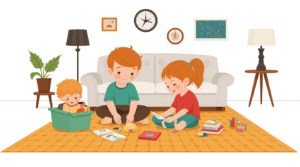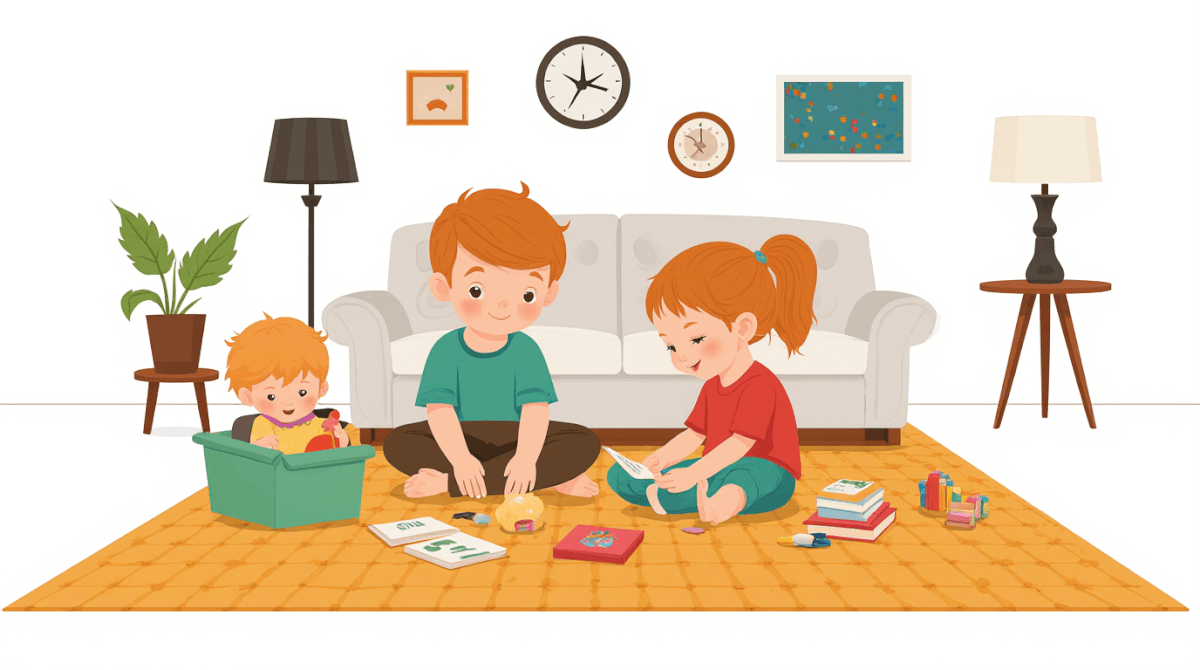
From the moment they first interact with their environment, children begin to form a sense of justice, a fundamental understanding of what is fair and unfair. This process is deeply intertwined with their growing emotional security, confidence, and identity, all of which are shaped by everyday family interactions. These interactions serve as the building blocks for a child’s capacity to understand and internalize societal norms and values.
One of the earliest psychological mechanisms at play is the child’s developing sense of empathy. When parents or caregivers respond to their expressions of distress with validation and comfort, the child begins to understand that emotions are valid and that there are appropriate ways to express them. This initial interaction lays the groundwork for the child to empathize with others, recognizing the emotional states of those around them. Over time, this empathy is crucial in developing a sense of justice because it fosters an understanding that actions have consequences, not just for oneself but for others as well.
Consider a scenario where a young child sees another child being teased. Initially, the child might feel upset but might not yet grasp why the teasing is wrong. If a caregiver reacts by acknowledging the child’s feelings and explaining that teasing can hurt others, the child begins to see the connection between behavior and its impact on others. Such interactions help the child understand that actions have consequences and that empathy is important in evaluating those outcomes. This sense of empathy gradually evolves into a more complex understanding of fairness, as the child starts to recognize the value of treating others with respect and consideration.
Another critical factor in the development of a sense of justice is the child’s growing confidence in their ability to make choices and exert control over their environment. This confidence is nurtured through small, daily decisions that children are allowed to make. Choosing what to wear or what snack to have can build a sense of autonomy and competence, which are foundational for later moral reasoning. As children successfully navigate these small decisions, they develop a belief in their ability to influence outcomes and understand the importance of rules and boundaries. This confidence in one’s own judgment and actions is essential when considering whether something is fair or unfair, as the child can evaluate situations from their perspective and that of others.
The role of modeling also cannot be overstated. Children closely observe the behaviors and attitudes of their caregivers, and they internalize these through imitation and reinforcement. If a parent consistently treats siblings with fairness, the child will likely see this as a norm and strive to emulate it. This modeling can take place in everyday situations, such as sharing toys or dividing tasks equitably. When parents themselves exhibit fair behavior, they are not only teaching but also demonstrating what it means to treat others justly. Over time, these observed behaviors become internalized, influencing how the child perceives and acts in social situations.
It is important to note that this process is not without its complexities. There can be tension between support and overprotection. While it is crucial for caregivers to provide a nurturing environment where children feel safe to explore and make mistakes, an overly protective stance can stifle the child’s ability to engage with the world independently and learn from their experiences. If a parent constantly intervenes to resolve every conflict for the child, the child may never fully develop the skills necessary to navigate social interactions on their own. Instead, the caregiver should strike a balance, offering guidance and support when needed but allowing the child to face challenges and make decisions themselves.
The cultural and societal context in which children grow up plays a significant role in shaping their sense of justice. The values and norms that are prevalent in the broader community can either reinforce or challenge the lessons learned within the family. A culture that emphasizes individual achievement might prioritize fairness based on merit, while one that places a higher value on community may emphasize collective well-being. These external influences can create tension with internalized family values but also provide opportunities for dialogue and reflection.
As children grow, their sense of justice becomes more nuanced. They begin to recognize that fairness is not always about absolute equality but can involve flexibility and context. In a classroom setting, the concept of fairness might include not only equal treatment but also individual needs being met appropriately. This development requires the child to consider multiple perspectives and to evaluate situations based on a combination of principles rather than a single rigid standard.
In summary, children’s sense of justice is a complex and ongoing process that is shaped by a myriad of factors, including empathy, confidence, modeling, and external cultural influences. Each interaction with caregivers and the broader environment contributes to the child’s growing understanding of what is fair and unfair. As children navigate these early experiences, they develop the emotional security, confidence, and identity necessary to engage with the world in a just and compassionate manner. This journey, while fraught with challenges and nuances, ultimately equips them to become not only better individuals but also contributors to a more just society.
Related Reading
– Mihaly Csikszentmihalyi — Flow (applied to childhood development)
– James Heckman — The Economics of Early Childhood