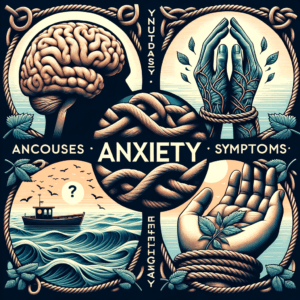
Understanding anxiety starts by recognizing it as a natural human response rather than a sign of personal weakness or flaw. Anxiety often arises from heightened sensitivity to potential threats—real or imagined—which triggers a series of physical and mental reactions that can escalate into persistent worry.
Imagine stepping into a crowded room at a social gathering for the first time. As you approach, your heart might start racing, your palms may become sweaty, and an urge to escape might arise. These initial responses are instinctive, rooted in our evolutionary need to detect danger and respond accordingly. In many modern situations, these physical signs of anxiety can be disproportionate to the actual threat.
Over time, these transient feelings of unease can evolve into more persistent anxious thoughts. You might start imagining all possible ways things could go wrong at a social event or worry excessively about embarrassing yourself in front of others. Each negative thought reinforces your sense of discomfort, and before long, you find your mind consumed by worries rather than engaging with the present moment.
This cycle perpetuates as anxious thoughts influence both emotions and behavior. Consider an example where someone feels overwhelming anxiety about giving a work presentation. As the day approaches, they might become increasingly tense and may even avoid thinking about it altogether or call in sick on the day of the event. This pattern of avoidance offers temporary relief but ultimately reinforces fear by preventing confrontation with the source of anxiety.
Anxiety frequently manifests as an uninvited guest that disrupts daily life with relentless chatter about potential threats. Our minds have the ability to imagine countless scenarios, many of which never materialize. The imagined outcomes can feel very real and immediate, causing significant distress in everyday situations.
One common way people try to cope is by attempting to predict future events, hoping this will give them a sense of control. This approach often backfires because it leads to excessive worry rather than peace of mind. Instead of focusing on what might go wrong tomorrow or next week, it’s beneficial to concentrate on the present moment and all that can be accomplished today.
Challenging negative thoughts with reality-based assessments is another effective technique. If you find yourself spiraling into a state of fear about an upcoming task, take a pause and ask whether your concerns are grounded in fact or fiction. Are there realistic reasons for concern? If not, gently remind yourself to let go of these unfounded fears.
Visualization can also be a powerful tool for managing anxiety. By mentally rehearsing scenarios before they occur, you can build confidence and reduce fear. If you have a speech coming up, visualize standing confidently in front of your audience, speaking clearly, and receiving positive feedback. This mental practice helps condition the mind to expect success rather than failure.
Overcoming anxiety is about recognizing that it’s okay not to have all the answers. Life inherently involves unpredictability, and trying to control every outcome often generates more stress than relief. Instead, focus on embracing uncertainty and building resilience through small steps each day.
While seeking support from professionals like counselors or therapists can be incredibly beneficial, there are also numerous self-help resources available online that offer guidance for managing anxiety without formal intervention. It’s important to explore different methods and find what works best for you individually. Remember, this is a journey of discovery rather than an immediate fix.
Navigating the challenges posed by anxiety requires patience, persistence, and openness to learning from both successes and setbacks. By understanding how anxious thoughts develop and influence emotions and behaviors, we can better equip ourselves to handle life’s uncertainties with greater ease and confidence.
Anxiety often stems from a deep-seated fear of failure or judgment, making everyday tasks feel monumental rather than manageable. Someone might dread stepping into a meeting at work because they are afraid their ideas won’t be good enough. This fear can lead to avoidance behaviors that protect the individual in the short term but undermine confidence and resilience over time.
Recognizing the patterns of thought that contribute to anxiety is crucial for managing it effectively. Cognitive distortions, such as catastrophizing or black-and-white thinking, often play a significant role. Catastrophizing involves imagining the worst-case scenario, while black-and-white thinking can lead to all-or-nothing views, leaving little room for nuance or flexibility.
Mindfulness practices, like meditation and breathing exercises, can be particularly helpful in managing anxiety by focusing on the present moment rather than worrying about future uncertainties. These techniques encourage a more balanced perspective and help individuals develop coping strategies that are sustainable over time.
Understanding that anxious thoughts are part of being human but do not define who you are is an important step toward reducing their hold on your life. It’s crucial to approach anxiety with compassion, acknowledging the challenges it presents without immediately seeking solutions. By accepting the presence of anxiety and learning to coexist with it, individuals can develop a more resilient mindset that allows them to navigate through difficult situations with greater ease.
Managing anxiety is about fostering self-awareness and developing skills that promote emotional well-being. This journey involves recognizing your triggers, understanding how anxious thoughts manifest in different situations, and learning to respond rather than react to these challenges. With time and practice, you can reduce the impact of anxiety on your life and find a greater sense of peace and control.
Anxiety is a complex emotional response that deeply affects our perceptions and behaviors. By exploring its roots and understanding how it operates within us, we can start to unravel the patterns that exacerbate it. Through consistent self-reflection and practice, you can learn to manage your anxious thoughts more effectively, leading to a life filled with greater clarity and calmness.