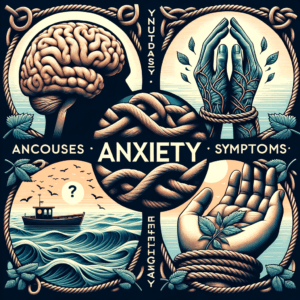
Anxiety often feels like an uninvited guest that quietly slips into our lives, making itself at home amidst the daily hustle and bustle. It starts small, perhaps as a fleeting thought or a nagging worry about an upcoming event, but it quickly grows roots in the fertile ground of uncertainty. Anxiety is not just a feeling; it’s a complex psychological mechanism that intertwines thoughts, emotions, and behaviors to create a formidable presence.
At its core, anxiety develops from our natural tendency to anticipate future challenges and threats. This evolutionary trait once protected us from dangers such as predators lurking in the shadows or rival tribes encroaching on our territory. Today, this heightened state of alertness is often triggered by less life-threatening concerns like work deadlines, financial pressures, or social obligations.
Imagine a scenario where you’re about to give a presentation at work. The thought of standing in front of your colleagues and superiors might be daunting enough on its own, but anxiety amplifies these fears into potential disasters. “What if I forget my lines?” “What if they laugh at me?” These thoughts can become so overwhelming that the mere idea of stepping up to speak feels like a mountain too steep to climb.
In such moments, anxious thoughts don’t just sit passively; they influence our emotions and behaviors in profound ways. The fear of public speaking might cause your heart rate to increase, palms to sweat, and voice to tremble—emotional responses that signal the body’s fight-or-flight response. These physiological changes can make it even harder to perform well, creating a vicious cycle where anxiety exacerbates symptoms, which in turn intensifies the initial worry.
Anxiety also affects how we perceive events around us. Let’s consider another everyday situation: driving on a busy road during rush hour. A non-anxious person might view this as an inconvenience but manageable nonetheless. An anxious individual, could see it as a hazardous situation fraught with potential accidents and delays. This skewed perception can lead to overthinking each decision made while driving, such as worrying about the possibility of hitting another car or being late for a meeting.
Anxiety often leads us to avoid situations that trigger these distressing thoughts and feelings. In the context of public speaking, this might mean declining invitations to present your ideas or leading workshops. While avoidance can temporarily relieve anxiety by removing the immediate threat, it ultimately prevents individuals from facing their fears and developing resilience.
Understanding the mechanics behind anxious thoughts is crucial for managing them effectively without falling into the trap of seeking quick fixes like medication or therapy. Instead, recognizing how these thoughts develop and influence our emotional responses can be a powerful tool in reducing anxiety’s grip on daily life. By acknowledging that fear and worry are natural reactions to uncertainty, we begin to see them as manageable rather than insurmountable obstacles.
In the example of trading on the Forex market, which was mentioned earlier, this principle holds true as well. Traders experience heightened anxiety due to the unpredictable nature of currency fluctuations. This can lead to extreme emotional swings and poor decision-making, such as overtrading or completely withdrawing from opportunities. By understanding that losing is a natural part of trading and accepting these losses rather than fearing them, traders can better manage their anxiety and make more informed decisions.
Anxiety is a reflection of our innate desire for control and certainty in an uncertain world. By embracing the unpredictability inherent in life and learning to navigate it with mindfulness and acceptance, we can mitigate the detrimental effects of anxious thoughts on our mental well-being. This doesn’t mean ignoring or dismissing these feelings but rather acknowledging them as part of human experience and finding healthier ways to cope.
In summary, anxiety is a complex interplay between our minds and bodies that shapes how we perceive and interact with the world around us. By unraveling its mechanisms and understanding its impacts on emotions and behaviors, we can begin to address it in more meaningful ways. This journey requires patience, self-reflection, and a willingness to face fears head-on, even if doing so feels daunting at first.