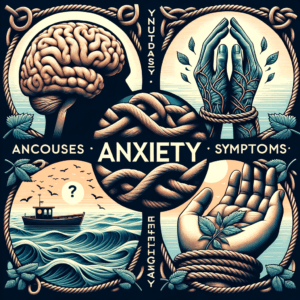
Anxiety can be a complex and overwhelming emotion, often making us feel like we’re walking on thin ice with every step forward. Whether it’s before an important interview, during a challenging exam, or even when anticipating your first kiss, anxiety has a way of sneaking up and clouding our judgment. The psychological mechanisms behind anxiety are intricate, involving a combination of thoughts, emotions, and behaviors that can intertwine in unpredictable ways.
At its core, anxiety stems from the perception of threat or uncertainty. When faced with an event we anticipate might go poorly, our brain jumps into survival mode, triggering the release of stress hormones like cortisol and adrenaline. This physiological response is designed to prepare us for fight-or-flight scenarios but can be counterproductive in situations where physical action isn’t necessary or helpful.
Imagine you’re about to give a presentation at work. Your mind starts racing with thoughts such as “What if I forget my lines?” or “What if they think I’m unprepared?” These anxious thoughts create a mental narrative that paints an exaggerated picture of failure, amplifying your emotional distress and leading to physical symptoms like rapid heartbeat or sweating.
The development of anxious thoughts often begins with a single concern or fear. Over time, this initial worry can snowball into a cascade of “what if” scenarios. Each new thought adds another layer of complexity and dread, making it increasingly difficult for the mind to see beyond the looming threat. This process is known as catastrophizing, where minor issues are blown out of proportion by an endless stream of negative predictions.
In everyday situations, this cycle can manifest in various ways. When preparing for a first date, you might worry about whether your conversation will be engaging enough or if there’s a chance of rejection. These worries aren’t just fleeting thoughts; they can become so deeply ingrained that they shape your behavior and decision-making process. You might find yourself over-preparing to the point where spontaneity is lost, or avoiding situations altogether to prevent potential embarrassment.
Interestingly, anxiety doesn’t operate in isolation but rather influences our emotions and behaviors interdependently. The anxious thoughts you have about an upcoming event not only cause emotional distress but also trigger a chain reaction of physiological responses that affect your overall well-being. The anticipation of public speaking might lead to increased heart rate, muscle tension, and feelings of unease. These physical sensations can then fuel further anxiety by reinforcing negative beliefs such as “I’m not capable” or “This is too scary.”
anxious thoughts have a way of distorting reality, making it harder for us to see situations objectively. When you’re feeling anxious about an upcoming exam, the prospect of failure might seem inevitable, overshadowing any positive outcomes that could realistically occur. This distortion can be so powerful that even when confronted with evidence to the contrary, your brain continues to prioritize and amplify negative information.
It’s important to note that while anxiety can feel overwhelmingly pervasive, it doesn’t define us entirely. Just as anxious thoughts develop over time through repeated exposure and reinforcement of fear-based scenarios, they can also diminish through consistent efforts towards understanding and acceptance. Recognizing when you’re engaging in catastrophic thinking is the first step toward breaking this cycle.
Instead of focusing on worst-case scenarios during a stressful moment, try to acknowledge your feelings without judgment. Notice the thoughts that are causing distress and gently remind yourself that they don’t represent reality. Engaging in activities that promote relaxation and mindfulness can also help mitigate the intensity of anxious moments. Practices like deep breathing, meditation, or simply taking a walk outside can provide temporary relief by shifting focus away from troubling thoughts.
Understanding anxiety involves recognizing its multifaceted nature—how it intertwines with our emotional responses and physical sensations to create a complex web of distress. By acknowledging this interconnectedness, we can begin to unravel the threads that contribute to anxious states and find ways to manage them more effectively in daily life.
So next time you find yourself spiraling into anxiety over an upcoming event or situation, take a moment to reflect on the thoughts driving your emotional response. Ask yourself if these thoughts are realistic or based on exaggerated fears. By doing so, you might discover that the perceived threats aren’t as daunting as they seem and that you have more resilience than you think.