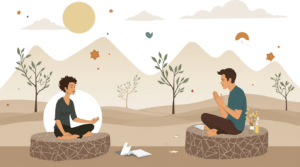
In the heart of every community, from small towns to bustling cities, there is a palpable sense of belief that guides people’s daily lives. Whether it is the Christian practice of sharing meals on the Lord’s Day, the Muslim act of prayer five times a day, or the Buddhist commitment to mindfulness in every moment, religious and spiritual beliefs translate into everyday decisions, habits, relationships, and moral choices. The tension between belief and action, conviction and compromise, often defines the lived experience of faith. These tensions manifest in subtle yet significant ways that shape identity, behavior, community, and moral thinking.
Consider a devout Muslim family who begins each day with the dawn prayer, or Salah. This act, while seemingly simple—a few minutes of standing, bowing, and prostrating before God—becomes a cornerstone of their daily routine. It is not just a religious obligation but a reminder to turn towards the divine, offering gratitude and seeking guidance. The act itself becomes a moment of clarity, a brief escape from the mundane and a recommitment to living in accordance with one’s faith. This practice influences their entire day, shaping their interactions, decision-making, and even their mood. The sense of purpose and connection to a greater order can be profound, influencing their patience and resilience in times of crisis.
A devout Christian family might choose to donate a significant portion of their income to support local charities or international relief efforts. This decision is not merely an act of charity but a reflection of their belief that God calls them to serve others. The act of giving becomes more than just financial support; it is an expression of faith, hope, and love. It influences their values, influencing their everyday decisions about spending, saving, and investing. Such actions also reinforce their sense of community and social responsibility, fostering a network of mutual support and care.
These examples illustrate the deep connection between belief and behavior. The tension between conviction and compromise is evident in both instances. For the Muslim family, maintaining the daily prayers amidst a busy schedule requires dedication and discipline. Similarly, for the Christian family, choosing to give generously can be challenging in the face of financial pressures or personal sacrifices. Both families must navigate these tensions, often making difficult choices that reflect their values.
This tension is not merely about sacrifice; it also serves as a source of strength. For many individuals, the act of balancing belief with practical realities strengthens their resolve and deepens their faith. The daily practice of prayer, can be seen as a form of spiritual discipline, a way to stay connected to one’s faith during challenging times. This routine becomes a source of comfort and guidance, providing a sense of continuity even when the world seems chaotic.
These beliefs influence not only individual behavior but also the broader social fabric. In times of crisis, such as natural disasters or economic downturns, religious communities often come together to support one another. The act of prayer, giving, or volunteering becomes a communal endeavor, fostering a sense of solidarity and shared purpose. During a severe flood, a church might organize a relief effort, mobilizing community members to help distribute food, supplies, and emotional support. This collective action reinforces the belief in the importance of serving others and living in accordance with one’s faith.
The complexity of living according to belief is not without its challenges. Doubt and uncertainty are inherent parts of the human experience, even for those who are deeply religious or spiritual. The idea that one’s actions should always reflect one’s beliefs can be overwhelming. A person might face a moral dilemma where their personal values conflict with societal norms or practical constraints. In such cases, the tension between belief and action becomes particularly acute.
Nevertheless, these complexities only add to the richness of faith in daily life. The process of grappling with these tensions is part of what makes religious and spiritual practices so meaningful. It forces individuals to reflect deeply on their values and beliefs, fostering a sense of authenticity and integrity. This reflection can lead to personal growth, allowing individuals to better understand themselves and the world around them.
Faith matters deeply in everyday life, influencing decisions, habits, relationships, and moral choices. The tensions between belief and action, conviction and compromise, are integral to the lived experience of faith. These tensions shape identity, behavior, community, and moral thinking, providing a source of strength and guidance in times of crisis. While the path is often complex and challenging, the act of living according to one’s beliefs remains a profound and essential aspect of human existence.