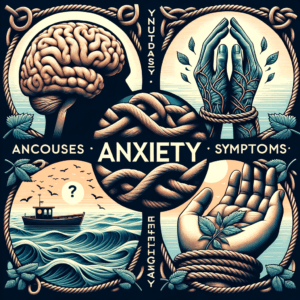
Anxiety is an intricate web of thoughts and feelings that can weave its way through our daily lives without us even realizing how deeply entangled we’ve become in its threads. At the heart of anxiety lies a constant undercurrent of worry, a relentless stream of negative self-talk that whispers doubts and fears into our minds. This internal dialogue shapes not only what we think but also influences how we feel and behave.
Imagine waking up one morning to find yourself feeling inexplicably uneasy about an upcoming meeting at work. Your mind races through all the possible scenarios: What if you forget something important? What if your colleagues think less of you because of a mistake? Each thought spirals into another, painting a picture of potential disaster. This is anxiety in action—it takes a mundane event and magnifies it into something much larger than life.
The process by which anxious thoughts develop often begins with an external trigger: a deadline at work, a conflict with a friend, or even the uncertainty of navigating new social situations. Once triggered, our minds immediately begin to interpret these events through a lens colored by fear and doubt. We might recall past experiences that left us feeling vulnerable or inadequate, using those memories as evidence for why we should be anxious about what’s ahead.
In this cycle, emotions follow closely behind thoughts. When we worry incessantly about future events, it naturally leads to feelings of unease, tension, and even despair. Over time, these emotional responses can become so habitual that they begin to shape our behavior. Someone struggling with anxiety might start avoiding situations that trigger uncomfortable feelings, further reinforcing the belief that danger lies just around every corner.
The impact of such a cycle is profound. It’s not uncommon for individuals to find themselves caught in a whirlwind of worry and fear, leaving little room for joy or relaxation. They might experience physical symptoms like headaches, muscle tension, or even digestive issues as their bodies respond to the constant barrage of stress hormones coursing through them.
To complicate matters further, anxiety often distorts our perception of reality. We may find ourselves overestimating risks and underestimating our ability to handle challenges. This cognitive distortion can lead us to see potential threats where none exist or overlook solutions that are readily available. A student might spend sleepless nights worrying about an upcoming exam while simultaneously dismissing the idea of seeking help from tutors or peers who could offer support.
Understanding anxiety doesn’t mean we suddenly become immune to its effects. Instead, it involves recognizing how our thoughts and emotions intertwine in creating this overwhelming sense of unease. By becoming more aware of these patterns, we can start to challenge them rather than succumbing to their power over us.
Consider the scenario where you receive an email with a negative comment from your boss. Your initial reaction might be one of dread and self-doubt—what if they are right? What if this reflects poorly on your performance? by taking a moment to reflect, you can start questioning these automatic thoughts. Is there evidence that supports the idea that everything is truly falling apart? Or could it simply be an isolated incident rather than a harbinger of doom?
By shifting from reaction mode to reflection mode, we give ourselves space to explore other possibilities and interpretations of events. This process allows us to interrupt the cycle of anxious thinking before it gains momentum. It’s akin to hitting the pause button on our minds when they start spiraling out of control.
Acknowledging that anxiety is often rooted in our emotional responses rather than external circumstances empowers us to take action where we can. While we might not be able to change a difficult situation directly, we can certainly influence how we react to it. This realization opens up opportunities for personal growth and resilience-building.
Instead of avoiding social gatherings due to fear of judgment, you could practice small steps towards engaging more comfortably with others. Each time you face your fears, even in minor ways, you weaken the grip that anxiety has on your life. Over time, these incremental changes can lead to significant shifts in how you perceive and respond to challenging situations.
In essence, understanding anxiety means recognizing it as a complex interplay of thoughts, emotions, and behaviors rather than an insurmountable obstacle. It invites us to explore our internal landscapes with curiosity and kindness, seeking out pathways that allow us to navigate life’s challenges more gracefully. Through this lens, we discover not only the roots of anxiety but also the seeds of resilience that lie within each one of us.