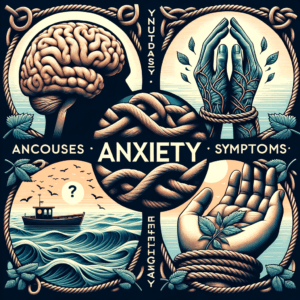
Anxiety is an intricate interplay between our mind and body that often arises as we navigate the complexities of everyday life. It’s not just a fleeting feeling but rather a series of cognitive processes, emotional responses, and physical reactions working in tandem. At its core, anxiety serves as a protective mechanism to alert us to potential threats or challenges, yet when it spirals out of control, it can disrupt our daily lives profoundly.
To understand the psychological underpinnings of anxiety, consider a common scenario: you’ve just received an email about an upcoming performance review at work. Initially, your mind might race with thoughts like “What if I don’t meet expectations?” or “Will my boss be disappointed in me?” These anxious thoughts are often accompanied by physical sensations such as an increased heart rate and sweating, which are part of the body’s “fight or flight” response designed to prepare you for immediate action.
This reaction is rooted in evolutionary biology. When early humans encountered a dangerous predator, their bodies would instantly mobilize resources to either flee from danger or confront it head-on. Today, while many threats have evolved from physical predators to abstract fears such as job insecurity or social rejection, our physiological response remains the same.
The cognitive aspect of anxiety often begins with negative thought patterns known as “catastrophizing,” where small uncertainties are amplified into major problems. Worrying about being late for an important meeting can escalate into imagining scenarios like arriving after everyone else and feeling humiliated or overlooked. This mental spiral not only exacerbates fear but also reinforces the belief that danger is imminent, even when it isn’t.
Anxious thoughts often create a feedback loop that intensifies emotions and behaviors. When you’re worried about an upcoming public speaking engagement, your mind might conjure up worst-case scenarios such as forgetting key points or appearing unprepared to your audience. These fears can make you avoid the event altogether, reinforcing your anxiety by depriving yourself of opportunities to prove to yourself that you can handle stress.
Beyond these internal processes, external factors also play a significant role in shaping our experience of anxiety. Societal pressures around success and perfectionism often push individuals to set unrealistic standards for themselves. In this high-stakes environment, minor setbacks or perceived failures are magnified, leading to heightened levels of worry and distress.
Additionally, the way we perceive and interpret events can heavily influence how anxious we feel. Someone who views life challenges as insurmountable obstacles is more likely to experience prolonged anxiety compared to someone who sees these challenges as opportunities for growth and learning.
Interestingly, cultural backgrounds also shape our understanding and expression of anxiety. In some cultures, openly discussing feelings of worry or stress might be discouraged, leading individuals to internalize their anxieties without seeking support from others. This lack of external validation can deepen the sense of isolation and intensify emotional distress.
Understanding these psychological mechanisms doesn’t mean dismissing the physical symptoms that accompany anxiety. Many people experience sleep disturbances, muscle tension, or gastrointestinal issues as part of their anxious state. These bodily reactions serve to keep us alert and ready for potential threats but can be exhausting when they occur frequently over time.
In reflecting on our daily experiences with anxiety, it’s clear that managing this complex condition involves both recognizing its triggers and developing strategies to mitigate its effects. By acknowledging the role of negative thought patterns in exacerbating anxiety and identifying practical steps to address these thoughts, we can begin to navigate life’s challenges more effectively.
Practicing mindfulness or engaging in regular physical activity has been shown to help regulate emotional responses and reduce stress levels. These activities promote a greater awareness of present moments without attaching anxious interpretations to them. Similarly, connecting with supportive friends or joining social groups dedicated to mental health can provide valuable insights and coping mechanisms that might not be immediately apparent.
While anxiety is an unavoidable part of life, understanding its psychological roots and emotional impacts empowers us to approach it from a place of resilience rather than fear. By recognizing the interplay between our thoughts, feelings, and physical reactions, we can take proactive steps towards managing anxiety more effectively and maintaining overall well-being in the face of daily uncertainties.
Anxiety is a multifaceted experience that intertwines cognitive processes, emotional responses, and physiological reactions. Rather than seeking to eliminate it entirely, appreciating its protective yet disruptive nature allows us to develop healthier ways to cope with life’s challenges. Through self-awareness, mindful practices, and supportive environments, we can foster greater resilience in the face of anxiety, enhancing our overall quality of life despite the presence of this common human condition.