- Eastern philosophy offers timeless wisdom that shapes ethical, spiritual, and social frameworks worldwide.
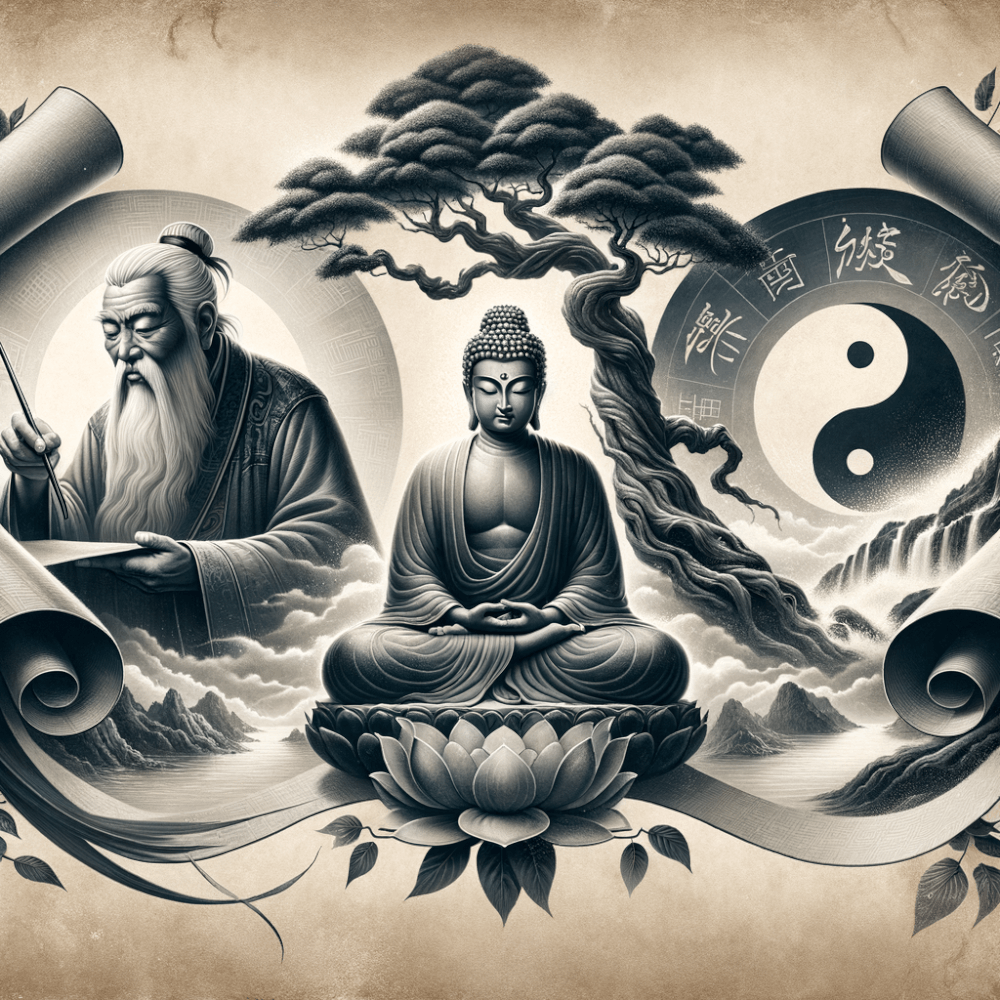
- Confucius, Buddha, and Taoism each present distinct paths addressing harmony between individuals and the universe.
- Their ideas continue to influence contemporary culture, governance, mindfulness practices, and ethical leadership.
The Ethical Foundations of Confucius: Order and Relationships
Confucius (551–479 BCE), one of the most influential figures in Eastern philosophy, laid the groundwork for ethics based on social harmony and moral development. Living during a period known as the Spring and Autumn era in China—a time marked by political instability and social upheaval—Confucius sought to restore societal order through a return to traditional values and rituals. His teachings, compiled in the Analects, emphasize virtues such as ren (benevolence), li (ritual propriety), and xiao (filial piety). These values encourage individuals to cultivate personal integrity and fulfill their roles in family and society faithfully.
Confucius believed that ethical leadership begins with self-cultivation, which then radiates into improved governance and social stability. This concept deeply influenced imperial China’s bureaucratic system, where civil servants were selected through rigorous examinations steeped in Confucian classics. Even today, Confucian ideals resonate strongly in East Asian cultures, where respect for authority and the importance of education remain culturally significant. For example, modern management theories often draw parallels to Confucian thought by emphasizing the need for ethical leadership and stakeholder harmony within organizations.
Philosophically, Confucius challenged legalistic and authoritarian notions of governance by arguing that moral virtue is the true source of political legitimacy. His prioritization of character education prefigures contemporary discussions on emotional intelligence and ethical leadership in technology companies aiming to build more humane workplaces. As artificial intelligence reshapes society, Confucian ethics can provide a framework to address issues like responsible decision-making and community welfare, underscoring the enduring relevance of his teachings in modern governance and ethical debates.
Buddha’s Middle Path: Liberation Through Mindfulness and Compassion
Siddhartha Gautama, known as the Buddha, lived around the 5th to 4th century BCE in what is now Nepal and India. His quest to understand human suffering culminated in the Four Noble Truths and the Eightfold Path, core principles of Buddhism. The Buddha’s profound insight was that desire and ignorance cause suffering (dukkha), and that liberation arises from mindful awareness and ethical living. His Middle Way advocates avoiding extremes of self-indulgence and self-mortification, promoting balance and mental clarity.
Buddhism’s impact extends far beyond its religious dimension; it has significantly influenced psychology, mindfulness-based therapies, and wellness movements worldwide. The practice of meditation, rooted in Buddhist tradition, has been widely adopted in modern-day mental health interventions to reduce stress and anxiety. Importantly, Buddhist ethics emphasize metta (loving-kindness) and compassion towards all beings, which informs contemporary social movements advocating nonviolence and environmental stewardship.
The Buddha’s teaching on impermanence (anicca) challenges modern society’s attachment to materialism and fixed identities, urging adaptability in a rapidly changing world. In technology, mindfulness practices inspired by Buddhism are integrated into user experience design and productivity tools to foster concentration and reduce digital fatigue. Thus, the Buddha’s wisdom offers a universal psychological and ethical framework applicable in both personal growth and collective well-being, highlighting Eastern philosophy’s deep connection to modern science and culture.
Taoism: Harmony with Nature and the Flow of Life
Taoism, attributed to the sage Laozi and traditionally dated back to the 6th century BCE, presents a mystical and philosophical approach emphasizing harmony with the Tao (the Way). The foundational text, the Tao Te Ching, describes living in accordance with the natural order, embracing simplicity, spontaneity, and humility. Taoism advocates wu wei (non-action or effortless action), a principle that encourages individuals to align their actions with the natural rhythms of life instead of forcing outcomes.
This philosophy has profoundly influenced Chinese art, medicine, and political thought, promoting balance between human beings and the environment. Its ecological wisdom is increasingly relevant in contemporary society’s urgent need for sustainable living and climate awareness. Taoist ideas inspire modern environmental ethics by emphasizing interconnectedness and respect for the earth’s processes, encouraging holistic approaches to technology and urban design that prioritize harmony rather than domination.
In contemporary culture, Taoist principles shape practices like Tai Chi and Qigong, which are popular for physical and mental health worldwide. These practices exemplify Taoism’s integration of body, mind, and spirit, reinforcing the philosophy’s practical applications beyond abstract concepts. On a technological front, the Taoist ethic of flow and adaptability resonates with agile methodologies in software development, focusing on flexibility and responsiveness to change rather than rigid control.
Conclusion: Enduring Wisdom from Eastern Philosophy
The wisdom from Confucius, Buddha, and Taoism collectively enriches Eastern philosophy with insights on ethics, spirituality, and harmony with the world. These traditions offer timeless guidance in addressing the complexities of human nature, governance, and the relationship with the environment. Confucius’s emphasis on moral cultivation and social roles complements the Buddha’s mindfulness and compassion teaching, while Taoism invites a surrender to natural flow and simplicity.
In a modern world grappling with technological advancement and social fragmentation, this Eastern philosophy provides valuable perspectives for ethical leadership, mental well-being, and sustainable living. Their teachings continue to inspire individuals and societies seeking balance, compassion, and a deeper connection to the universe, underscoring the ongoing relevance of Eastern philosophy across cultures and disciplines.