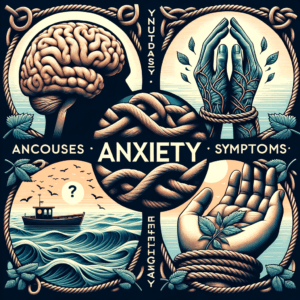
Understanding Anxiety Through Early Life Experiences
Anxiety is not an isolated emotional state but a complex interplay between biological predispositions and environmental influences. While genetic factors play a significant role in shaping our psychological landscape, the impact of early life experiences cannot be overstated. Childhood abuse or neglect, can profoundly alter brain chemistry and structure, leading to heightened vulnerability to anxiety disorders later in life.
Research conducted by Dr. Charles Nemeroff at Emory University illustrates this interplay vividly. The study focused on women diagnosed with clinical depression who were also victims of childhood abuse. These participants displayed unusually high levels of stress hormones like cortisol and ACTH when exposed to moderately stressful tasks, such as solving math problems in front of a panel of stern judges. Their hormonal responses were significantly more pronounced than those of healthy individuals or even depressed women without a history of abuse.
This heightened physiological response indicates that early traumatic experiences leave lasting marks on the body’s stress system, making it hyperactive and prone to overreacting to minor stressors later in life. Such persistent hyperactivity can manifest as chronic anxiety, where everyday situations are perceived through the lens of past trauma, causing disproportionate emotional distress.
Brain structures such as the hippocampus show abnormal development following childhood abuse or neglect. The hippocampus is crucial for regulating mood and memory functions, and its impairment due to early life stress can lead to long-term cognitive and emotional challenges. This underscores how environmental factors during formative years can sculpt brain architecture in ways that predispose individuals to anxiety.
The critical period theory further complicates our understanding of this dynamic relationship. Between birth and age three, a child’s neural pathways are highly malleable, allowing for rapid development based on external stimuli. Positive nurturing experiences foster robust connections essential for healthy emotional regulation and social interaction. Prolonged exposure to negative or neglectful environments can hinder the formation of these critical pathways, leading to developmental deficits.
Children subjected to abuse during this period may develop neural circuits that prioritize survival instincts over adaptive responses to everyday stressors. This skewed focus on threat detection can result in heightened vigilance and a persistent state of alertness, even in non-threatening situations. Over time, such chronic arousal can erode mental resilience, making the individual more susceptible to anxiety disorders.
The impact of early neglect extends beyond just emotional development; it affects physical growth as well. Studies reveal that severely neglected children tend to have smaller brains with underdeveloped cortical regions, crucial for higher-order thinking and emotional regulation. While researchers continue to explore the long-term consequences of these physiological alterations, the evidence suggests a clear link between environmental deprivation in early life and lasting biological vulnerabilities.
Understanding how nature and nurture intersect to shape anxiety is essential for crafting effective strategies to mitigate its effects. Recognizing that traumatic childhood experiences can predispose individuals to chronic stress responses allows us to approach anxiety not just as a psychological condition but as a manifestation of deeply embedded neural pathways and hormonal imbalances. This holistic view emphasizes the importance of creating supportive environments from an early age, nurturing resilience through positive relationships and protective factors.
It highlights the need for interventions that address both the biological and psychological aspects of anxiety. While traditional therapies focus on cognitive restructuring to modify thought patterns, understanding the physiological roots of anxiety can inform approaches that also include stress reduction techniques and lifestyle modifications aimed at soothing overactive stress systems.
In essence, anxiety is a multi-faceted phenomenon rooted in complex interactions between genetics and environment. By acknowledging the profound influence of early life experiences on brain development and hormonal balance, we gain deeper insight into why some individuals are more prone to experiencing chronic anxiety. This knowledge empowers us to develop comprehensive approaches that consider both biological vulnerabilities and psychological triggers, offering a more nuanced path towards understanding and managing this pervasive condition.
The journey from childhood trauma to adult anxiety is not linear but a complex web of interconnected factors. By unraveling these layers, we can better support individuals in navigating the challenges of anxiety, fostering greater resilience and well-being across all stages of life.