
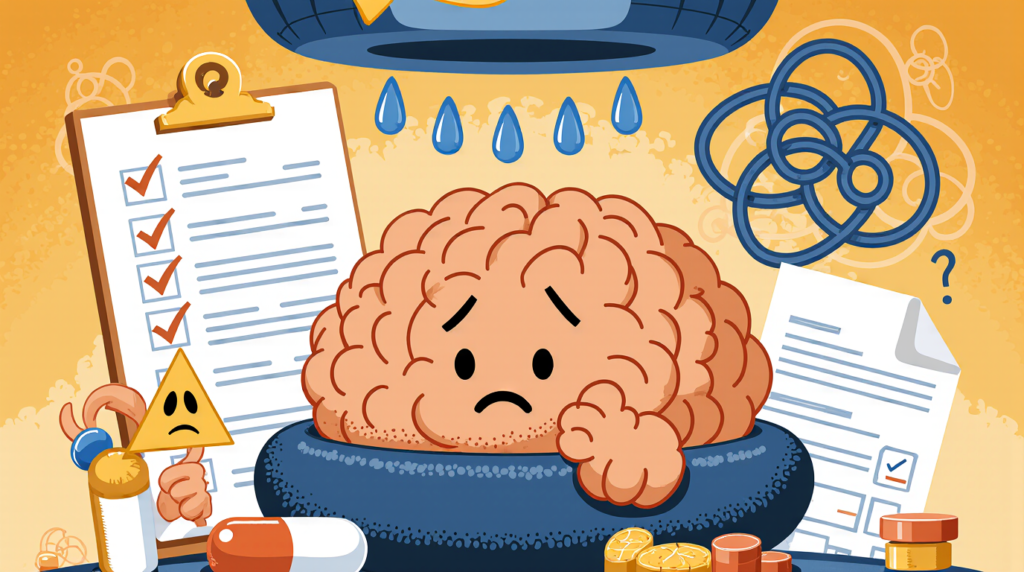
Mental overload occurs when we are bombarded with a relentless stream of stimuli—emotional, cognitive, or sensory—that our mind struggles to process. Imagine standing in a busy street where every second is filled with si
Posts published in “When the Mind Needs Attention”
This section focuses on moments when the mind is struggling and needs care.
Here we explore experiences like anxiety, depression, burnout, emotional distress, and mental overload from a human perspective — not to label people, but to help them understand what they’re going through and why attention and support matter.
Mental overload can manifest as an insidious, constant background noise that permeates everyday life. This persistent state of worry often begins subtly, with fleeting concerns that seem to spring up out of nowhere. As t
In the fast-paced environments of today's world, individuals often find themselves grappling with a persistent sense of emotional strain. This phenomenon, commonly referred to as "emotional overload," can be described as
Long-term pressure can be a subtle, insidious force that gradually chips away at one's psychological well-being. It is rooted in the relentless nature of mental overload, constant stimulation, and emotional neglect, each
The modern world, with its relentless barrage of digital notifications, social media updates, and endless news streams, can fragment attention in a manner that mirrors the breaking of a stream into countless tiny rivulet
Mental overload occurs when the demands on our cognitive resources exceed our capacity to process them effectively. This state can arise from a multitude of sources: relentless work deadlines, an overwhelming number of c
One common source of mental rigidity is the overwhelming burden of constant stimulation. Modern life is replete with distractions—be it social media updates, notifications, or the unrelenting stream of information from n
The human brain is an intricate organ, designed to process an immense amount of information every day. Emotions are a significant part of this processing, often arising from internal and external stimuli. When you experi