
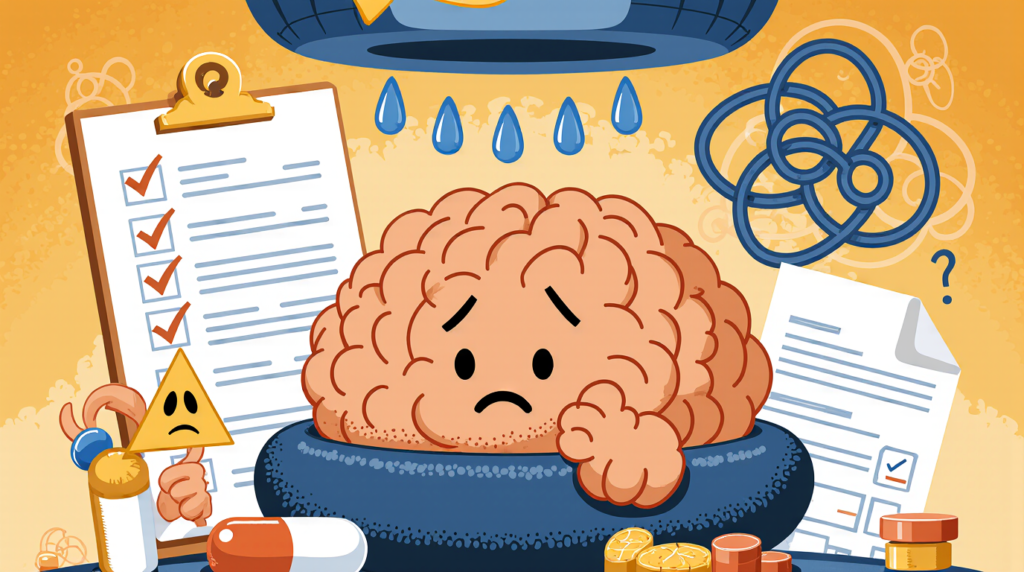
When the brain is overwhelmed by continuous input, it may struggle to process and filter these signals effectively. Attention, a finite resource, becomes fragmented as the individual tries to manage multiple sources of i
Posts published in “When the Mind Needs Attention”
This section focuses on moments when the mind is struggling and needs care.
Here we explore experiences like anxiety, depression, burnout, emotional distress, and mental overload from a human perspective — not to label people, but to help them understand what they’re going through and why attention and support matter.
Panic episodes are sudden, overwhelming experiences that can feel like a storm breaking through the calm of everyday life. They are often characterized by intense fear or discomfort, a sense of impending doom, and physic
Mental stress can fragment our attention, making it difficult to concentrate on tasks or engage fully in social interactions. This fragmentation occurs because the brain, under constant pressure, struggles to maintain it
Consider the daily experience of someone who juggling multiple projects, deadlines, and personal matters. Each day brings new challenges, and the mind can become overburdened with concerns about how to manage it all. As
Mental overload occurs when the brain's capacity to process information becomes overwhelmed. This can happen due to high-stress environments, excessive multitasking, or the constant influx of digital notifications and so
Mental overload occurs when the brain is constantly bombarded with information and responsibilities, leaving little room for rest and reflection. In our digitally saturated world, where notifications and social media upd
In the age of information, our minds are perpetually engaged, bombarded with a ceaseless stream of data, thoughts, and emotions. This constant flow can lead to mental overload, a state where the brain's capacity to proce
In the fast-paced whirl of modern life, the mind, once a sanctuary of peace and clarity, now finds itself a battleground. The relentless demands of constant connectivity, rapid information consumption, and the expectatio