Understanding Anxiety: The Inner Turmoil
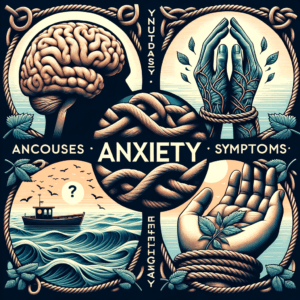
Anxiety is a complex emotional state that can disrupt the smooth flow of daily life, making it challenging to navigate everyday situations with ease and confidence. It often begins subtly with persistent worries and gradually escalates into a series of uncomfortable physical sensations and disruptive thoughts. These experiences are not random but arise from intricate psychological processes.
At its core, anxiety is sparked by an initial worry or fear. Imagine a student preparing for final exams who feels uncertain about their ability to pass despite having studied diligently. This initial concern can trigger a cascade of anxious thoughts: “What if I forget everything? What if my answers are wrong?” Each thought contributes to feelings of dread and self-doubt.
As these worries escalate, the mind responds by overanalyzing potential outcomes, heightening one’s state of alertness. The brain searches for reassurances or solutions but often finds none due to the abstract nature of anxiety. This absence of concrete answers intensifies fear, creating a cycle where thoughts feed on each other and emotions spiral out of control.
Physically, this mental turmoil manifests in various bodily reactions such as heart palpitations, sweating, and trembling. These responses mimic our body’s fight-or-flight mechanism, which is designed to protect us from real dangers but becomes maladaptive when triggered by perceived threats like exam stress or public speaking anxiety.
Behaviorally, individuals may start avoiding situations that trigger these anxious feelings. Someone with social anxiety might decline invitations to gatherings to avoid feeling overwhelmed and judged. Over time, this avoidance reinforces fear as it prevents direct confrontation and learning experiences, making the situation worse rather than better.
The development of such mechanisms can be traced back to our evolutionary history where detecting threats was crucial for survival. In today’s world, many triggers are not life-threatening but rather challenges that require adaptive coping strategies. When faced with these challenges, some individuals may feel overwhelmed and struggle to find effective ways to manage their anxiety.
Anxiety also often stems from a sense of loss of control over one’s environment or future outcomes. This uncertainty can lead to obsessive planning and excessive caution, further exacerbating feelings of being trapped in a cycle of worry without resolution. When we feel unable to influence the outcome of events, it becomes harder to find peace and move forward confidently.
Societal pressures play a significant role in fostering anxious thoughts. The relentless pursuit of perfection, coupled with social media’s portrayal of ideal lives, intensifies feelings of inadequacy and failure among individuals who compare themselves unfavorably against unattainable standards. Social comparisons can be particularly challenging because they often highlight the gaps between our perceived reality and what we believe society expects from us.
Understanding anxiety involves recognizing these intricate psychological processes at work. It is not merely about combating symptoms but delving into the underlying fears and insecurities that fuel them. By identifying specific triggers and understanding their origins, people can begin to develop healthier responses to stressors.
Someone dealing with public speaking anxiety might benefit from gradual exposure rather than outright avoidance. Starting small, such as practicing in front of a mirror or discussing topics they are passionate about in informal settings, allows for incremental confidence building without overwhelming the individual. Over time, this can help reduce anxiety and build resilience against future challenges.
Similarly, mindfulness and acceptance-based approaches can be beneficial in managing anxious thoughts. By fostering an environment where these thoughts are observed neutrally rather than engaged with critically, one can gradually reduce the intensity of anxiety responses over time. Mindfulness helps individuals acknowledge their anxious thoughts without immediately reacting to them, allowing for a more balanced perspective on stressors.
While anxiety is deeply rooted in our psychological makeup, recognizing its mechanisms enables us to approach it more effectively. It shifts from being a daunting enemy to a challenge that can be managed through understanding and gradual adaptation. This perspective transforms anxiety into an opportunity for personal growth rather than a debilitating condition. By acknowledging the complexity of anxiety and working towards healthier coping strategies, individuals can learn to navigate their inner turmoil with greater resilience and clarity.