Understanding Anxiety: The Inner Battle
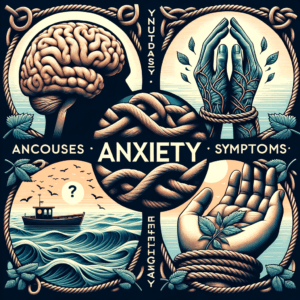
Anxiety often manifests as an overwhelming fear or unease, triggered by perceived threats—real or imagined. This fear sets off a cascade of physiological reactions that prepare our bodies for survival through the fight-or-flight response. In everyday life, this can feel like being caught in a storm without a safe haven.
Imagine you’re about to give a presentation at work and your heart starts racing as if it’s going to leap out of your chest. Your palms begin to sweat uncontrollably, and suddenly, everything seems louder and more intense than usual. This is anxiety at play, hijacking your senses and perceptions. The fear you feel might not be grounded in an immediate danger but rather a future possibility that your mind has exaggerated.
The brain’s limbic system, which includes the amygdala, acts as a security alarm for perceived threats. When it detects one, it triggers the release of stress hormones like cortisol and adrenaline, setting off various physical responses. These include sweating, hot or cold flashes, nausea, diarrhea, numbness, tingling in extremities, shortness of breath, dizziness, chest pain, fear of losing control, a sense of impending doom, feeling detached from reality, heart palpitations, and trembling.
In the midst of an anxiety attack, these symptoms can feel terrifying. They peak within ten minutes but may linger for hours afterward, leaving you shaken and questioning your ability to handle such intense sensations. It’s easy to start associating certain places or situations with the onset of an attack, leading to avoidance behaviors that only perpetuate the cycle.
If you had a panic attack in a grocery store aisle, you might avoid going there next time. Over time, this could escalate into avoiding all public spaces—a condition called agoraphobia. The fear of experiencing another attack becomes a significant obstacle, making it difficult to engage with everyday life and activities that others take for granted.
The severity and frequency of anxiety attacks can vary widely from person to person. One might experience mild discomfort while giving a speech, whereas another could have a full-blown panic episode over minor inconveniences. These variations highlight the complexity of anxiety and underscore why it’s essential not to compare your experiences with others’.
While these symptoms are frightening, they aren’t inherently dangerous or life-threatening. Recognizing this fact is crucial for recovery. Understanding that you won’t die from an anxiety attack can help break the cycle of fear feeding more anxiety. This knowledge, needs to be complemented by practical coping mechanisms.
One such mechanism is deep breathing exercises. When your body senses a threat, it prepares for action by speeding up your heart rate and taking quick breaths. By focusing on slow, deep breaths, you can counteract these reactions and signal to your brain that everything is okay. Practicing mindfulness meditation or grounding techniques can also help redirect your focus from anxious thoughts to the present moment.
Another approach involves cognitive restructuring, which challenges and changes negative thought patterns. If you’re worried about a meeting at work, instead of catastrophizing, try asking yourself what the worst-case scenario really is and how likely it is to happen. Often, this reframing can reduce the intensity of your anxiety.
Living with anxiety requires patience and self-compassion. It’s not about overcoming it entirely but finding ways to manage its impact on your life. Acknowledging that anxiety is a part of who you are now doesn’t mean giving up control; instead, it means learning how to live alongside it more comfortably.
Understanding the psychological underpinnings of anxiety—how anxious thoughts develop and influence emotions and behavior—is key to managing this condition effectively. By recognizing that your fears might be exaggerated or misplaced, and by developing strategies to mitigate their effects, you can regain a sense of control over your life. Anxiety may never fully disappear, but it doesn’t have to define who you are or limit what you’re capable of achieving.
Building resilience isn’t about ignoring the challenges anxiety brings; rather, it’s about facing them with greater awareness and skill, gradually reclaiming your peace of mind.