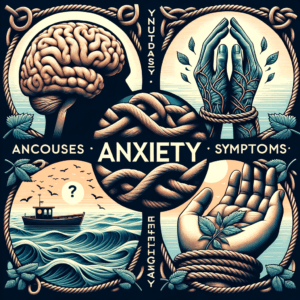
Anxiety can feel like an overwhelming force, pushing against us at every turn, threatening to engulf our lives in its grip. It’s a sensation that many of us are all too familiar with, as we navigate the complexities and challenges of everyday existence. From mounting financial pressures to familial obligations, from the demands of personal and professional life to the constant stream of negative news and information, it’s no wonder anxiety can seem like an insurmountable challenge.
The cycle of anxious thoughts often begins innocuously enough—perhaps a fleeting worry about a looming deadline or concern over an upcoming event. Yet, these initial seeds of unease tend to sprout quickly into full-blown scenarios that play out repeatedly in our minds. Each time we revisit these thoughts, they grow more potent and expansive, eventually taking on a life of their own.
Imagine this scenario: you’re at work, and your manager assigns you a project with an unrealistic deadline. Initially, the thought might be just a minor concern—a fleeting “I hope I can manage this.” Yet as the day progresses, that initial worry begins to amplify. Thoughts like “What if something goes wrong?” or “How am I going to do all of this?” start to cycle through your mind incessantly. Before you know it, these thoughts are dominating your mental space, overshadowing any other tasks and responsibilities.
This pattern is a common characteristic of anxiety—initial worries snowball into larger fears that can become all-consuming. As the intensity of these anxious thoughts increases, so too does their influence on our emotions and behavior. We may find ourselves feeling increasingly irritable or restless, struggling to concentrate, or even experiencing physical symptoms such as headaches or nausea.
In everyday situations, anxiety can manifest in numerous ways. Consider a student facing an important exam. The initial concern might be about not performing well. Over time, this thought could evolve into fears of academic failure and its broader implications for future opportunities and self-worth. Another example is someone preparing for a job interview who worries about being asked difficult questions. These concerns can escalate to imagining worst-case scenarios where they lose the opportunity entirely.
Understanding anxiety isn’t just about recognizing these patterns; it’s also crucial to acknowledge how deeply intertwined anxious thoughts are with our emotional well-being and behavioral responses. The student might start avoiding studying for fear of encountering challenging material, while the interviewee may feel increasingly isolated as they try to avoid social interactions that could remind them of their fears.
The good news is that there are numerous resources available to help navigate these challenges. While seeking professional medical advice from a doctor or counselor can be incredibly beneficial, it’s important to remember that support comes in many forms. Friends and family provide emotional grounding and practical assistance. Self-help books and online resources offer valuable insights and coping strategies tailored to individual needs.
Taking time for oneself is paramount in managing anxiety effectively. Engaging in activities that bring joy and relaxation can significantly alleviate stress and improve overall mental health. Whether it’s a leisurely walk in nature, indulging in a hobby, or simply enjoying quiet moments of solitude, these practices remind us of the importance of self-care.
It’s also essential to explore different methods of coping with anxiety. Some may find solace in exercise, while others might benefit from meditation or creative expression through art and writing. Experimenting with various approaches can help identify what works best for each individual, making it possible to craft a personalized strategy that enhances resilience against anxious thoughts.
Recognizing the cyclical nature of anxiety—how initial concerns grow into more expansive fears—and understanding its impact on emotions and behavior is key to managing this pervasive condition effectively. By acknowledging the importance of self-care and exploring various coping mechanisms, individuals can begin to reclaim their lives from the grip of anxiety, fostering a sense of empowerment and control in the face of life’s challenges.
Living with anxiety doesn’t mean struggling alone; it means finding support, nurturing oneself, and embracing strategies that bring relief and peace. It’s about recognizing the value of moments spent in self-reflection and enjoyment, and understanding that these actions are not selfish but necessary for overall well-being. As we navigate through life’s storms, remembering to take care of ourselves is a crucial step towards finding calm amidst chaos.
While anxiety can feel like an insurmountable challenge, the journey toward managing it starts with self-awareness and compassionate action. By understanding how anxious thoughts develop and influence our lives, seeking support from various sources, and prioritizing self-care, we can begin to break free from their grip, reclaiming a sense of peace and control in our daily existence.