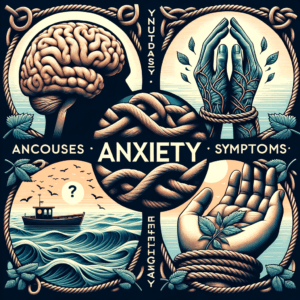
Anxiety can feel like a constant companion, quietly whispering doubts and worries into your ear throughout the day. It’s an intricate interplay between thoughts, emotions, and behaviors that often leaves us feeling overwhelmed and unsure of how to navigate our daily lives. Understanding this complex relationship is crucial in dealing with anxiety, even if it doesn’t offer immediate solutions.
At its core, anxiety is a response to perceived threats or uncertainties. Our minds are wired for survival, constantly scanning the environment for potential dangers—real or imagined. When faced with stressful situations, be it an important work presentation or an unexpected change in plans, our bodies and minds react as if these scenarios were life-threatening. The result? An avalanche of anxious thoughts.
Imagine you’re walking down a busy city street on your way to work. Suddenly, you notice that the sidewalk is wet, leaving you unsure whether it’s safe to continue walking or if there’s a puddle hiding under your feet. This momentary uncertainty triggers an internal debate: should I proceed with caution, turn around and find another route, or simply forge ahead? The mind races through these possibilities, each thought accompanied by a sense of unease as you consider the worst-case scenarios.
In such moments, anxious thoughts tend to spiral into exaggerated predictions about what might go wrong. You begin to picture slipping on the wet surface and injuring yourself, being late for work, or even having an embarrassing encounter with other pedestrians. These thoughts become increasingly vivid, and your heart starts racing as you try to assess the potential outcomes of each action.
The cycle of anxiety is further fueled by a feedback loop between our thoughts and emotions. Negative predictions breed fear and distress, which in turn heighten the sense of threat. As this emotional tension mounts, behaviors may shift dramatically. You might start avoiding situations that trigger these anxious feelings, even if they are minor or entirely manageable. You could decide to take an alternate route home just because it’s less likely to be wet and potentially safer.
This avoidance behavior can provide temporary relief from anxiety but often perpetuates the problem in the long run. By sidestepping situations that cause discomfort, we miss out on opportunities for learning and growth. The mind doesn’t get a chance to challenge its exaggerated fears through direct experience, and the anxiety remains unresolved.
Consider another scenario: you’re at a social gathering where everyone seems to be engaged in conversation. You notice someone standing alone and think about approaching them but hesitate because of fear of rejection or not knowing what to say. These thoughts can lead to feelings of inadequacy and low self-esteem, reinforcing your belief that you are socially awkward and incapable.
The emotional distress from these anxious moments often leads people to withdraw further into their comfort zones. This withdrawal limits social interactions and can affect personal relationships, leading to isolation and loneliness. Over time, the lack of supportive connections exacerbates feelings of anxiety and contributes to a sense of disconnection from others.
Understanding the psychological mechanisms behind anxiety is essential for gaining perspective on these experiences. It’s crucial to recognize that anxious thoughts are just mental processes—neither facts nor guarantees of negative outcomes. While it’s natural to feel uneasy in challenging situations, the exaggerated predictions often stem from a desire to protect oneself rather than an accurate representation of reality.
By acknowledging the role of fear and uncertainty in shaping our perceptions, we can begin to challenge these thoughts more effectively. If you find yourself worrying about the possibility of losing your job due to minor mistakes, it’s important to recognize that this worry is a mental construct rather than an inevitability. In reality, most situations are far less dire than they appear in our minds.
It’s beneficial to explore alternative ways of responding to anxiety-inducing scenarios. Instead of avoiding the wet sidewalk or retreating from social interactions, you can practice facing these challenges head-on. Walking across the potentially slippery path and observing that nothing bad happens can gradually diminish your fears. Similarly, initiating conversations with strangers can build confidence in handling social situations.
The key to managing anxiety lies in developing a more balanced perspective on these mental processes. Rather than viewing anxious thoughts as definitive truths, it’s helpful to see them as part of the human condition—fleeting moments that don’t define our capabilities or worth. By acknowledging this and actively engaging with challenging situations, we can begin to break free from the restrictive hold of anxiety.
Understanding anxiety involves recognizing its origins in our minds and emotions while embracing strategies for managing these experiences more effectively. It’s a journey of self-discovery and resilience, allowing us to navigate life’s uncertainties with greater ease and confidence.