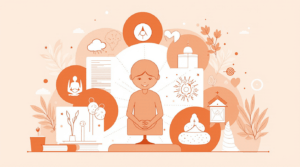
At its core, spirituality is often perceived as a quest for meaning, a longing to transcend the limitations of the physical world. This search can manifest in various forms but remains deeply personal and individualized. When one embarks on the path of self-observation, they are engaging with a practice that seeks to unravel the complexities of their own existence. Through this introspective lens, one may uncover hidden tensions and contradictions within themselves.
Consider the tension between certainty and uncertainty. In moments of profound doubt, we are reminded of the inherent limitations of human knowledge and understanding. These periods of uncertainty can be unsettling but also profoundly liberating. They allow us to question our beliefs and assumptions, opening up space for new perspectives and deeper insights into our inner world. This is not merely a cognitive exercise; it is an emotional and psychological process that reshapes our sense of identity.
Self-observation reveals the ever-present struggle between presence and absence. In daily life, we often find ourselves caught in the web of thoughts and actions, sometimes losing touch with the present moment. Self-observation invites us to pause and return to the here and now, fostering a greater awareness of our immediate surroundings and experiences. This practice can be both challenging and rewarding. It challenges us to let go of distractions and fully engage with life as it unfolds, rather than getting swept away by the ceaseless stream of thoughts.
Control and surrender are another set of tensions that arise in self-observation. The desire for control is a fundamental aspect of human nature; we want to shape our lives according to our desires and expectations. This drive can be both empowering and oppressive. Self-observation can reveal when we are clinging too tightly to the notion of control, perhaps at the expense of authentic experience or genuine presence. In these moments, surrender becomes a valuable practice. It involves letting go of rigid plans and embracing the fluidity of life.
Doubt and trust also play significant roles in this discipline. Doubt can be uncomfortable; it challenges our beliefs and assumptions, forcing us to confront uncomfortable truths. Yet, doubt is not merely negative—it can be a powerful catalyst for growth and transformation. Trust, offers solace in an often unpredictable world. It allows us to have faith in ourselves and others, even when circumstances are uncertain. Self-observation encourages us to navigate these dualities with mindfulness and compassion.
Religion, while not the only path to spirituality, provides a framework that many find supportive in their search for meaning and coherence. Belief systems can shape our identity, behaviors, and moral thinking by offering narratives that provide context and purpose. They often address fundamental questions about existence and offer guidelines for living a fulfilling life. It is essential to recognize the complexity and diversity within religious traditions. Different beliefs coexist, each with its unique perspective on what it means to be human.
Consider the practice of meditation in various spiritual traditions. It serves as a form of self-observation, allowing practitioners to focus their attention inward and observe their thoughts and emotions without judgment. This practice can lead to greater self-awareness and an enhanced ability to manage one’s mental states. Such practices are not confined to any single religious tradition but can be found across cultures and faiths.
In the modern world, where technology and constant connectivity can fragment our attention, self-observation becomes even more critical. It encourages us to slow down, reflect, and reconnect with ourselves in a deeply meaningful way. This discipline is particularly relevant in an era marked by rapid change and uncertainty. By engaging in regular introspection, we can develop greater resilience and adaptability.
The Discipline of Self-Observation is about cultivating an ongoing dialogue with oneself—a conversation that remains open, honest, and compassionate. It invites us to confront our inner tensions, embrace our uncertainties, and find a sense of harmony within the chaos of life. Through this practice, we can uncover layers of meaning and depth in our existence, fostering a more authentic and fulfilling journey through life’s complexities.
To explore the broader framework behind this topic, read
Living Your Beliefs: When Faith and Spiritual Awareness Meet Daily Life.
Related Reading
– Byron Katie — Loving What Is
– Wayne Dyer — The Power of Intention