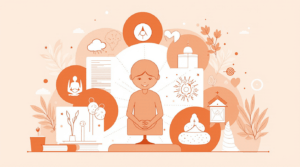
Being fully present is often the cornerstone of spiritual exploration, representing an intimate dialogue with one’s own soul rather than engaging with external religious structures or practices. This state of presence is deeply personal and can be understood as a journey toward inner coherence, where every moment becomes a chance to connect more profoundly with oneself and the world around.
In this context, spirituality emerges not from adherence to dogma but from an intrinsic search for meaning and depth within one’s life. It is about finding ways to navigate the inherent tensions of existence—between certainty and uncertainty, between control and surrender—that shape our daily experiences. These tensions are particularly pronounced in moments of solitude, where we are stripped down to the bare essentials of self-awareness.
Solitude can be a crucible for spiritual growth, allowing one to confront their deepest fears and uncertainties. It is here that questions about identity and purpose often arise most forcefully. When faced with the silence and stillness of an empty room or the solitude of nature, individuals may find themselves questioning the very foundations of their beliefs and values. This process can be unsettling but also profoundly liberating, as it encourages a reevaluation of one’s inner landscape.
The experience of being fully present is often marked by a heightened sense of awareness and sensitivity to one’s surroundings. It involves paying close attention to every aspect of the moment: the sound of wind rustling through leaves, the taste of a simple meal, or the sensation of touching something familiar yet fresh. Such moments can be transformative, offering glimpses into deeper layers of existence that are not always accessible when we are preoccupied with external concerns.
This presence is not without its challenges. There are times when doubt and trust seem to coexist in a delicate balance, much like the tension between control and surrender. Doubt can arise from an awareness of the imperfections and limitations of one’s own existence. It may manifest as questions about the nature of reality itself—why we exist, what gives life meaning, or how we should live our lives. Trust, emerges from a sense of faith in something beyond ourselves—a belief in a greater purpose or a higher power that provides context to our existence.
These tensions are not exclusive to moments of doubt but can be present even when one feels most secure and certain. They serve as reminders that spiritual growth is an ongoing process, where both doubt and trust must coexist. It is through the dialectic between these two states that we begin to understand the complexity of human experience and the depth of our inner lives.
In the pursuit of being fully present, individuals often find solace in shared experiences with others who also value such a state. Community can provide support and encouragement during moments of uncertainty, reminding us that we are not alone in our struggles and doubts. This sense of belonging is crucial for fostering a deeper connection to both self and others, enhancing the overall quality of one’s spiritual journey.
Being fully present is about embracing all facets of oneself—strengths and weaknesses, joys and sorrows—with an open heart and mind. It is a reminder that spirituality is not just about achieving a perfect state but about continually working toward greater awareness and authenticity in each moment. This process may be fraught with challenges, yet it is precisely through these challenges that we find the greatest growth and meaning.
Being fully present is a profoundly personal experience that invites us to explore the depths of our inner lives. It is an invitation to engage deeply with both the certainties and uncertainties that define human existence. Through this exploration, we may discover new dimensions of understanding and compassion for ourselves and others, enriching our spiritual journeys in meaningful ways.
To explore the broader framework behind this topic, read
Living Your Beliefs: When Faith and Spiritual Awareness Meet Daily Life.