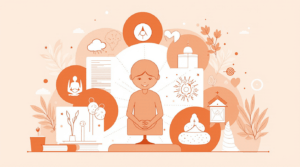
In the realm of inner presence, we often grapple with the tension between certainty and uncertainty. The act of mindfulness is like standing at a crossroads, where every moment could lead us down one path or another. There are times when clarity seems just beyond reach, and doubt shadows our steps. Yet, amidst these uncertainties, there emerges a quiet confidence that lies within us—a sense that we can be present in the here and now, no matter what uncertainty looms.
Consider a quiet evening spent alone with thoughts. In such solitude, one can observe the constant stream of mental chatter. At first, it might seem overwhelming, like waves crashing against a rocky shore. But as practice deepens, there comes a moment when these thoughts begin to recede, leaving behind a sense of inner calm and clarity. This is not an escape from reality but a deeper engagement with one’s own experience. It is here that the inner presence becomes more pronounced, allowing us to see our thoughts and emotions as passing clouds in the vast sky of consciousness.
Presence and absence are also inextricably linked in this journey. The practice of mindfulness requires letting go of the desire for permanence or control. We must accept that what is present can disappear just as quickly. This acceptance brings a sense of surrender, not to external circumstances but to the natural flow of existence itself. By embracing both presence and absence, we open ourselves to a more profound understanding of life’s impermanence.
Control and surrender are another pair of tensions that frequently emerge in this exploration. The human instinct for control is strong; it drives us to seek stability and certainty. Mindfulness teaches us that true control lies not in manipulating external events but in mastering our inner landscape. We learn to observe our thoughts and emotions without judgment, allowing them to flow naturally while maintaining a sense of calm and centeredness.
Doubt and trust are perhaps the most complex pairings within this journey. Doubt can be paralyzing, leading us to question everything, including our very purpose in life. As we explore mindfulness further, doubt transforms into a catalyst for deeper inquiry. It prompts us to ask fundamental questions about who we are and why we are here. This questioning eventually leads us to a place of trust—a trust not in external authorities or dogmas but in the inherent wisdom that resides within each of us.
The inner experience of spirituality, is deeply personal and varied. While organized religions provide structures and traditions for many, they can sometimes obscure the intimate connection we have with our own spiritual journey. Spirituality as an inner experience is about cultivating a deeper awareness of one’s self and the world around us. It involves recognizing that each moment contains both challenges and opportunities for growth.
In exploring these themes, it is important to acknowledge the complexity and diversity within spirituality. Different individuals may find their paths through various practices such as meditation, prayer, or simply quiet contemplation. What unites them is not adherence to any specific belief system but a shared quest for meaning and connection with something greater than themselves.
Mindfulness and inner presence are about finding balance amidst life’s inherent uncertainties. They invite us to embrace both the presence of moments and their fleeting nature; they teach us how to relinquish control while simultaneously mastering our internal landscapes; and they lead us from doubt into a place of trust. These practices are not just tools for personal growth but also profound reflections on the very essence of human existence.
In this journey, we continually rediscover that the inner presence is always accessible, even in the midst of chaos or uncertainty. It is a sanctuary within ourselves—a place where we can find peace, clarity, and our true selves.
To explore the broader framework behind this topic, read
Living Your Beliefs: When Faith and Spiritual Awareness Meet Daily Life.