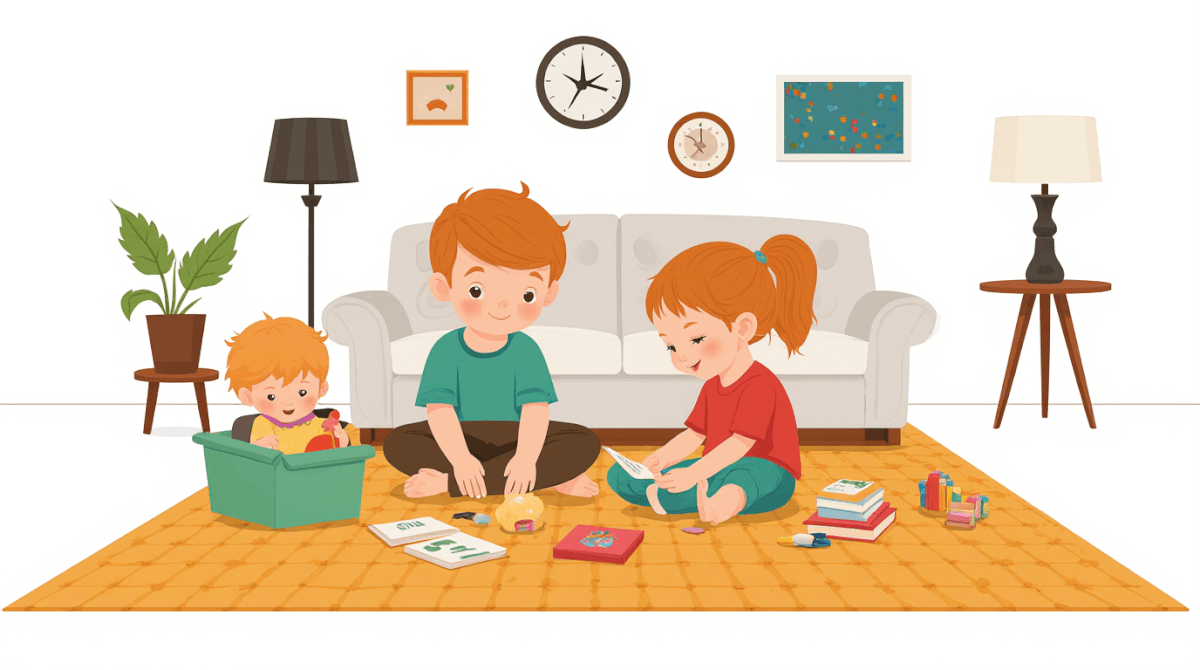
The emotional influence of gentle limits is a significant factor in shaping the way young individuals navigate their world, develop self-regulation, and form healthy relationships. These limits, carefully crafted to be supportive yet firm, play an essential role in fostering resilience, independence, and social competence. By understanding how these gentle constraints operate within the environment and early experiences of children, we can gain insight into why they are so critical for growth.
Gentle limits refer to the guidelines or boundaries set by caregivers that provide a sense of safety while allowing exploration and freedom. These limits are not rigid but flexible, adapting to the child’s developmental stage and individual needs. A parent might establish a rule like “We only go to the park when it is sunny” rather than an inflexible ban on all outdoor play during bad weather.
The environment and early experiences significantly influence the development of self-regulation in children. Self-regulation involves managing one’s emotions, thoughts, and actions in response to internal or external stimuli—a crucial skill for navigating social interactions and academic challenges. Gentle limits contribute to this process by teaching children how to handle unexpected situations and make appropriate choices. A child who learns that they can only play at the park if it is safe might begin to assess their own activities based on safety standards.
Consider a scenario where a young child repeatedly asks for an extra cookie before dinner. Instead of an immediate yes or no, a parent might say, “We always save cookies for after dinner as part of our family rule.” This gentle limit allows the child to understand that rules exist but also provides flexibility in how those rules are applied. Over time, this interaction reinforces the importance of following guidelines while maintaining a sense of trust and security.
Gentle limits promote social competence by teaching children about boundaries and respect for others’ space and needs. When neighbors visit, parents might establish that “visitors always come to our house and we go outside to meet them.” Such rules prepare children for real-world interactions, helping them understand the give-and-take nature of relationships. Children learn early on how to adapt their behavior based on social cues and expectations.
Gentle limits encourage resilience by allowing children to face small challenges independently. When a child is allowed to make choices within these defined boundaries—such as deciding which clothes to wear or what activity to engage in—they develop problem-solving skills and confidence. These experiences lay the foundation for handling more significant life challenges later on.
It is important to note that the effectiveness of gentle limits depends largely on how they are communicated and enforced. Consistency in applying these rules ensures that children understand their importance, while explanation about why certain limits exist helps build a child’s comprehension. Explaining “We only go to the zoo during school breaks because it is too crowded at other times” provides context for the rule and encourages critical thinking.
Research has shown that environments rich with gentle yet firm boundaries contribute positively to children’s emotional well-being (Hartup & Stevens, 1997). Such settings help children develop a secure base from which they can explore their world confidently. Children who grow up in homes where they experience consistent but supportive guidance tend to have better social skills and higher self-esteem.
Environments with overly strict or absent boundaries can hinder emotional development. Excessive restrictions might lead to anxiety and rebellion, while an absence of guidelines can result in impulsive behavior without proper consequence awareness. Both extremes highlight the importance of finding a balance that nurtures both discipline and freedom.
The mechanism through which gentle limits influence child development operates on multiple levels—emotional, social, and cognitive. Emotionally, these limits help children manage their feelings by providing structure within which to express themselves freely yet responsibly. Socially, they prepare children for complex interactions by teaching them about boundaries and cooperation. Cognitively, they support the development of problem-solving skills as children learn to navigate rules and make informed decisions.
A child learning to handle disappointment when their preferred toy is not available may internalize strategies such as waiting patiently or seeking alternative entertainment. These early experiences build emotional intelligence by allowing children to process their emotions in structured yet supportive environments.
The emotional influence of gentle limits extends far beyond simple behavioral control. By establishing a balance between freedom and structure, these limits contribute significantly to a child’s overall development. They foster resilience, social competence, self-regulation, and emotional well-being, all of which are essential for navigating the complexities of life. Understanding this mechanism underscores the importance of thoughtful, consistent parenting in shaping healthy, well-adjusted individuals.
References:
Hartup, W., & Stevens, R. (1997). Peer relationships: A social psychological perspective. *Annual Review of Psychology*, 48, 411-435.