
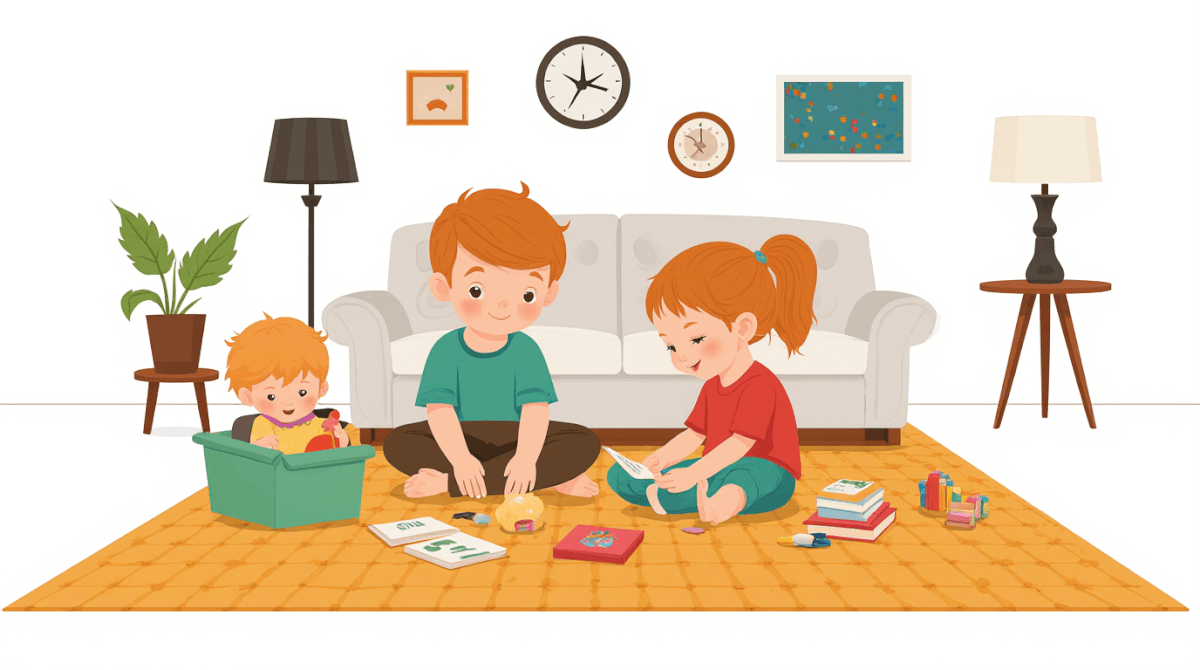
Understanding how children learn through observing reactions is crucial to grasping the complex interplay of environment, early experiences, and cognitive development that shapes a child’s behavior. The primary mechanism involved here is observational learning—children not only observe their surroundings but also interpret others’ responses to those observations, which significantly influences their own actions and beliefs.
Observational learning occurs when children learn by watching what happens to other people in similar situations. This process can be seen in various scenarios where a child might watch an adult handle a difficult situation or witness how peers react to different stimuli. Consider a scenario where a child sees another child being rewarded for sharing toys with friends during playtime. Through observing this positive reaction from both the recipient and possibly the teacher, the child might internalize that sharing is associated with desirable outcomes such as praise and camaraderie.
The environment plays a pivotal role in shaping how children interpret these observations. A supportive home or school environment can reinforce positive behaviors while an unsupportive one may lead to negative outcomes. If a child sees parents resolving conflicts peacefully and respectfully at home, they are more likely to adopt such strategies themselves when faced with similar situations outside the family. If a child frequently witnesses aggression in their community, they might unconsciously internalize that violence is an acceptable way of handling disputes.
Early experiences also influence how children perceive and respond to these observed reactions. If a child grows up observing adults being kind and compassionate towards others, they are likely to develop similar traits as they grow older. Exposure to harsh or critical environments might lead to a more cynical outlook on human behavior and interactions. These early experiences can form the basis for future social skills and interpersonal relationships.
One key aspect of observational learning is the process by which children generalize these learned behaviors. After observing how someone else reacts in a particular situation, a child may apply that knowledge to their own actions, whether consciously or subconsciously. If a child sees a friend being praised for helping with homework and subsequently feels a desire to help others too, this illustrates the transfer of observed behavior into personal practice.
Children often mimic not just the actions but also the emotions expressed by those around them. This emotional contagion can be seen in various social settings. When observing someone laughing or crying, a child may start to experience similar feelings themselves, thereby internalizing the emotional context associated with those behaviors. This process is crucial for developing empathy and understanding complex social cues.
In addition to direct observation, children also learn through vicarious reinforcement—observing others being rewarded or punished for certain actions. If a child sees another student receiving praise for completing homework on time, they may be motivated to do the same because of the positive outcome observed. Witnessing someone being punished for misbehaving can deter such behavior in future interactions.
The influence of observational learning extends beyond immediate social contexts; it shapes broader cognitive and emotional development. By observing how others handle various situations, children build a mental framework that guides their decision-making processes. This framework includes not only actions but also the underlying values and beliefs associated with those behaviors. If a child frequently observes adults prioritizing honesty in communication, they may come to value truthfulness as an important social norm.
Observational learning contributes significantly to children’s ability to adapt to different environments and social norms. By observing various reactions to similar situations, children learn to navigate complex social landscapes more effectively. This is particularly evident in multicultural settings where children must interpret diverse behavioral codes and expectations.
It is important to note that the influence of observed reactions on a child’s behavior can be both positive and negative. A child might adopt healthy eating habits by observing family members prioritizing nutritious meals or develop poor study habits by frequently seeing peers engage in procrastination without consequences. Creating an environment rich with positive role models and constructive feedback is essential for fostering healthy developmental outcomes.
The impact of observational learning on children’s behavior is not limited to social interactions; it also influences academic performance. Observing how teachers handle classroom management or respond to student questions can shape a child’s own approach to learning and problem-solving. Similarly, witnessing how parents manage stress and time effectively can inspire similar coping mechanisms in children.
Another critical aspect of observational learning involves the role of peer interactions. Children often learn through observing their peers’ reactions during play and social activities. If multiple friends react positively to a particular game or activity, an individual child may be more inclined to try it out too, leading to increased engagement and enjoyment in shared experiences.
Observational learning is a fundamental mechanism through which children acquire knowledge, attitudes, and behaviors by observing the reactions of others. This process is deeply influenced by the social, cultural, and relational contexts within which children grow up. By carefully shaping these environments, adults can guide children towards positive developmental outcomes that will benefit them throughout their lives.
References:
– Bandura, A. (1977). Social Learning Theory. Prentice-Hall.
– Zahn-Waxler, C., & Radke-Yarrow, M. (1985). Early origins of conscience: Empathy in the young child. American Psychologist, 40(2), 273-278.
Related Reading
– Stanley Greenspan — The Growth of the Mind
– Lev Vygotsky — Mind in Society



